Talk to The Black Jacobins like its author wrote you back.
Get the ideas that fit your life — not generic summaries.
- Chat with the book
- Audiobook-style main ideas
- Adapts to your life and goals
- Helps you take action
The Black Jacobins, in detail
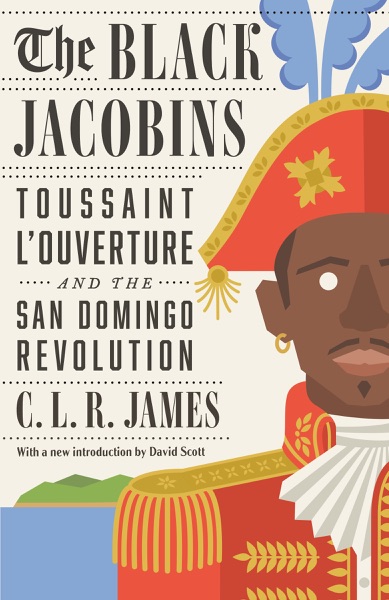
The Black Jacobins is C.L.R. James's account of the Haitian Revolution, the only successful slave revolt in history, which between 1791 and 1804 transformed Saint-Domingue — France's wealthiest Caribbean colony — into the independent republic of Haiti. First published in 1938, the book centers on Toussaint L'Ouverture, the former slave who became the revolution's greatest general and strategist, and traces his rise, his complex relationships with France and with rival Haitian factions, and his eventual capture and death in a French prison.
James wrote the book as both history and political argument. He was a Trinidadian Marxist writing in the late 1930s, and his subject was not merely the past. He wanted to show that enslaved Africans were not passive victims of history but active agents who made decisions, built alliances, and shaped the modern world. The Haitian revolutionaries, James argued, drew on the same Enlightenment ideals as the French Jacobins — liberty, equality, the rights of man — and carried those ideals further than their French contemporaries were willing to.
The book's most arresting passages describe the scale of the plantation system's violence and the calculated economic logic that sustained it. Saint-Domingue's sugar production made France rich, and the colony's white planters, free colored class, and enslaved population lived in a structure of organized terror. When the revolution came, it came from below and with extraordinary brutality on both sides, which James refuses to sanitize.
Toussaint's tragedy, in James's telling, is that he tried to hold contradictions together that couldn't be held. He wanted independence and order, racial equality and the plantation economy, alliance with France and sovereignty for Haiti. His maneuvering was brilliant but ultimately left him vulnerable to Napoleon's double-dealing. James's admiration for Toussaint is clear, but so is his analysis of the structural limits that undid him. The book holds up as both a compelling narrative and a serious work of political thought about colonialism, race, and the conditions under which revolutionary movements succeed or fail.
The big ideas
- 1.
The Haitian Revolution was the only successful slave revolt in history, and it produced the first Black republic in the Western Hemisphere, declared independent in 1804.
- 2.
Toussaint L'Ouverture was a self-educated former slave who became one of the great military strategists of his era, holding off French, Spanish, and British forces simultaneously.
- 3.
James argues that enslaved people were not passive: they were active historical agents who interpreted Enlightenment ideas and deployed them against the system that had enslaved them.
