Fantasy · Book club
The Blade Itself book club questions
Here are 12 book club questions for The Blade Itself by Joe Abercrombie, ordered to open easily and end somewhere worth arguing about. Copy them, print them, or bring them up one at a time.
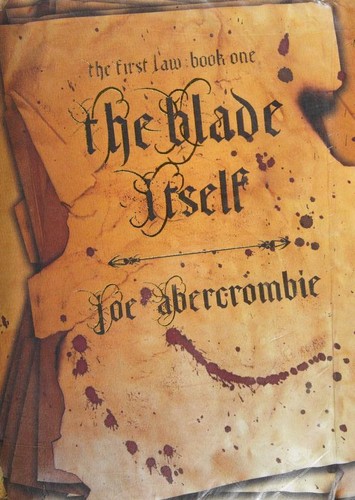
The Blade Itself is the first book of the First Law trilogy, a grimdark fantasy that opened with a deliberate challenge to the genre's conventions: the barbarian is not particularly heroic, the noble knight is not particularly noble, and the crippled torturer employed by the Inquisition is probably the most interesting person in the room.
Joe Abercrombie · 2006 · 12h 45m
Full summary and key takeaways →The 12 questions
- 1.
Glokta is a torturer with the reader's sympathy for most of the book. How does Abercrombie manage that, and is it legitimate or a manipulation?
- 2.
Jezal is introduced as almost entirely unlikeable. How much do his qualities change through volume one, and does Abercrombie earn any warmth toward him?
- 3.
Logen is trying to leave violence behind and failing. Do you think the novel believes people can fundamentally change, or is it more deterministic than that?
- 4.
Bayaz presents as a helpful wizard but the book makes him quietly menacing. What specifically made you distrust him, and when did you first notice it?
- 5.
Abercrombie is often grouped with George R.R. Martin as grimdark fantasy. How does The First Law differ from A Song of Ice and Fire in what it's actually doing?
- 6.
The book is very funny in places — mostly at Jezal's expense. Does the humor undercut the darkness, complement it, or do both simultaneously?
- 7.
The world-building is deliberately sparse in volume one — no appendices, no map you'll consult constantly. Does restraint in world-building feel like trust in the reader or absence of depth?
- 8.
The First Law is sometimes described as a deconstruction of Tolkien-style fantasy. Is that a useful frame, or does it make Abercrombie sound more reactive than he is?
- 9.
What does the book seem to believe about heroism? Is there a character you'd describe as genuinely heroic, and what does that term even mean in this world?
- 10.
Abercrombie cycles between three very different POV characters. Which perspective felt most necessary to the book, and which could you have done without?
- 11.
The magic is deliberately vague and potentially dangerous. Does it bother you when magic in fantasy doesn't have clear rules?
- 12.
Volume one ends without resolving much. Does that feel like a complete reading experience or like having read an extended prologue?
How to run the discussion
- Pick six to eight, not all of them. An hour of real discussion covers fewer questions than anyone expects, and racing the list is what makes a book club feel like homework.
- Open with what people noticed, not what they concluded. Asking for a verdict first hardens opinions before anyone has heard each other.
- Let the disagreement run. The questions below that split a room are the ones worth the time; the ones everyone answers the same way can be skipped.
- Ask the quiet person a specific question. A direct, narrow question is far easier to answer than an open invitation to contribute.
Themes worth steering toward
If the conversation stalls, these are the threads that usually restart it.
Common questions
What are good book club questions for The Blade Itself?
Here are 12 book club questions for The Blade Itself by Joe Abercrombie, ordered to open easily and end somewhere worth arguing about. The strongest openers ask what each reader noticed rather than what they concluded, and the discussion usually turns on moral ambiguity, war and its costs, power and cynicism.
How long should a book club discussion of The Blade Itself last?
Most groups run 60 to 90 minutes of actual discussion. That is roughly six to eight questions, not all of them, so pick the ones that suit your group rather than working down the list in order.
What are the main themes in The Blade Itself?
Moral ambiguity, War and its costs, Power and cynicism, Violence and character, Heroism's dark side. Those are the threads most likely to divide a room, which makes them the useful places to steer a discussion that has gone quiet.
Picking the next one? See books like The Blade Itself or questions for other book club picks.
