Science · Book club
Nature via Nurture: Genes, Experience, and What Makes Us Human book club questions
Here are 12 book club questions for Nature via Nurture: Genes, Experience, and What Makes Us Human by Matt Ridley, ordered to open easily and end somewhere worth arguing about. Copy them, print them, or bring them up one at a time.
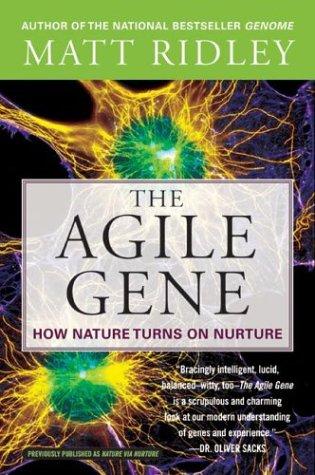
Matt Ridley's central argument is that the nature versus nurture debate has been framed wrong for over a century.
Matt Ridley · 2003 · 6h 0m
Full summary and key takeaways →The 12 questions
- 1.
Ridley argues the nature-nurture binary was never scientifically valid. Where do you still encounter blank-slate or genetic-determinist thinking in everyday life?
- 2.
How does the concept of gene-environment interaction change the way you think about personal responsibility for behavior or mental health?
- 3.
Ridley suggests political ideology has distorted research on human nature. Can you think of a current debate where that distortion is still operating?
- 4.
If roughly half of personality variance is genetic, what does that imply for how parents should think about their role in shaping their children?
- 5.
The serotonin transporter example shows that genes matter only in certain environments. What does this mean for how we should design social policies or interventions?
- 6.
Ridley defends evolutionary psychology against critics who see it as deterministic. Do you find his defense convincing, and where does it fall short?
- 7.
Which of your own traits do you attribute primarily to your upbringing, and which feel more like stable predispositions? How sure are you?
- 8.
The book was published in 2003. How has the science of epigenetics and gene expression changed or reinforced Ridley's argument since then?
- 9.
What is the practical difference between saying a behavior is 50% heritable versus saying it is determined by genes? Does the distinction matter to you?
- 10.
Ridley argues that acknowledging genetic influence opens the door to smarter interventions. Can you think of an example where this logic has worked in practice?
- 11.
How do you respond to the idea that evolved human tendencies — like aggression or tribalism — are universal but not inevitable?
- 12.
If a person has a genetic predisposition to a mental illness, what obligation does society have toward them, and does the genetic framing change that obligation?
How to run the discussion
- Pick six to eight, not all of them. An hour of real discussion covers fewer questions than anyone expects, and racing the list is what makes a book club feel like homework.
- Open with what people noticed, not what they concluded. Asking for a verdict first hardens opinions before anyone has heard each other.
- Let the disagreement run. The questions below that split a room are the ones worth the time; the ones everyone answers the same way can be skipped.
- Ask the quiet person a specific question. A direct, narrow question is far easier to answer than an open invitation to contribute.
Themes worth steering toward
If the conversation stalls, these are the threads that usually restart it.
Common questions
What are good book club questions for Nature via Nurture: Genes, Experience, and What Makes Us Human?
Here are 12 book club questions for Nature via Nurture: Genes, Experience, and What Makes Us Human by Matt Ridley, ordered to open easily and end somewhere worth arguing about. The strongest openers ask what each reader noticed rather than what they concluded, and the discussion usually turns on genetics, human nature, evolution.
How long should a book club discussion of Nature via Nurture: Genes, Experience, and What Makes Us Human last?
Most groups run 60 to 90 minutes of actual discussion. That is roughly six to eight questions, not all of them, so pick the ones that suit your group rather than working down the list in order.
What are the main themes in Nature via Nurture: Genes, Experience, and What Makes Us Human?
Genetics, Human nature, Evolution, Environment, Development. Those are the threads most likely to divide a room, which makes them the useful places to steer a discussion that has gone quiet.
Picking the next one? See books like Nature via Nurture: Genes, Experience, and What Makes Us Human or questions for other book club picks.
