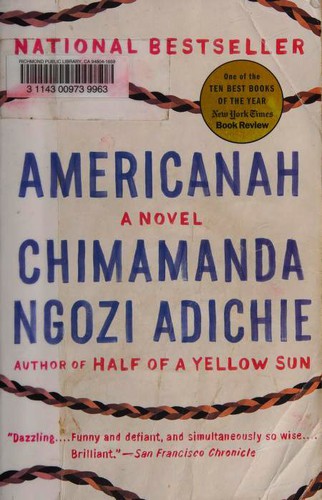
Americanah by Chimamanda Ngozi Adichie is a 2013 literary fiction book about race and identity, immigration and belonging, love and separation. Race is not a biological fact but a social assignment — Ifemelu's experience of becoming Black only in America is one of contemporary fiction's most effective dramatizations of this.
Summary
Americanah follows Ifemelu, a young Nigerian woman who leaves Lagos for America as a university student and spends fifteen years navigating a country that insists on categorizing her in ways Nigeria never did. The novel opens as she's preparing to return to Lagos — and to reconnect with her first love, Obinze, who himself spent years trying and failing to make a life in England before returning to Nigeria as a wealthy, unhappily married man.
Adichie's central argument is that Ifemelu becomes "Black" only in America. In Nigeria she was Igbo, or middle-class, or clever — but not Black in the American sense. The discovery of American race is the novel's intellectual engine, expressed partly through Ifemelu's blog, "Raceteenth, or Various Observations About American Blacks (Those Formerly Known as Negroes) by a Non-American Black." The blog entries, quoted at length, are among the sharpest writing about American racial dynamics in contemporary fiction — funny, angry, precise, and deliberately addressed to white readers who think they're past all this.
But Americanah is also a love story, and Adichie balances the political observation with genuine emotional weight. The Ifemelu-Obinze relationship is the spine of the novel — a first love interrupted by circumstances, sustained across years and continents by memory and correspondence, and eventually tested by who each has become in the other's absence. Adichie is honest about how time and experience change people, and whether the person you loved at nineteen can be the same person you love at thirty-five.
This is a long novel that reads quickly because Adichie's prose is alive and Ifemelu is enormous fun to be inside. The American sections are funnier and more caustic than the quieter Nigerian sections — Adichie saves her most affectionate writing for Lagos. A warning: the book is so confident in its observations about American race that white readers sometimes experience it as confrontational. That is, to a significant degree, the point.
Talk to Americanah like its author wrote you back.
Get the ideas that fit your life — not generic summaries.
- Chat with the book
- Audiobook-style main ideas
- Adapts to your life and goals
- Helps you take action
Key takeaways
- 1.
Race is not a biological fact but a social assignment — Ifemelu's experience of becoming Black only in America is one of contemporary fiction's most effective dramatizations of this.
- 2.
The blog posts embedded in the novel function as a direct address to white readers, forcing a second perspective on the same events described in the narrative.
- 3.
Hair is the novel's central physical symbol: Ifemelu's decision to wear her natural hair becomes an act of self-recovery as much as style.
- 4.
Obinze's parallel story in England — as an undocumented worker — shows the British version of the immigrant experience, which is different from the American one in specific and instructive ways.
- 5.
Adichie is precise about the difference between African-American Blackness and the experience of African immigrants who are racialized as Black in America without sharing that history.
- 6.
The novel's Lagos sections are a corrective to the American narrative of Africa as a continent of suffering — Lagos is rendered as a specific, dynamic, flawed, and recognizable city.
- 7.
Ifemelu's American relationships — particularly with Curt and Blaine — dramatize the way race shapes intimacy even in relationships that try to transcend it.
- 8.
The ending is deliberately ambiguous about whether Ifemelu and Obinze's reunion is a beginning or a continuation of the same story with new complications.
Discussion questions
Use these on your own, with a book club, or as chat starters in Superbook. Book club version, ready to copy or print →
- 1.
Ifemelu says she was not 'Black' before she came to America. What does that claim mean, and do you think the novel proves it?
- 2.
The blog posts are addressed to white Americans as an audience. How did you respond to being interpellated as that audience — if you are, or if you're not?
- 3.
Ifemelu's natural hair becomes central to her self-understanding. Do you think Adichie earns that weight for something so apparently superficial, or does the novel over-invest it?
- 4.
Obinze's chapters are less angry and more melancholy than Ifemelu's. Why do you think Adichie structured it that way — what does gender have to do with the different registers?
- 5.
Blaine and Ifemelu's relationship breaks partly over political disagreement about how Black Americans should respond to injustice. Who is right, and does the novel take a side?
- 6.
Ifemelu's American success — a fellowship, a well-regarded blog — positions her in a particular class. How does class intersect with race in her observations and her blind spots?
- 7.
Adichie distinguishes sharply between African immigrants and African Americans. Some African-American critics found that distinction itself a form of distancing. What do you think?
- 8.
The Lagos sections are the warmest writing in the book. Is that nostalgia, or is Adichie actually arguing that Nigerian society has specific advantages over American society?
- 9.
Obinze is married and unhappy when Ifemelu returns. The novel treats his and Ifemelu's reconnection sympathetically. Does it handle the ethical complications of that fairly?
- 10.
Compare this to Half of a Yellow Sun, Adichie's earlier novel. What has her view of Nigeria changed between 2006 and 2013, based on what you can see in the two books?
- 11.
What does the title 'Americanah' mean, and who gets to use it as a term?
- 12.
By the end of the novel, is Ifemelu going home or going somewhere new? What does the answer depend on?
Themes
Frequently asked questions
-
Is Americanah worth reading?
Yes, especially if you want a novel that takes race seriously as a lived experience rather than a political abstraction. It's also a genuinely good love story and a sharp portrait of immigrant life. The blog posts embedded in the narrative are some of the most direct and funny writing about American race in contemporary fiction.
-
Is Americanah a difficult read?
No. It's a long novel but it reads quickly — Adichie's prose is lively and Ifemelu is a compelling narrator. The difficulty, if any, is emotional rather than stylistic: white readers may find some of Ifemelu's observations uncomfortable, and that discomfort is productive.
-
What is Americanah about, without spoilers?
A Nigerian woman comes to America for university, becomes Black in a way she never was in Lagos, builds a successful life, and eventually decides to go home — to a city and a first love that have both changed while she was away. It's about race, immigration, and whether you can ever fully return.
-
Who shouldn't read Americanah?
Readers who want fiction that doesn't challenge their assumptions about race will likely find it polemical. Adichie is making arguments, not just telling a story. If that feels like homework rather than literature, this one may not be for you.
-
Is there a film adaptation of Americanah?
A Netflix adaptation was announced with Lupita Nyong'o attached as star and producer, but as of 2025 it remains in development and has not been released.
Similar books
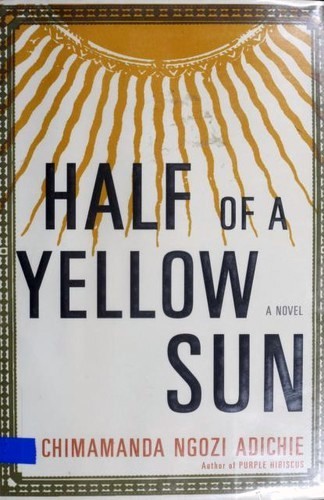
Half of a Yellow Sun
Chimamanda Ngozi Adichie
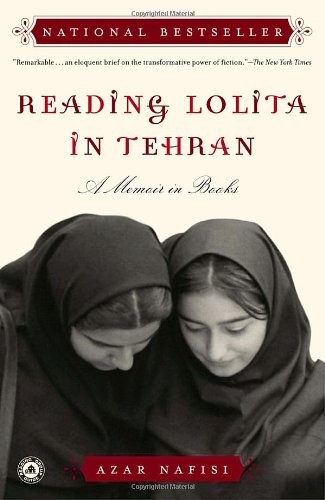
Reading Lolita in Tehran: A Memoir in Books
Azar Nafisi
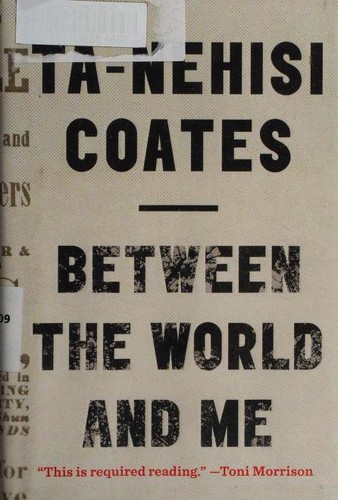
Between the World and Me
Ta-Nehisi Coates
Persepolis: The Story of a Childhood
Marjane Satrapi
