History · Book club
The Bluest Eye book club questions
Here are 12 book club questions for The Bluest Eye by Toni Morrison, ordered to open easily and end somewhere worth arguing about. Copy them, print them, or bring them up one at a time.
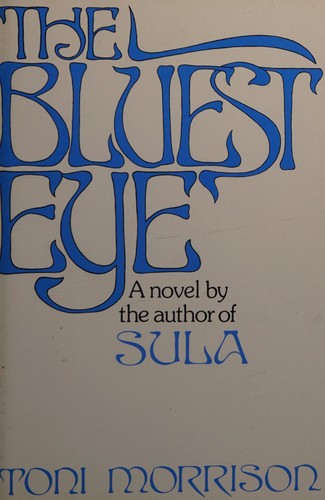
Toni Morrison's first novel, published in 1970, is set in Lorain, Ohio in 1940–41 and follows Pecola Breedlove, an eleven-year-old Black girl who has internalized the conviction that she is ugly — that beauty means whiteness, means blue eyes — and whose desire for blue eyes becomes the central image of a novel about what racism does to the interior life of children.
Toni Morrison · 1970 · 3h 45m
Full summary and key takeaways →The 12 questions
- 1.
Morrison structures the novel around an eleven-year-old's wish for blue eyes. What does that image make visible about how racial hierarchy is internalized by children?
- 2.
The Dick-and-Jane primer appears three times: intact, compressed, and broken. What does Morrison accomplish with that formal device that straightforward narrative couldn't?
- 3.
Claudia's response to white baby dolls — her desire to destroy them — is presented as healthy rather than pathological. Is that a persuasive reading? What does it say about her relationship to the beauty standard?
- 4.
Morrison gives Cholly Breedlove an interiority and a history that explain his actions without excusing them. How does that choice affect the reader's experience of the novel? Is it successful?
- 5.
The community's cruelty toward Pecola — including from other Black characters — is as damaging as white racism in the novel. What is Morrison saying about how oppression circulates within communities?
- 6.
The omniscient narrator knows things that the child narrators Claudia and Frieda cannot know. What does that shift in perspective allow Morrison to do? What does it cost the narrative in terms of immediacy?
- 7.
The novel was published in 1970. Morrison had trouble finding a publisher and the book sold poorly initially. What does that history tell us about who was imagined as the audience for serious literary fiction in 1970?
- 8.
Pecola's madness at the end of the novel is both a mercy and a condemnation. How does Morrison ask you to feel about it?
- 9.
Morrison said the absence of this story from literature was itself violent — that the invisibility of the Black girls it depicts was a form of erasure. Is that an argument about what fiction is obligated to represent?
- 10.
The novel is set in 1940–41, but Morrison wrote it in 1970, after the civil rights movement. How does that temporal gap shape the book's perspective?
- 11.
The Bluest Eye is often taught in high school and has been repeatedly challenged and banned. What are the arguments for and against teaching it to adolescents?
- 12.
Morrison's prose is demanding — allusive, indirect, formally complex. Is that difficulty justified by what it achieves? Does literary difficulty ever become an obstacle to the work's social purpose?
How to run the discussion
- Pick six to eight, not all of them. An hour of real discussion covers fewer questions than anyone expects, and racing the list is what makes a book club feel like homework.
- Open with what people noticed, not what they concluded. Asking for a verdict first hardens opinions before anyone has heard each other.
- Let the disagreement run. The questions below that split a room are the ones worth the time; the ones everyone answers the same way can be skipped.
- Ask the quiet person a specific question. A direct, narrow question is far easier to answer than an open invitation to contribute.
Themes worth steering toward
If the conversation stalls, these are the threads that usually restart it.
Common questions
What are good book club questions for The Bluest Eye?
Here are 12 book club questions for The Bluest Eye by Toni Morrison, ordered to open easily and end somewhere worth arguing about. The strongest openers ask what each reader noticed rather than what they concluded, and the discussion usually turns on race and beauty standards, childhood and trauma, self-hatred and identity.
How long should a book club discussion of The Bluest Eye last?
Most groups run 60 to 90 minutes of actual discussion. That is roughly six to eight questions, not all of them, so pick the ones that suit your group rather than working down the list in order.
What are the main themes in The Bluest Eye?
Race and beauty standards, Childhood and trauma, Self-hatred and identity, Community and violence, American racism. Those are the threads most likely to divide a room, which makes them the useful places to steer a discussion that has gone quiet.
Picking the next one? See books like The Bluest Eye or questions for other book club picks.
