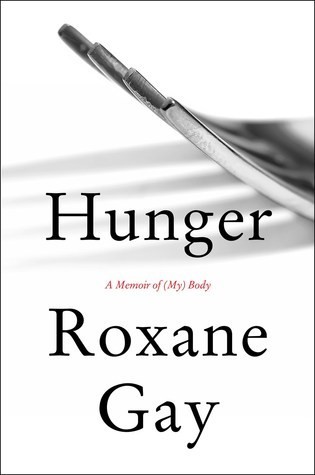
Hunger by Roxane Gay is a 2017 memoir book about body image, trauma, identity. Bodies are not problems to be solved but sites of complex, often painful history. Gay's memoir challenges the cultural habit of treating fat bodies as evidence of personal failure.
Summary
Hunger is Roxane Gay's memoir about her body, the trauma that shaped it, and the world's persistent refusal to accommodate it. Gay writes with extraordinary honesty about the experience of being a large woman in a culture that conflates body size with worth, discipline, and character. The book is not a weight loss story. It is an account of what it costs to live in a body that the world codes as wrong, and an examination of how Gay came to understand her own relationship with eating, size, and survival.
The memoir is organized around Gay's experience of being gang-raped at twelve years old and her response to that assault over the following decades. She describes eating as a way of building a body she believed would be safe — impenetrable, visible, and powerful in its size. The candor is unusual and unsettling in the best way. Gay does not present her body as something to be fixed or her eating as a problem to be solved. She presents them as logical, if painful, responses to what happened to her.
The cultural analysis woven through the personal narrative is sharp. Gay writes about the experience of air travel, medical care, restaurant chairs, movie seats, and countless daily encounters with a world that designs for bodies her size and smaller. She writes about the specific cruelties of public commentary on fat bodies and the way those cruelties are normalized under the guise of health concern. The tone is neither self-pitying nor polemic. Gay is direct and frequently funny, which makes the painful sections land harder.
Hunger does not resolve neatly. Gay does not arrive at peace with her body, does not lose weight, and does not offer a program for others. This is either the book's most honest quality or its most frustrating one depending on what the reader wants. What it offers instead is a precise, intellectually serious account of one woman's experience at the intersection of trauma, appetite, fatness, and identity. For readers whose own experiences intersect with any of these, it is likely to feel like the most honest book they have read on the subject.
Talk to Hunger like its author wrote you back.
Get the ideas that fit your life — not generic summaries.
- Chat with the book
- Audiobook-style main ideas
- Adapts to your life and goals
- Helps you take action
Key takeaways
- 1.
Bodies are not problems to be solved but sites of complex, often painful history. Gay's memoir challenges the cultural habit of treating fat bodies as evidence of personal failure.
- 2.
Overeating can be a rational survival response to trauma rather than a failure of willpower or discipline. Understanding that mechanism changes what kind of help is actually useful.
- 3.
The world is physically designed to accommodate a narrow range of body sizes. The daily friction that large people navigate is not incidental but structural.
- 4.
Cultural commentary on fat bodies is rarely about health. It is more often about contempt, control, and the discomfort that bodies outside normative range provoke in observers.
- 5.
Trauma responses are not solved by deciding to respond differently. They are often metabolized over years or decades and resist the kind of willpower-based interventions that diet culture prescribes.
- 6.
Self-disclosure about body experience is politically and personally complex. Gay's candor is its own form of argument about what honest writing on the body can and should look like.
- 7.
The memoir form requires a different kind of accountability than first-person essays. Gay's willingness to contradict herself and remain unresolved across 250 pages is rare and instructive.
- 8.
What society calls a health issue is sometimes a political and structural one. Access to adequate medical care, physical spaces, and social respect correlates with body size in ways that policy, not personal behavior, could address.
Discussion questions
Use these on your own, with a book club, or as chat starters in Superbook.
- 1.
Gay describes building her body as a form of protection after trauma. Had you encountered that framing before reading this book? How does it change how you think about overeating?
- 2.
The book is deliberately unresolved — Gay does not achieve peace with her body by the end. Does that feel honest or unsatisfying, and why?
- 3.
What messages did you receive growing up about body size and worth? How much of your current relationship with your own body traces back to those messages?
- 4.
Gay writes about the specific physical barriers she encounters in daily life — plane seats, restaurant chairs, medical equipment. Did her account change how you think about how spaces are designed?
- 5.
The book distinguishes between health as a genuine concern and health as a cover for contempt. How do you identify which motivation is operating in a given conversation about body size?
- 6.
Gay is forthright about the events that shaped her eating. What would it take to be that honest about the origins of your own habits?
- 7.
Hunger is a memoir, not a self-help book. It offers no program or resolution. What kind of reader is best served by that choice, and who might find it frustrating?
- 8.
The cultural forces Gay describes — media, design, medicine, daily social interaction — all treat large bodies as failures. How much individual behavior can actually change in that environment versus how much structural change is required?
- 9.
Gay writes as both a personal witness and a cultural critic. Which mode did you find more compelling?
- 10.
The book has been criticized for not being more prescriptive. Do you think memoirs about illness, trauma, or the body have an obligation to offer guidance to readers in similar situations?
- 11.
If you have not experienced the daily frictions Gay describes, what did reading about them teach you? If you have, did the book reflect your experience accurately?
- 12.
Gay says she is working toward not just accepting her body but befriending it. What does that distinction mean to you?
Themes
Frequently asked questions
-
What is Hunger by Roxane Gay about?
It is a memoir about Gay's body, the gang rape she survived at twelve, the decades of eating and size that followed, and the experience of living in a large body in a world that treats largeness as moral failure.
-
Is Hunger worth reading?
Yes. It is one of the most honest books written about the intersection of trauma, eating, and body image. It does not offer resolution or a recovery program, which is either its honesty or its limitation depending on what you need from it.
-
Who should read Hunger?
Readers who have experienced disordered eating, trauma responses, or the social friction of living in a non-normative body. Also essential reading for healthcare providers, designers, and anyone who writes or thinks about the politics of the body.
-
How long is Hunger?
Around 250 pages, roughly three and a half hours at average reading pace. Gay's prose is spare and precise, which means the book covers substantial emotional terrain in relatively short space.
-
Does Hunger have a hopeful ending?
Not in the conventional sense. Gay does not achieve acceptance or lose weight or resolve her relationship with food. The book ends with her still working toward something, which she calls befriending her body. The lack of resolution is a deliberate choice, not an omission.