Psychology · Book club
The Body Keeps the Score book club questions
Here are 12 book club questions for The Body Keeps the Score by Bessel van der Kolk, ordered to open easily and end somewhere worth arguing about. Copy them, print them, or bring them up one at a time.
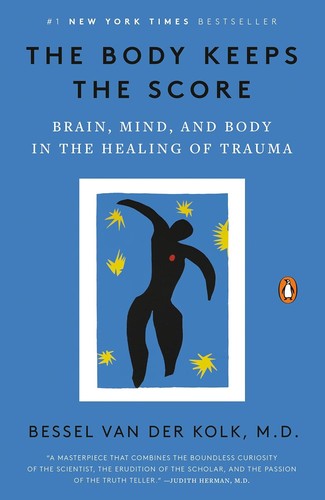
The Body Keeps the Score is Bessel van der Kolk's account of four decades spent studying and treating trauma, from Vietnam veterans at the VA in the 1970s to survivors of childhood abuse, accidents, and domestic violence.
Bessel van der Kolk · 2014 · 11h 15m
Full summary and key takeaways →The 12 questions
- 1.
Van der Kolk argues that the body holds trauma in ways language cannot fully reach. Has there been a time in your own life when a physical response preceded or overrode your rational understanding of a situation?
- 2.
The book makes a case that talk therapy is often not enough. What does this suggest about how we should think about mental health treatment more broadly?
- 3.
Van der Kolk describes the feeling of being trapped in the past as a defining feature of trauma. What conditions in everyday life — not necessarily traumatic — can produce a similar sense of being stuck?
- 4.
The research on EMDR and yoga as trauma treatments was controversial when van der Kolk first pursued it. What does the resistance to these approaches say about how the medical establishment evaluates evidence?
- 5.
Van der Kolk is sharply critical of how the DSM categorizes trauma-related conditions. What do you think is lost when human suffering is translated into diagnostic categories?
- 6.
The chapters on developmental trauma are among the most difficult in the book. What obligations do they suggest society has toward children in environments of chronic stress or abuse?
- 7.
The book argues that social connection is protective against lasting trauma. What does this imply about the design of institutions — prisons, schools, hospitals — that routinely isolate people?
- 8.
Van der Kolk describes patients who harmed themselves as a way to feel real or in control. How does the book change or complicate how you think about self-destructive behavior?
- 9.
Several chapters describe how theater, writing, and movement have helped trauma survivors. Why might expressive and physical practices reach something that structured psychotherapy does not?
- 10.
The book draws heavily on van der Kolk's own clinical experience and research. Does the personal investment make the arguments more compelling, or does it introduce bias you find yourself pushing back on?
- 11.
Van der Kolk argues that agency — the sense that your actions matter — is central to recovery. Where in your own life has regaining a sense of agency shifted how you felt about something difficult?
- 12.
If you were designing a school or workplace with the research in this book in mind, what would you change about how it handles stress, conflict, and people in crisis?
How to run the discussion
- Pick six to eight, not all of them. An hour of real discussion covers fewer questions than anyone expects, and racing the list is what makes a book club feel like homework.
- Open with what people noticed, not what they concluded. Asking for a verdict first hardens opinions before anyone has heard each other.
- Let the disagreement run. The questions below that split a room are the ones worth the time; the ones everyone answers the same way can be skipped.
- Ask the quiet person a specific question. A direct, narrow question is far easier to answer than an open invitation to contribute.
Themes worth steering toward
If the conversation stalls, these are the threads that usually restart it.
Common questions
What are good book club questions for The Body Keeps the Score?
Here are 12 book club questions for The Body Keeps the Score by Bessel van der Kolk, ordered to open easily and end somewhere worth arguing about. The strongest openers ask what each reader noticed rather than what they concluded, and the discussion usually turns on trauma, neuroscience, healing.
How long should a book club discussion of The Body Keeps the Score last?
Most groups run 60 to 90 minutes of actual discussion. That is roughly six to eight questions, not all of them, so pick the ones that suit your group rather than working down the list in order.
What are the main themes in The Body Keeps the Score?
Trauma, Neuroscience, Healing, Mind-body connection, PTSD. Those are the threads most likely to divide a room, which makes them the useful places to steer a discussion that has gone quiet.
Picking the next one? See books like The Body Keeps the Score or questions for other book club picks.
