Philosophy · Book club
The Book: On the Taboo Against Knowing Who You Are book club questions
Here are 12 book club questions for The Book: On the Taboo Against Knowing Who You Are by Alan Watts, ordered to open easily and end somewhere worth arguing about. Copy them, print them, or bring them up one at a time.
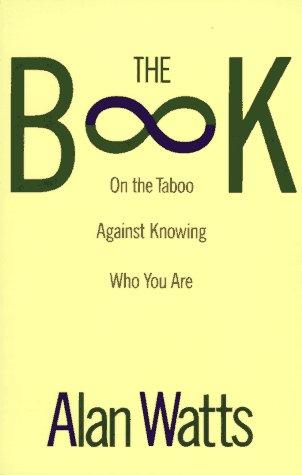
The Book, published in 1966, is Alan Watts's most direct attempt to explain the central illusion he spent his career examining: the belief that each of us is a separate self, enclosed in skin, confronting an alien world.
Alan Watts · 1966 · 3h 20m
Full summary and key takeaways →The 12 questions
- 1.
Watts argues that the sense of being a separate, enclosed self is taught rather than perceived. Does that claim seem right to you? What is your evidence either way?
- 2.
Have you ever had an experience — in nature, in meditation, in a moment of intense absorption — where the boundary between self and surroundings felt less solid? What did you make of it at the time?
- 3.
The book was written in 1966, during significant cultural upheaval. How much of its argument is universal and how much is it a product of its moment?
- 4.
Watts links the belief in a separate self to the exploitation of nature. Is that causal claim convincing, or does it feel like too large a leap?
- 5.
He draws heavily on Vedanta. For readers without that background, does the Hindu framework help the argument or create distance from it?
- 6.
Watts says he is pointing at something most readers have already experienced. What experience in your own life comes closest to what he seems to be describing?
- 7.
The book argues that knowing who you really are would be liberating, not frightening. Does it feel that way to you, or does the dissolution of the separate self feel like a loss?
- 8.
What is the 'taboo' in Watts's title? Why does he think this knowledge is suppressed?
- 9.
How does The Book compare to The Wisdom of Insecurity for readers who've read both? Does the later book add something the earlier one didn't?
- 10.
Watts is a popularizer working with difficult philosophical material. Does that make him trustworthy or does it make you want to go to the source texts?
- 11.
The game metaphor — life as a game that requires forgetting it's a game — is the book's most memorable idea. Does it help or frustrate you?
- 12.
If Watts's argument were true, what would change about how you make decisions, relate to others, or think about your own death?
How to run the discussion
- Pick six to eight, not all of them. An hour of real discussion covers fewer questions than anyone expects, and racing the list is what makes a book club feel like homework.
- Open with what people noticed, not what they concluded. Asking for a verdict first hardens opinions before anyone has heard each other.
- Let the disagreement run. The questions below that split a room are the ones worth the time; the ones everyone answers the same way can be skipped.
- Ask the quiet person a specific question. A direct, narrow question is far easier to answer than an open invitation to contribute.
Themes worth steering toward
If the conversation stalls, these are the threads that usually restart it.
Common questions
What are good book club questions for The Book: On the Taboo Against Knowing Who You Are?
Here are 12 book club questions for The Book: On the Taboo Against Knowing Who You Are by Alan Watts, ordered to open easily and end somewhere worth arguing about. The strongest openers ask what each reader noticed rather than what they concluded, and the discussion usually turns on identity, consciousness, interconnection.
How long should a book club discussion of The Book: On the Taboo Against Knowing Who You Are last?
Most groups run 60 to 90 minutes of actual discussion. That is roughly six to eight questions, not all of them, so pick the ones that suit your group rather than working down the list in order.
What are the main themes in The Book: On the Taboo Against Knowing Who You Are?
Identity, Consciousness, Interconnection, Self-deception, Eastern philosophy. Those are the threads most likely to divide a room, which makes them the useful places to steer a discussion that has gone quiet.
Picking the next one? See books like The Book: On the Taboo Against Knowing Who You Are or questions for other book club picks.
