Historical fiction · Book club
The Book Thief book club questions
Here are 12 book club questions for The Book Thief by Markus Zusak, ordered to open easily and end somewhere worth arguing about. Copy them, print them, or bring them up one at a time.
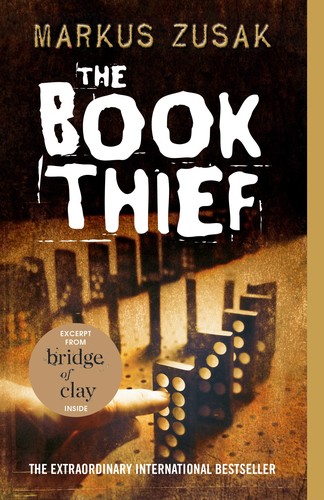
The Book Thief is set in a small German town during World War II and narrated by Death.
Markus Zusak · 2005 · 8h 0m
Full summary and key takeaways →The 12 questions
- 1.
Death says he is haunted by humans. What does the novel mean by this, and does the device of a non-human narrator actually change how you read the war material?
- 2.
Liesel steals books. The novel treats this as a kind of heroism. Is that framing convincing, or does it romanticize theft in a way that serves the plot's emotional needs?
- 3.
Hans Hubermann gives bread to a Jewish prisoner in the street and gets beaten for it. He knew what would happen. Is that courage or recklessness — and does the distinction matter?
- 4.
The novel tells you several major deaths before they occur. How did foreknowledge affect your reading? Did it increase or diminish the emotional impact?
- 5.
Max paints over Mein Kampf to write stories for Liesel. What does that physical act — overwriting propaganda with fiction — say about the novel's view of language?
- 6.
Rosa Hubermann is harsh, crude, and ultimately devoted. How does the novel use her to complicate simple ideas about goodness?
- 7.
Rudy Steiner is one of the most memorable secondary characters in the novel. What does his fate say about the war's relationship to innocence?
- 8.
Compared to All Quiet on the Western Front, which shows WWI through a soldier's eyes, where does The Book Thief land differently by centering a child on the home front?
- 9.
Is Liesel a fully realized character, or is she primarily a vehicle for the novel's themes about words and survival? Does that distinction matter?
- 10.
The novel is often taught in schools and appears frequently on teen reading lists. Do you think it is fundamentally a children's book, a young adult novel, or an adult novel? How would that affect your recommendation?
- 11.
Zusak is Australian, writing about Nazi Germany. Does the outsider perspective feel earned, or does it occasionally produce a tourist's version of German suffering?
- 12.
By the novel's end, Liesel is the only survivor from Himmel Street. What is she supposed to carry forward — and what has the novel asked you to carry?
How to run the discussion
- Pick six to eight, not all of them. An hour of real discussion covers fewer questions than anyone expects, and racing the list is what makes a book club feel like homework.
- Open with what people noticed, not what they concluded. Asking for a verdict first hardens opinions before anyone has heard each other.
- Let the disagreement run. The questions below that split a room are the ones worth the time; the ones everyone answers the same way can be skipped.
- Ask the quiet person a specific question. A direct, narrow question is far easier to answer than an open invitation to contribute.
Themes worth steering toward
If the conversation stalls, these are the threads that usually restart it.
Common questions
What are good book club questions for The Book Thief?
Here are 12 book club questions for The Book Thief by Markus Zusak, ordered to open easily and end somewhere worth arguing about. The strongest openers ask what each reader noticed rather than what they concluded, and the discussion usually turns on words and power, death and grief, human kindness in extremity.
How long should a book club discussion of The Book Thief last?
Most groups run 60 to 90 minutes of actual discussion. That is roughly six to eight questions, not all of them, so pick the ones that suit your group rather than working down the list in order.
What are the main themes in The Book Thief?
Words and power, Death and grief, Human kindness in extremity, Childhood and war, Storytelling. Those are the threads most likely to divide a room, which makes them the useful places to steer a discussion that has gone quiet.
Picking the next one? See books like The Book Thief or questions for other book club picks.
