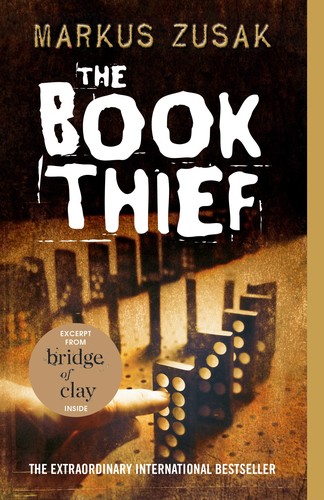
The Book Thief by Markus Zusak is a 2005 historical fiction book about words and power, death and grief, human kindness in extremity. The novel argues that stories and words are the only things that survive history — and the only things history can truly destroy. Both are true simultaneously.
Summary
The Book Thief is set in a small German town during World War II and narrated by Death. Liesel Meminger, nine years old, arrives at a foster home on Himmel Street after her brother dies en route. She cannot read, but she is drawn obsessively to books — stealing her first from a grave, working through others pilfered from bonfires and a mayor's library. Her foster father Hans Hubermann teaches her to read in the basement at night. The household later shelters a Jewish fist-fighter named Max Vandenburg in that same basement, and his presence binds the novel's threads together.
The novel is fundamentally about what language does in the face of violence. Hitler's regime is explicitly a project of words — of propaganda, book-burning, and the replacement of ordinary speech with ideology. Zusak positions Liesel's theft of books as a counter-gesture: to possess words is to hold something the regime cannot fully control. Max writes stories for Liesel on painted-over pages of Mein Kampf. Words are everywhere a double agent — they build and destroy, they save people and betray them. The novel takes that theme seriously without becoming schematic.
The narrator's identity is not a gimmick. Death is not omniscient or cruel; he is tired, he notices colors compulsively, and he is disturbed by humanity's capacity to endure and to inflict. His asides, forewarnings, and direct addresses to the reader create a structure that deliberately fractures suspense — we are told often what will happen before it does, so that the question becomes not what but how we bear the knowing. That technique produces genuine emotional force in the final chapters.
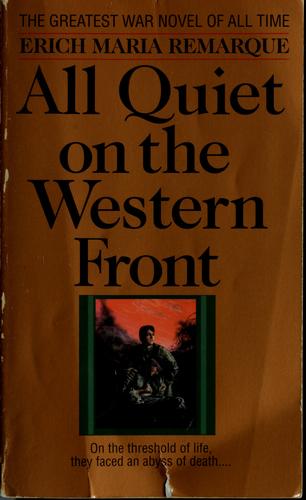
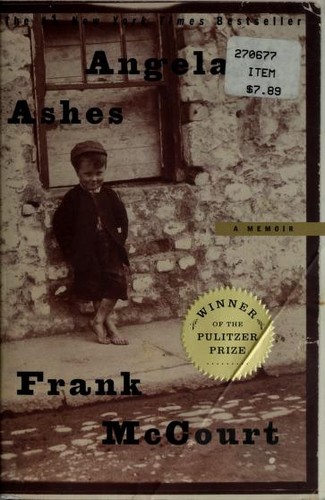
Readers who love this novel tend to respond to its unsentimental tenderness — it refuses to rescue its characters from history. Readers who find it overlong or over-decorated are not wrong that it indulges its prose style. The obvious comparison is All Quiet on the Western Front for the German civilian perspective on war; a more useful one might be Angelas Ashes for the voice of impoverished childhood narrating its own deprivation.
Talk to The Book Thief like its author wrote you back.
Get the ideas that fit your life — not generic summaries.
- Chat with the book
- Audiobook-style main ideas
- Adapts to your life and goals
- Helps you take action
Key takeaways
- 1.
The novel argues that stories and words are the only things that survive history — and the only things history can truly destroy. Both are true simultaneously.
- 2.
Hans Hubermann's quiet decency — teaching Liesel to read, sheltering Max, giving bread to a Jewish prisoner — is the novel's moral center, not the more dramatic gestures.
- 3.
Death as narrator creates a structural irony: we know more than the characters do, which turns dread into a sustained state rather than a plot device.
- 4.
Max's handmade books — stories painted over Nazi text — make the act of writing an act of resistance. The medium is part of the meaning.
- 5.
The novel treats Nazi Germany from inside an ordinary household, which refuses the comfort of distance. The perpetrators are neighbors, not monsters.
- 6.
Liesel's relationship to reading is transformative but also dangerous — books connect her to people who will be taken from her, and each connection is a potential future wound.
- 7.
The destruction of Himmel Street at the end is not a narrative surprise — it is announced in advance. The novel asks you to sit with that knowledge, which is different from asking you to be shocked by it.
- 8.
Rudy Steiner's final scene is one of the more discussed in contemporary literary fiction — what it costs the reader is partly a function of what the novel has withheld.
Discussion questions
Use these on your own, with a book club, or as chat starters in Superbook. Book club version, ready to copy or print →
- 1.
Death says he is haunted by humans. What does the novel mean by this, and does the device of a non-human narrator actually change how you read the war material?
- 2.
Liesel steals books. The novel treats this as a kind of heroism. Is that framing convincing, or does it romanticize theft in a way that serves the plot's emotional needs?
- 3.
Hans Hubermann gives bread to a Jewish prisoner in the street and gets beaten for it. He knew what would happen. Is that courage or recklessness — and does the distinction matter?
- 4.
The novel tells you several major deaths before they occur. How did foreknowledge affect your reading? Did it increase or diminish the emotional impact?
- 5.
Max paints over Mein Kampf to write stories for Liesel. What does that physical act — overwriting propaganda with fiction — say about the novel's view of language?
- 6.
Rosa Hubermann is harsh, crude, and ultimately devoted. How does the novel use her to complicate simple ideas about goodness?
- 7.
Rudy Steiner is one of the most memorable secondary characters in the novel. What does his fate say about the war's relationship to innocence?
- 8.
Compared to All Quiet on the Western Front, which shows WWI through a soldier's eyes, where does The Book Thief land differently by centering a child on the home front?
- 9.
Is Liesel a fully realized character, or is she primarily a vehicle for the novel's themes about words and survival? Does that distinction matter?
- 10.
The novel is often taught in schools and appears frequently on teen reading lists. Do you think it is fundamentally a children's book, a young adult novel, or an adult novel? How would that affect your recommendation?
- 11.
Zusak is Australian, writing about Nazi Germany. Does the outsider perspective feel earned, or does it occasionally produce a tourist's version of German suffering?
- 12.
By the novel's end, Liesel is the only survivor from Himmel Street. What is she supposed to carry forward — and what has the novel asked you to carry?
Themes
Frequently asked questions
-
Is The Book Thief worth reading as an adult?
Yes. Despite its origins as a young adult novel, it is structurally sophisticated and emotionally serious. Adults often find the Death-narrator device more interesting than younger readers do, and the treatment of complicity and ordinary decency under fascism is not dumbed down.
-
Is The Book Thief sad?
Very. The novel announces its deaths in advance and then delivers them. If you are looking for a narrative that spares its characters, this is not it. The emotional cost is high, and Zusak is deliberate about extracting it.
-
What is The Book Thief about, without spoilers?
A young girl in Nazi Germany finds solace in books and literacy while her family shelters a Jewish man in their basement. The story is narrated by Death. It is about how ordinary people survive extraordinary horror, and what language can and cannot protect us from.
-
Is there a film adaptation of The Book Thief?
Yes. A 2013 film directed by Brian Percival, with Geoffrey Rush and Emily Watson as the foster parents. It is a competent adaptation that simplifies the narrative structure but captures the period and performances well. The narrator device is harder to sustain in film.
-
Who shouldn't read The Book Thief?
Readers who find stylistic ornamentation distracting — Zusak's prose is deliberate and sometimes decorative. Also readers who want emotional surprise: the novel is forthright about its intentions and delivers grief as announced, not as ambush.