History · Book club
The Boys in the Boat: Nine Americans and Their Epic Quest for Gold at the 1936 Berlin Olympics book club questions
Here are 12 book club questions for The Boys in the Boat: Nine Americans and Their Epic Quest for Gold at the 1936 Berlin Olympics by Daniel James Brown, ordered to open easily and end somewhere worth arguing about. Copy them, print them, or bring them up one at a time.
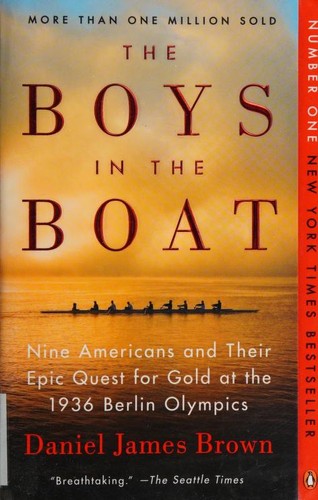
The Boys in the Boat is the story of the University of Washington crew team that won the gold medal at the 1936 Berlin Olympics, defeating Nazi Germany's squad on Hitler's home course.
Daniel James Brown · 2013 · 6h 45m
Full summary and key takeaways →The 12 questions
- 1.
George Pocock talks about 'swing' as the moment when individual effort disappears into collective motion. Have you ever experienced something like that in a team, workplace, or relationship?
- 2.
Joe Rantz's childhood abandonment shaped his relationship to the crew. How does personal history shape our relationship to belonging, and what do we look for in groups to fill what we've lacked?
- 3.
The Washington crew was unusual among college rowers for its working-class composition. How much did shared economic background contribute to the particular team chemistry Brown documents?
- 4.
Al Ulbrickson is a reserved, unsentimental coach who rarely praised his rowers directly. What kind of leadership does that represent, and when does reserve become withholding?
- 5.
The Nazi government staged the Berlin Olympics as international propaganda. At what point do individual athletes — or their governments — have a responsibility to refuse to participate in a political spectacle?
- 6.
The final race begins poorly for the Americans, with illness, a bad lane draw, and a slow start. What does the recovery tell us about the relationship between preparation and performance under adverse conditions?
- 7.
Brown clearly loves this material and the people in it. Where do you see his affection shading into sentimentality, and does it affect how much you trust his account?
- 8.
The book is structured around Joe Rantz specifically because Brown met him in old age. How does the structure of survivor testimony — one person's memory as the anchor — shape what kind of history gets written?
- 9.
Rowing requires a complete submission of individual ego to the timing of the crew. What other disciplines require that kind of subordination, and what makes it psychologically difficult for high performers?
- 10.
The Washington boys beat Germany on Germany's home course, in front of Hitler. Brown frames this as meaningful beyond sport. Do sporting outcomes have political significance, and should they?
- 11.
How does The Boys in the Boat compare to other sports narratives you've read? What does it do better or worse than Seabiscuit, Unbroken, or other books in the genre?
- 12.
Joe Rantz told Brown this story at the end of his life. What does it mean that people return, in old age, to the experiences that defined them at twenty?
How to run the discussion
- Pick six to eight, not all of them. An hour of real discussion covers fewer questions than anyone expects, and racing the list is what makes a book club feel like homework.
- Open with what people noticed, not what they concluded. Asking for a verdict first hardens opinions before anyone has heard each other.
- Let the disagreement run. The questions below that split a room are the ones worth the time; the ones everyone answers the same way can be skipped.
- Ask the quiet person a specific question. A direct, narrow question is far easier to answer than an open invitation to contribute.
Themes worth steering toward
If the conversation stalls, these are the threads that usually restart it.
Common questions
What are good book club questions for The Boys in the Boat: Nine Americans and Their Epic Quest for Gold at the 1936 Berlin Olympics?
Here are 12 book club questions for The Boys in the Boat: Nine Americans and Their Epic Quest for Gold at the 1936 Berlin Olympics by Daniel James Brown, ordered to open easily and end somewhere worth arguing about. The strongest openers ask what each reader noticed rather than what they concluded, and the discussion usually turns on teamwork, perseverance, depression-era america.
How long should a book club discussion of The Boys in the Boat: Nine Americans and Their Epic Quest for Gold at the 1936 Berlin Olympics last?
Most groups run 60 to 90 minutes of actual discussion. That is roughly six to eight questions, not all of them, so pick the ones that suit your group rather than working down the list in order.
What are the main themes in The Boys in the Boat: Nine Americans and Their Epic Quest for Gold at the 1936 Berlin Olympics?
Teamwork, Perseverance, Depression-era America, Sport, Class. Those are the threads most likely to divide a room, which makes them the useful places to steer a discussion that has gone quiet.
Picking the next one? See books like The Boys in the Boat: Nine Americans and Their Epic Quest for Gold at the 1936 Berlin Olympics or questions for other book club picks.
