Romance · Book club
The Bride Test book club questions
Here are 12 book club questions for The Bride Test by Helen Hoang, ordered to open easily and end somewhere worth arguing about. Copy them, print them, or bring them up one at a time.
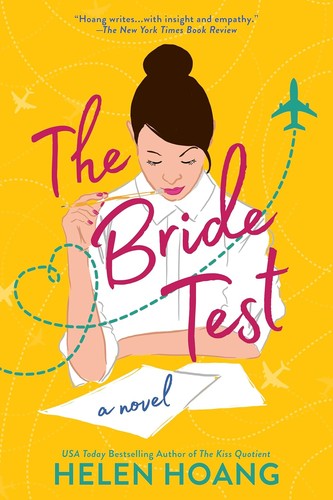
The Bride Test is the second novel in Helen Hoang's Kiss Quotient series.
Helen Hoang · 2019 · 6h 20m
Full summary and key takeaways →The 12 questions
- 1.
Khai believes he is incapable of love. The novel eventually proves him wrong — but does it do so in a way that respects the real experience of people who struggle with emotional recognition, or does it veer toward the 'love fixes everything' trope?
- 2.
Esme agrees to an arranged situation for a summer in hopes of securing a better life. Is that pragmatic, desperate, or both? How does the novel frame her choice?
- 3.
Khai's mother arranges this whole scheme without fully consulting him. Is she presented sympathetically? Should she be?
- 4.
How does Esme's class background shape the way she reads Khai and her situation? What assumptions does she make that come directly from her circumstances?
- 5.
The novel suggests that Khai genuinely doesn't recognize his own emotions because of how his brain works. How do you distinguish between emotional unavailability and a neurological difference? Does the book draw that line well?
- 6.
Esme has a daughter she is trying to build a life for. At what point does her story stop being about the romance and become something broader?
- 7.
Compared to The Kiss Quotient — if you've read it — how does this book handle neurodivergent romance differently? Is the emotional register the same?
- 8.
The Vietnamese-American family dynamics are central. Did they feel authentic to you, or did they feel like backdrop?
- 9.
Is the 'mismatch in perceived feelings' plot device used thoughtfully here, or does it still feel like manufactured conflict?
- 10.
What does the title mean by the end? Is it ironic, sincere, or complicated?
- 11.
Who in the novel changes more: Khai or Esme? Is it an equal transformation?
- 12.
Which scene in the book did the most emotional work for you, and why?
How to run the discussion
- Pick six to eight, not all of them. An hour of real discussion covers fewer questions than anyone expects, and racing the list is what makes a book club feel like homework.
- Open with what people noticed, not what they concluded. Asking for a verdict first hardens opinions before anyone has heard each other.
- Let the disagreement run. The questions below that split a room are the ones worth the time; the ones everyone answers the same way can be skipped.
- Ask the quiet person a specific question. A direct, narrow question is far easier to answer than an open invitation to contribute.
Themes worth steering toward
If the conversation stalls, these are the threads that usually restart it.
Common questions
What are good book club questions for The Bride Test?
Here are 12 book club questions for The Bride Test by Helen Hoang, ordered to open easily and end somewhere worth arguing about. The strongest openers ask what each reader noticed rather than what they concluded, and the discussion usually turns on neurodiversity and connection, immigration and belonging, class and aspiration.
How long should a book club discussion of The Bride Test last?
Most groups run 60 to 90 minutes of actual discussion. That is roughly six to eight questions, not all of them, so pick the ones that suit your group rather than working down the list in order.
What are the main themes in The Bride Test?
Neurodiversity and connection, Immigration and belonging, Class and aspiration, Love and worthiness, Family loyalty. Those are the threads most likely to divide a room, which makes them the useful places to steer a discussion that has gone quiet.
Picking the next one? See books like The Bride Test or questions for other book club picks.
