Religion & Spirituality · Book club
The Case for God book club questions
Here are 12 book club questions for The Case for God by Karen Armstrong, ordered to open easily and end somewhere worth arguing about. Copy them, print them, or bring them up one at a time.
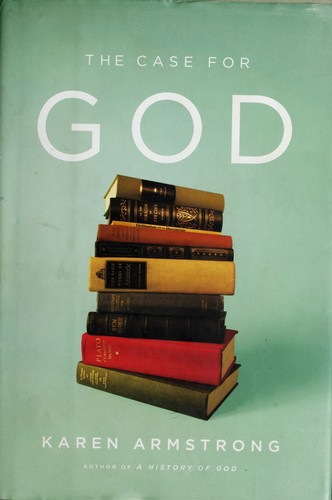
The Case for God is Karen Armstrong's argument that the new atheism misunderstands what sophisticated religious believers in most traditions have actually claimed about God.
Karen Armstrong · 2009 · 7h 15m
Full summary and key takeaways →The 12 questions
- 1.
Armstrong argues the new atheists are attacking a form of religion that sophisticated theologians have always rejected. Does this argument feel like a rescue of real religion, or a retreat to an unfalsifiable position?
- 2.
Have you encountered the apophatic tradition — the idea that nothing can be said positively about God — before? Does it seem like genuine religious insight or like philosophical evasion?
- 3.
Armstrong's distinction between logos and mythos is central. Do you think these are genuinely separate modes of knowing, or is one always reducible to the other?
- 4.
Many ordinary believers hold more literal views than the mystics Armstrong champions. Does her argument apply to them, or only to a religious elite?
- 5.
What would it mean to treat religion primarily as a practice rather than a set of beliefs? Does that description fit any religious community you've observed?
- 6.
Armstrong claims religious ritual can transform the practitioner, even without metaphysical claims. Is transformation through practice a sufficient account of what religion is for?
- 7.
If God is truly beyond all concepts, what is the point of theology? What is the point of liturgy?
- 8.
The argument that literalism is a modern distortion implies there is a better, more authentic version of religion. Who gets to say which version is authentic?
- 9.
Armstrong suggests secular humanism inherited its moral seriousness from religious traditions. Do you find that genealogy persuasive?
- 10.
Christopher Hitchens would argue that even a non-propositional God has done harm through the institutions and political power of religion. Does Armstrong's argument address that?
- 11.
Have you ever experienced something that felt genuinely beyond language — in nature, music, grief, or love? Did it feel at all connected to what the mystics describe?
- 12.
Armstrong is both a former nun and a skeptic of organized religion. Does her particular biographical position strengthen or weaken her authority on this subject for you?
How to run the discussion
- Pick six to eight, not all of them. An hour of real discussion covers fewer questions than anyone expects, and racing the list is what makes a book club feel like homework.
- Open with what people noticed, not what they concluded. Asking for a verdict first hardens opinions before anyone has heard each other.
- Let the disagreement run. The questions below that split a room are the ones worth the time; the ones everyone answers the same way can be skipped.
- Ask the quiet person a specific question. A direct, narrow question is far easier to answer than an open invitation to contribute.
Themes worth steering toward
If the conversation stalls, these are the threads that usually restart it.
Common questions
What are good book club questions for The Case for God?
Here are 12 book club questions for The Case for God by Karen Armstrong, ordered to open easily and end somewhere worth arguing about. The strongest openers ask what each reader noticed rather than what they concluded, and the discussion usually turns on religion, theology, mysticism.
How long should a book club discussion of The Case for God last?
Most groups run 60 to 90 minutes of actual discussion. That is roughly six to eight questions, not all of them, so pick the ones that suit your group rather than working down the list in order.
What are the main themes in The Case for God?
Religion, Theology, Mysticism, Secularism, Apophatic tradition. Those are the threads most likely to divide a room, which makes them the useful places to steer a discussion that has gone quiet.
Picking the next one? See books like The Case for God or questions for other book club picks.
