Literary fiction · Book club
The Catcher in the Rye book club questions
Here are 12 book club questions for The Catcher in the Rye by J. D. Salinger, ordered to open easily and end somewhere worth arguing about. Copy them, print them, or bring them up one at a time.
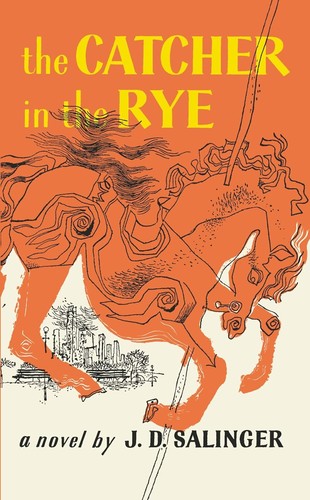
Holden Caulfield has just been expelled from Pencey Prep — his fourth school — and is not ready to go home and tell his parents.
J. D. Salinger · 1951 · 5h 0m
Full summary and key takeaways →The 12 questions
- 1.
Holden calls almost everyone he meets a phony. Is his diagnosis ever accurate? What would 'not phony' look like to him, and does the novel show us anyone who qualifies?
- 2.
Allie's death happened two years before the story's events. Holden never mourns him in any conventional way. How does grief manifest in his behavior across the novel?
- 3.
Holden is narrating from a psychiatric facility. Does knowing that change how you read his account? Is he a reliable narrator?
- 4.
Phoebe is ten and the only person who fully engages with Holden. Why does she reach him when adults don't? What does that say about what Holden actually needs?
- 5.
The catcher fantasy — protecting children from the fall into adulthood — is Holden's own idea of his purpose. Is it heroic, delusional, or something more poignant than either?
- 6.
Holden's response to James Castle, the boy who jumped out of a window rather than take back what he said — is that admiration? Is it a death wish? What is Holden identifying with?
- 7.
The novel has been banned repeatedly, most often for language and sexuality. Does reading it with that history in mind affect what you think it's actually about?
- 8.
First-time teenage readers and adult rereaders often have very different responses to Holden. What accounts for that shift? What do you see now that you might have missed earlier?
- 9.
The ending is deliberately inconclusive — Holden doesn't know what he'll say when school comes around. Does that feel right, or does the novel owe you more resolution?
- 10.
Salinger never allowed Catcher to be adapted into a film. Does that restraint fit the book's themes? What would a film version have to do to not betray it?
- 11.
Is Holden lonely, or is he choosing isolation? Does the novel distinguish between these?
- 12.
The novel is set in 1949 New York. How much of Holden's experience feels specific to that postwar moment, and how much feels universal to a certain kind of adolescent mind?
How to run the discussion
- Pick six to eight, not all of them. An hour of real discussion covers fewer questions than anyone expects, and racing the list is what makes a book club feel like homework.
- Open with what people noticed, not what they concluded. Asking for a verdict first hardens opinions before anyone has heard each other.
- Let the disagreement run. The questions below that split a room are the ones worth the time; the ones everyone answers the same way can be skipped.
- Ask the quiet person a specific question. A direct, narrow question is far easier to answer than an open invitation to contribute.
Themes worth steering toward
If the conversation stalls, these are the threads that usually restart it.
Common questions
What are good book club questions for The Catcher in the Rye?
Here are 12 book club questions for The Catcher in the Rye by J. D. Salinger, ordered to open easily and end somewhere worth arguing about. The strongest openers ask what each reader noticed rather than what they concluded, and the discussion usually turns on adolescent alienation, authenticity and phoniness, grief and loss.
How long should a book club discussion of The Catcher in the Rye last?
Most groups run 60 to 90 minutes of actual discussion. That is roughly six to eight questions, not all of them, so pick the ones that suit your group rather than working down the list in order.
What are the main themes in The Catcher in the Rye?
Adolescent alienation, Authenticity and phoniness, Grief and loss, Identity and adulthood. Those are the threads most likely to divide a room, which makes them the useful places to steer a discussion that has gone quiet.
Picking the next one? See books like The Catcher in the Rye or questions for other book club picks.
