Philosophy · Book club
The City of God book club questions
Here are 12 book club questions for The City of God by Saint Augustine, ordered to open easily and end somewhere worth arguing about. Copy them, print them, or bring them up one at a time.
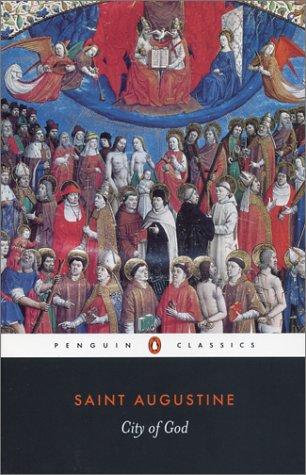
The City of God was written between 413 and 426 CE, prompted by the sack of Rome by the Visigoths in 410.
Saint Augustine · 1610 · 21h 30m
Full summary and key takeaways →The 12 questions
- 1.
Augustine argues that no political order should be identified with the Kingdom of God. Where do you see that confusion being made today — by any political tradition?
- 2.
His definition of justice requires that God be given what is owed — meaning a society without proper theology cannot be truly just. Can you construct a secular account of justice that answers his challenge?
- 3.
The two cities are defined by loves, not by institutions. By Augustine's criterion, which city do you think you mostly inhabit?
- 4.
Augustine distinguishes Rome's earthly peace — real but limited — from true peace. Is that distinction practically useful, or does it make earthly politics seem inherently second-rate?
- 5.
The book was triggered by a military disaster that prompted blame-shifting toward Christians. How does that polemical origin shape what Augustine chooses to argue and what he leaves out?
- 6.
Books 11–22 trace a philosophy of history from creation to Last Judgment. What assumptions about history — that it has a direction, that suffering is providential — does that framework require, and which do you share?
- 7.
Augustine is harshly critical of Roman religion but respectful of Platonic philosophy. What is it about Platonism that he finds compatible with Christianity, and where does he part ways?
- 8.
The City of God is nearly 1,100 pages. If you read selections, which sections did you find most alive, and which most dated?
- 9.
Augustine says Christians can serve in armies and hold public office even in an unjust state. Does his argument for civic participation hold, or does it ask too much accommodation of imperfect institutions?
- 10.
How does Augustine's response to Rome's fall compare to how people today respond when an institution they trusted collapses?
- 11.
The book essentially argues that Christianity is not responsible for Rome's decline. Is that the kind of argument that can actually persuade critics, or does it only reinforce existing positions?
- 12.
What would it mean to live, in Augustine's terms, as a 'pilgrim' in the earthly city — participating fully but without ultimate attachment?
How to run the discussion
- Pick six to eight, not all of them. An hour of real discussion covers fewer questions than anyone expects, and racing the list is what makes a book club feel like homework.
- Open with what people noticed, not what they concluded. Asking for a verdict first hardens opinions before anyone has heard each other.
- Let the disagreement run. The questions below that split a room are the ones worth the time; the ones everyone answers the same way can be skipped.
- Ask the quiet person a specific question. A direct, narrow question is far easier to answer than an open invitation to contribute.
Themes worth steering toward
If the conversation stalls, these are the threads that usually restart it.
Common questions
What are good book club questions for The City of God?
Here are 12 book club questions for The City of God by Saint Augustine, ordered to open easily and end somewhere worth arguing about. The strongest openers ask what each reader noticed rather than what they concluded, and the discussion usually turns on political theology, history and providence, justice and empire.
How long should a book club discussion of The City of God last?
Most groups run 60 to 90 minutes of actual discussion. That is roughly six to eight questions, not all of them, so pick the ones that suit your group rather than working down the list in order.
What are the main themes in The City of God?
Political theology, History and providence, Justice and empire, Two cities, Christian eschatology. Those are the threads most likely to divide a room, which makes them the useful places to steer a discussion that has gone quiet.
Picking the next one? See books like The City of God or questions for other book club picks.
