History · Book club
The Civil War: A Narrative book club questions
Here are 12 book club questions for The Civil War: A Narrative by Shelby Foote, ordered to open easily and end somewhere worth arguing about. Copy them, print them, or bring them up one at a time.
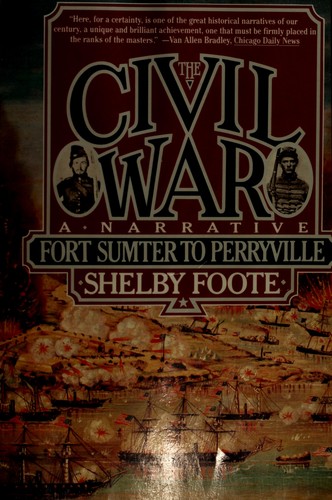
Shelby Foote spent twenty years writing this three-volume, 1.5-million-word account of the American Civil War, and the result is one of the most ambitious narrative history projects ever attempted by a single author.
Shelby Foote · 1958 · 100h 0m
Full summary and key takeaways →The 12 questions
- 1.
Foote has been criticized for inadequately engaging with slavery as the war's central cause. Reading his narrative, where do you see this evasion, and does it damage the history's credibility?
- 2.
He gives considerable sympathy to Confederate generals. Is it possible to separate admiration for military craft from moral judgment about what cause that craft served?
- 3.
The work took twenty years to complete and required Foote to live inside the war's details for longer than the war itself lasted. What does that kind of sustained attention produce that a shorter project cannot?
- 4.
Grant's reputation collapsed after his presidency and was only rehabilitated in the twentieth century. Does Foote's portrait of him as a military genius change how you think about historical reputation?
- 5.
The war's outcome was far from inevitable. At which moments in the narrative does the Confederate cause seem closest to viability, and what would have had to change?
- 6.
Foote was a novelist who turned to history. How does his narrative read differently from academic military history you may have encountered?
- 7.
Lee is often credited with prolonging the war through his battlefield brilliance. Is that a compliment, given the cost in lives?
- 8.
How does the war look different when narrated from the inside — through diaries and letters — versus from the strategic altitude Foote sometimes adopts?
- 9.
The trilogy ends with Lincoln's assassination. How does Foote frame this ending, and does it feel like a conclusion or an opening onto something unresolved?
- 10.
What does the Civil War explain about American political culture that is still operating today?
- 11.
Foote wrote primarily from written records and refused to impose a modern moral framework. Is that a virtue in a historian or an evasion?
- 12.
The scale of this project — three volumes, 1.5 million words — is rarely attempted today. What does that scale allow that a single-volume history cannot?
How to run the discussion
- Pick six to eight, not all of them. An hour of real discussion covers fewer questions than anyone expects, and racing the list is what makes a book club feel like homework.
- Open with what people noticed, not what they concluded. Asking for a verdict first hardens opinions before anyone has heard each other.
- Let the disagreement run. The questions below that split a room are the ones worth the time; the ones everyone answers the same way can be skipped.
- Ask the quiet person a specific question. A direct, narrow question is far easier to answer than an open invitation to contribute.
Themes worth steering toward
If the conversation stalls, these are the threads that usually restart it.
Common questions
What are good book club questions for The Civil War: A Narrative?
Here are 12 book club questions for The Civil War: A Narrative by Shelby Foote, ordered to open easily and end somewhere worth arguing about. The strongest openers ask what each reader noticed rather than what they concluded, and the discussion usually turns on american civil war, military history, leadership.
How long should a book club discussion of The Civil War: A Narrative last?
Most groups run 60 to 90 minutes of actual discussion. That is roughly six to eight questions, not all of them, so pick the ones that suit your group rather than working down the list in order.
What are the main themes in The Civil War: A Narrative?
American Civil War, Military history, Leadership, National identity, Political conflict. Those are the threads most likely to divide a room, which makes them the useful places to steer a discussion that has gone quiet.
Picking the next one? See books like The Civil War: A Narrative or questions for other book club picks.
