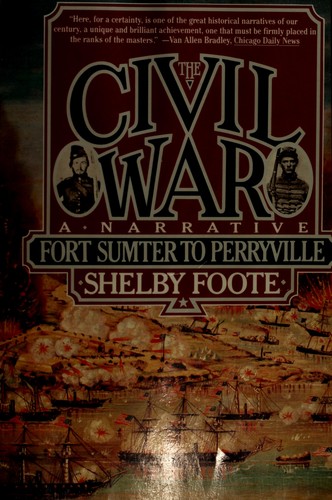
The Civil War: A Narrative by Shelby Foote is a 1958 history book about american civil war, military history, leadership. The Civil War was not a series of discrete battles but a continuous, grinding attrition in which logistics, morale, and political will shaped outcomes as much as battlefield tactics.
Summary
Shelby Foote spent twenty years writing this three-volume, 1.5-million-word account of the American Civil War, and the result is one of the most ambitious narrative history projects ever attempted by a single author. The work covers the conflict from Fort Sumter in 1861 through the assassination of Lincoln in 1865, drawing on original documents, memoirs, and battle reports to create something closer to a novel in texture than a conventional military history.
Foote wrote as a Mississippian who was deeply absorbed in the war's human dimensions. He gives equal weight to both sides, tracing the war through individual personalities rather than through abstraction. Ulysses Grant, William Sherman, Jefferson Davis, Robert E. Lee, and dozens of lesser-known officers emerge as full characters with consistent voices across all three volumes. The battle sequences — Shiloh, Chancellorsville, Gettysburg, Vicksburg, the Wilderness — are rendered with a clarity that makes the chaos of nineteenth-century combat comprehensible without reducing it to chess-move simplicity.
The work has been criticized by academic historians for occasionally soft-pedaling the centrality of slavery to the Confederate cause. Foote was a novelist before he was a historian, and that lineage shows in his tendency to pursue dramatic coherence over ideological argument. His sympathies are complicated — he admired Confederate valor while acknowledging the war's moral outcome — and readers who want a more direct engagement with slavery and race may find him evasive. That said, no other single work conveys the full scale of the war's human cost with comparable immediacy.
The trilogy's longevity owes a great deal to Ken Burns's 1990 PBS documentary, in which Foote appeared extensively and introduced a generation of Americans to his prose. But the books existed long before that and reward readers who approach them as literature. They are a reminder that historical narrative, done at this level of craft, can make a dead century feel immediate.
Talk to The Civil War: A Narrative like its author wrote you back.
Get the ideas that fit your life — not generic summaries.
- Chat with the book
- Audiobook-style main ideas
- Adapts to your life and goals
- Helps you take action
Key takeaways
- 1.
The Civil War was not a series of discrete battles but a continuous, grinding attrition in which logistics, morale, and political will shaped outcomes as much as battlefield tactics.
- 2.
Robert E. Lee and Ulysses Grant emerge as opposing archetypes: Lee's aggressive genius and limited resources against Grant's relentless operational pressure and superior supply.
- 3.
Jefferson Davis's leadership failures — his preference for micromanagement, his personal feuds with subordinates, his inability to unite Confederate political factions — were as damaging to the South as any Union military victory.
- 4.
Civilian morale on both sides collapsed at different rates. The South's broke first, not primarily from military defeat but from economic exhaustion and the failure of Confederate nationalism to outlast the suffering.
- 5.
The war's scale was unlike anything Americans had experienced. The 620,000 dead exceeded U.S. losses in all other wars combined up to that point, and the numbers were reached through battlefield medicine that was barely past the amputation stage.
- 6.
Foote treats the common soldier on both sides with equal dignity. Their letters, diaries, and testimony give the trilogy its human texture and undercut any attempt to reduce the conflict to abstract cause.
- 7.
The Confederacy's best chance at international recognition — crucial for survival — died at Antietam, which gave Lincoln the political cover to issue the Emancipation Proclamation and reframe the war as a moral cause no European power could openly oppose.
- 8.
Sherman's March demonstrated a strategic concept that would define twentieth-century warfare: destroy not just the enemy army but the economic and psychological infrastructure that sustains it.
Discussion questions
Use these on your own, with a book club, or as chat starters in Superbook. Book club version, ready to copy or print →
- 1.
Foote has been criticized for inadequately engaging with slavery as the war's central cause. Reading his narrative, where do you see this evasion, and does it damage the history's credibility?
- 2.
He gives considerable sympathy to Confederate generals. Is it possible to separate admiration for military craft from moral judgment about what cause that craft served?
- 3.
The work took twenty years to complete and required Foote to live inside the war's details for longer than the war itself lasted. What does that kind of sustained attention produce that a shorter project cannot?
- 4.
Grant's reputation collapsed after his presidency and was only rehabilitated in the twentieth century. Does Foote's portrait of him as a military genius change how you think about historical reputation?
- 5.
The war's outcome was far from inevitable. At which moments in the narrative does the Confederate cause seem closest to viability, and what would have had to change?
- 6.
Foote was a novelist who turned to history. How does his narrative read differently from academic military history you may have encountered?
- 7.
Lee is often credited with prolonging the war through his battlefield brilliance. Is that a compliment, given the cost in lives?
- 8.
How does the war look different when narrated from the inside — through diaries and letters — versus from the strategic altitude Foote sometimes adopts?
- 9.
The trilogy ends with Lincoln's assassination. How does Foote frame this ending, and does it feel like a conclusion or an opening onto something unresolved?
- 10.
What does the Civil War explain about American political culture that is still operating today?
- 11.
Foote wrote primarily from written records and refused to impose a modern moral framework. Is that a virtue in a historian or an evasion?
- 12.
The scale of this project — three volumes, 1.5 million words — is rarely attempted today. What does that scale allow that a single-volume history cannot?
Themes
Frequently asked questions
-
Is The Civil War: A Narrative worth reading all three volumes?
For readers serious about the period, yes. Foote's narrative power is unlike anything else available on the subject. But it is a twenty-year commitment in reading time for some, and readers who want more explicit engagement with slavery and race should pair it with James McPherson's Battle Cry of Freedom.
-
How long does it take to read The Civil War: A Narrative?
The trilogy runs to roughly 1.5 million words. At average reading pace that is 80-100 hours across three volumes. Most readers spread it over months or years, reading it as a reference alongside other Civil War books.
-
Is Shelby Foote's history accurate?
Largely yes in its factual account of battles and movements, but Foote was not a credentialed historian and he downplays the centrality of slavery to the Confederate cause more than current scholarship supports. Read it for narrative power, but supplement with academic historians for fuller context.
-
Who should read The Civil War: A Narrative?
Readers who want to understand the war's human texture — who fought, how they felt, what the battles actually looked like — rather than just the strategic overview. It rewards readers who are willing to invest in long narrative history.
-
What is Shelby Foote's perspective on the Confederacy?
Foote was a Mississippian who admired Confederate military skill and treated Southern soldiers sympathetically without endorsing the political cause. His view is complicated and has attracted criticism from historians who argue it obscures the moral stakes of the war.
Similar books
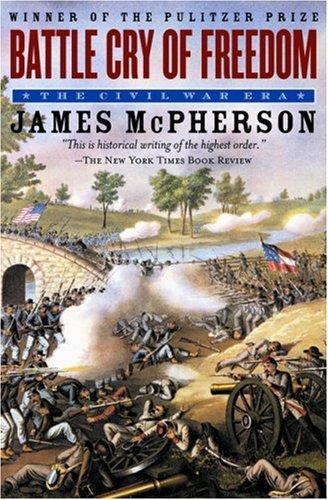
Battle Cry of Freedom: The Civil War Era
James M. McPherson
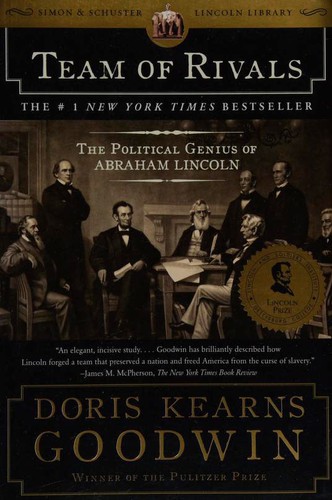
Team of Rivals: The Political Genius of Abraham Lincoln
Doris Kearns Goodwin
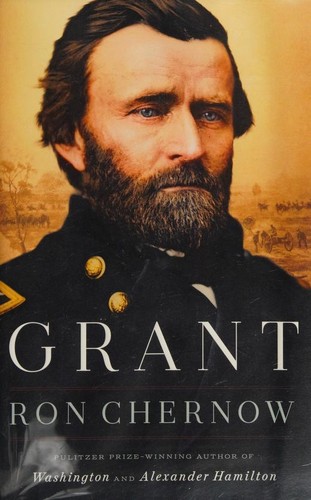
Grant
Ron Chernow
Washington: A Life
Ron Chernow
