Philosophy · Book club
The Clock of the Long Now book club questions
Here are 11 book club questions for The Clock of the Long Now by Stewart Brand, ordered to open easily and end somewhere worth arguing about. Copy them, print them, or bring them up one at a time.
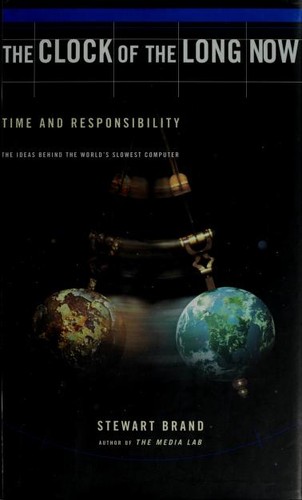
The Clock of the Long Now is Stewart Brand's case for thinking at a civilizational scale rather than a quarterly one.
Stewart Brand · 1999 · 4h 15m
Full summary and key takeaways →The 11 questions
- 1.
Brand's Pace Layers model suggests civilization depends on different layers changing at different rates. What happens in your own organization or community when a fast layer tries to override a slow one?
- 2.
The ten-thousand-year clock is a physical way of making long thinking tangible. Are there other artifacts or practices in your life that anchor you to a longer time horizon?
- 3.
He argues that digital infrastructure is uniquely fragile because of rapid obsolescence. What digital files or projects do you have that you expect to be accessible in twenty years?
- 4.
Brand wrote the book partly in response to Y2K panic. How does short-term crisis thinking interact with long-term responsibility in current issues you care about?
- 5.
What decisions made in the last fifty years do you think will most constrain the options available to people in the next hundred?
- 6.
He is relatively optimistic that civilization can think long when given the right prompts and institutions. Does that optimism seem warranted to you now?
- 7.
The book implies that some institutions — religions, universities — carry longer time horizons than corporations or governments. Is that still true? What institutions in your life think long?
- 8.
Brand distinguishes between leaving options open and making decisions. Is there a domain in your life where you're systematically foreclosing future options without realizing it?
- 9.
The Long Now Foundation uses 02024 rather than 2024 in its dates. That small typographic choice is meant to shift attention. Do you find it works, or does it feel like an affectation?
- 10.
What responsibilities, if any, do you feel toward people who will be alive in a hundred years? How does your answer compare to what you actually do?
- 11.
How does the Pace Layers model apply to your own field of work? Which layer does your work primarily operate in, and where is the friction with adjacent layers?
How to run the discussion
- Pick six to eight, not all of them. An hour of real discussion covers fewer questions than anyone expects, and racing the list is what makes a book club feel like homework.
- Open with what people noticed, not what they concluded. Asking for a verdict first hardens opinions before anyone has heard each other.
- Let the disagreement run. The questions below that split a room are the ones worth the time; the ones everyone answers the same way can be skipped.
- Ask the quiet person a specific question. A direct, narrow question is far easier to answer than an open invitation to contribute.
Themes worth steering toward
If the conversation stalls, these are the threads that usually restart it.
Common questions
What are good book club questions for The Clock of the Long Now?
Here are 11 book club questions for The Clock of the Long Now by Stewart Brand, ordered to open easily and end somewhere worth arguing about. The strongest openers ask what each reader noticed rather than what they concluded, and the discussion usually turns on long-term thinking, civilization, technology.
How long should a book club discussion of The Clock of the Long Now last?
Most groups run 60 to 90 minutes of actual discussion. That is roughly six to eight questions, not all of them, so pick the ones that suit your group rather than working down the list in order.
What are the main themes in The Clock of the Long Now?
Long-term thinking, Civilization, Technology, Responsibility, Time. Those are the threads most likely to divide a room, which makes them the useful places to steer a discussion that has gone quiet.
Picking the next one? See books like The Clock of the Long Now or questions for other book club picks.
