Religion & Spirituality · Book club
The Cloud of Unknowing book club questions
Here are 12 book club questions for The Cloud of Unknowing by Anonymous, ordered to open easily and end somewhere worth arguing about. Copy them, print them, or bring them up one at a time.
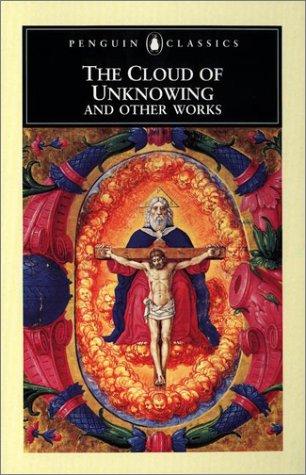
The Cloud of Unknowing is an anonymous English mystical treatise written in the latter half of the fourteenth century.
Anonymous · 1472 · 3h 30m
Full summary and key takeaways →The 12 questions
- 1.
The Cloud argues that God is beyond all concepts and images. Does that claim feel like a loss — the removal of content — or a liberation? What would it mean to pray toward something entirely unknown?
- 2.
The author says every thought, even good thoughts about God, must be pushed aside into the cloud of forgetting. How does that instruction sit with traditions that emphasize Scripture, doctrine, and theological knowledge?
- 3.
He warns that this practice is not for everyone. What kind of person does he seem to think is ready for it — and what kind is not?
- 4.
The 'naked intent' is described as a simple, undivided act of love. Is that psychologically possible to sustain — or is the will inherently complex and divided?
- 5.
The Cloud shares something with Buddhist meditation practice in its emphasis on releasing thought rather than directing it. What is similar, and what is irreducibly different?
- 6.
The author is anonymous, and we know almost nothing about who wrote it. Does that anonymity affect how you read the book — does it matter whether the author had personal authority?
- 7.
The text was written for a specific disciple, in a specific relationship of guidance. Can it be meaningfully read by someone without that kind of ongoing relationship?
- 8.
The Cloud describes prayer that is wordless and imageless. What does that do to the communal and liturgical dimensions of religion — does it require a private practice alongside a public one?
- 9.
The author distinguishes active, mixed, and contemplative life. Where does ordinary modern life fall — and does the framework help you think about the different modes of your own week?
- 10.
Thomas Merton and others have read The Cloud as relevant to modern life. What would need to change in how you structure your time and attention to make even a modest version of this practice possible?
- 11.
The Cloud uses everyday Middle English rather than formal Latin — deliberately accessible for its era. What does the choice to write in the vernacular suggest about what the author thought contemplative prayer was for?
- 12.
What does it mean to 'forget' yourself in the sense the author describes — not self-destruction but self-transcendence? Is there a secular equivalent of that movement?
How to run the discussion
- Pick six to eight, not all of them. An hour of real discussion covers fewer questions than anyone expects, and racing the list is what makes a book club feel like homework.
- Open with what people noticed, not what they concluded. Asking for a verdict first hardens opinions before anyone has heard each other.
- Let the disagreement run. The questions below that split a room are the ones worth the time; the ones everyone answers the same way can be skipped.
- Ask the quiet person a specific question. A direct, narrow question is far easier to answer than an open invitation to contribute.
Themes worth steering toward
If the conversation stalls, these are the threads that usually restart it.
Common questions
What are good book club questions for The Cloud of Unknowing?
Here are 12 book club questions for The Cloud of Unknowing by Anonymous, ordered to open easily and end somewhere worth arguing about. The strongest openers ask what each reader noticed rather than what they concluded, and the discussion usually turns on contemplation, apophatic theology, prayer.
How long should a book club discussion of The Cloud of Unknowing last?
Most groups run 60 to 90 minutes of actual discussion. That is roughly six to eight questions, not all of them, so pick the ones that suit your group rather than working down the list in order.
What are the main themes in The Cloud of Unknowing?
Contemplation, Apophatic theology, Prayer, Mystical union, Self-surrender. Those are the threads most likely to divide a room, which makes them the useful places to steer a discussion that has gone quiet.
Picking the next one? See books like The Cloud of Unknowing or questions for other book club picks.
