Science · Book club
The Code Breaker: Jennifer Doudna, Gene Editing, and the Future of the Human Race book club questions
Here are 13 book club questions for The Code Breaker: Jennifer Doudna, Gene Editing, and the Future of the Human Race by Walter Isaacson, ordered to open easily and end somewhere worth arguing about. Copy them, print them, or bring them up one at a time.
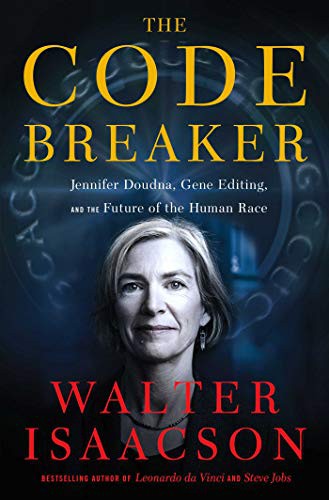
The Code Breaker is Walter Isaacson's account of how CRISPR gene-editing technology was discovered and what it means for the future of medicine and humanity.
Walter Isaacson · 2021 · 8h 40m
Full summary and key takeaways →The 13 questions
- 1.
Isaacson presents the CRISPR patent dispute as a cautionary tale about how credit gets assigned in science. Does the Nobel Prize system seem adequate for discoveries made in competitive multi-lab environments?
- 2.
Doudna called a temporary moratorium on certain CRISPR research in 2015. Was that the right move? What responsibilities do scientists have to slow down their own fields?
- 3.
He Jiankui edited embryos without adequate consent or oversight. Where does moral responsibility lie in that case — with He, with his funders, with his government, or with the scientific community that created the tool?
- 4.
The distinction between therapeutic and enhancement editing is philosophically contested. Where would you personally draw that line, and how confident are you in the distinction?
- 5.
Isaacson follows a number of female scientists, including Doudna, who faced institutional skepticism early in their careers. What has and hasn't changed in science culture since then?
- 6.
CRISPR therapies for sickle cell disease now exist. They cost over two million dollars per patient. How should society think about distributing access to gene therapies?
- 7.
If germline editing became safe and affordable, would you want your potential children to be protected from heritable genetic diseases? Where does that reasoning lead?
- 8.
Isaacson writes approvingly about the competitive drive behind the CRISPR race. Is intense competition a good engine for science, or does it produce distortions we should be more worried about?
- 9.
The book suggests that CRISPR will eventually allow enhancement beyond disease prevention. Does that prospect excite, concern, or bore you, and why?
- 10.
Do you think international governance of germline editing is possible, or will national differences in values and regulation make global coordination unlikely?
- 11.
Isaacson has written biographies of Einstein, Jobs, and da Vinci. How does framing a living scientist this way affect how the science gets presented?
- 12.
What do you think the public misunderstands most about CRISPR that this book tries to correct?
- 13.
If you could change one thing about how science communicates its findings and risks to the public, what would it be?
How to run the discussion
- Pick six to eight, not all of them. An hour of real discussion covers fewer questions than anyone expects, and racing the list is what makes a book club feel like homework.
- Open with what people noticed, not what they concluded. Asking for a verdict first hardens opinions before anyone has heard each other.
- Let the disagreement run. The questions below that split a room are the ones worth the time; the ones everyone answers the same way can be skipped.
- Ask the quiet person a specific question. A direct, narrow question is far easier to answer than an open invitation to contribute.
Themes worth steering toward
If the conversation stalls, these are the threads that usually restart it.
Common questions
What are good book club questions for The Code Breaker: Jennifer Doudna, Gene Editing, and the Future of the Human Race?
Here are 13 book club questions for The Code Breaker: Jennifer Doudna, Gene Editing, and the Future of the Human Race by Walter Isaacson, ordered to open easily and end somewhere worth arguing about. The strongest openers ask what each reader noticed rather than what they concluded, and the discussion usually turns on gene editing, crispr, scientific competition.
How long should a book club discussion of The Code Breaker: Jennifer Doudna, Gene Editing, and the Future of the Human Race last?
Most groups run 60 to 90 minutes of actual discussion. That is roughly six to eight questions, not all of them, so pick the ones that suit your group rather than working down the list in order.
What are the main themes in The Code Breaker: Jennifer Doudna, Gene Editing, and the Future of the Human Race?
Gene editing, CRISPR, Scientific competition, Bioethics, Women in science. Those are the threads most likely to divide a room, which makes them the useful places to steer a discussion that has gone quiet.
Picking the next one? See books like The Code Breaker: Jennifer Doudna, Gene Editing, and the Future of the Human Race or questions for other book club picks.
