The Code Breaker: Jennifer Doudna, Gene Editing, and the Future of the Human Race by Walter Isaacson is a 2021 science book about gene editing, crispr, scientific competition. CRISPR-Cas9 is a gene-editing tool derived from a bacterial immune system that allows scientists to cut and rewrite DNA sequences with unprecedented precision.
Summary
The Code Breaker is Walter Isaacson's account of how CRISPR gene-editing technology was discovered and what it means for the future of medicine and humanity. The book centers on Jennifer Doudna, a Berkeley biochemist who shared the 2020 Nobel Prize in Chemistry for her work developing CRISPR-Cas9 into a precise gene-editing tool. Isaacson uses her career as the spine of a larger story about how science actually works: through competition, collaboration, personal ambition, and occasional disputes over credit.
CRISPR began as a biological curiosity — a defense mechanism used by bacteria to store and recognize the DNA sequences of viruses that had attacked them. Doudna and her collaborators recognized that the same molecular machinery could be repurposed to cut and edit DNA in any organism with surgical precision. The discovery touched off an extraordinary race among laboratories in Berkeley, Cambridge, and Boston, culminating in a bitter patent dispute between Doudna's team and Feng Zhang's lab at the Broad Institute — a dispute that is still playing out in courts.
Isaacson is a skilled popularizer and the molecular biology never becomes impenetrable. The book is at its best tracking the human dynamics: the competitive friendships, the politics of credit, the gender dynamics Doudna navigated in a male-dominated field. It is less rigorous when it comes to the ethics. The final sections on germline editing — permanently heritable changes to the human genome — are thoughtful but somewhat superficial, particularly given the gravity of what is being discussed.
The 2018 case of He Jiankui, the Chinese scientist who created the first CRISPR babies in an experiment widely condemned as reckless, sharpens the ethical questions Isaacson raises throughout. The book ends with a view of CRISPR as a technology that has already changed medicine and will continue to do so at a pace that governance has not kept up with. What gets made of it depends on decisions being made now, mostly by people who haven't fully thought them through.
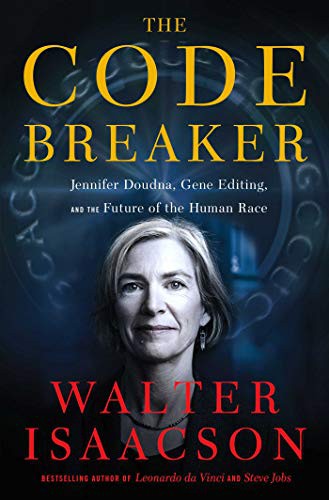
Talk to The Code Breaker: Jennifer Doudna, Gene Editing, and the Future of the Human Race like its author wrote you back.
Get the ideas that fit your life — not generic summaries.
- Chat with the book
- Audiobook-style main ideas
- Adapts to your life and goals
- Helps you take action
Key takeaways
- 1.
CRISPR-Cas9 is a gene-editing tool derived from a bacterial immune system that allows scientists to cut and rewrite DNA sequences with unprecedented precision.
- 2.
Jennifer Doudna and Emmanuelle Charpentier shared the 2020 Nobel Prize, but the patent dispute with Feng Zhang's team shows how contested scientific credit can be even in collaborative fields.
- 3.
Germline editing — changes to eggs, sperm, or embryos — produces heritable modifications that would affect not just the individual but all their descendants.
- 4.
He Jiankui's 2018 creation of CRISPR-edited babies showed that governance of the technology had not kept pace with its development, and that rogue applications were a real rather than hypothetical risk.
- 5.
CRISPR has rapidly moved into clinical trials for sickle cell disease, certain cancers, and inherited blindness — conditions where the gene responsible is well understood.
- 6.
Science moves through competition and secrecy as much as through open collaboration. The CRISPR race was marked by strategic publication timing, patent filings, and personal rivalries.
- 7.
Doudna's career illustrates ongoing structural barriers for women in science: from the childhood dismissal she experienced to the dynamics of a field where credit often flows to men.
- 8.
The line between therapeutic editing (fixing disease genes) and enhancement editing (improving traits beyond normal function) is philosophically blurry and will not hold indefinitely.
- 9.
The technology is cheap and accessible enough that the relevant question is no longer whether it will be used, but by whom and under what oversight.
Discussion questions
Use these on your own, with a book club, or as chat starters in Superbook. Book club version, ready to copy or print →
- 1.
Isaacson presents the CRISPR patent dispute as a cautionary tale about how credit gets assigned in science. Does the Nobel Prize system seem adequate for discoveries made in competitive multi-lab environments?
- 2.
Doudna called a temporary moratorium on certain CRISPR research in 2015. Was that the right move? What responsibilities do scientists have to slow down their own fields?
- 3.
He Jiankui edited embryos without adequate consent or oversight. Where does moral responsibility lie in that case — with He, with his funders, with his government, or with the scientific community that created the tool?
- 4.
The distinction between therapeutic and enhancement editing is philosophically contested. Where would you personally draw that line, and how confident are you in the distinction?
- 5.
Isaacson follows a number of female scientists, including Doudna, who faced institutional skepticism early in their careers. What has and hasn't changed in science culture since then?
- 6.
CRISPR therapies for sickle cell disease now exist. They cost over two million dollars per patient. How should society think about distributing access to gene therapies?
- 7.
If germline editing became safe and affordable, would you want your potential children to be protected from heritable genetic diseases? Where does that reasoning lead?
- 8.
Isaacson writes approvingly about the competitive drive behind the CRISPR race. Is intense competition a good engine for science, or does it produce distortions we should be more worried about?
- 9.
The book suggests that CRISPR will eventually allow enhancement beyond disease prevention. Does that prospect excite, concern, or bore you, and why?
- 10.
Do you think international governance of germline editing is possible, or will national differences in values and regulation make global coordination unlikely?
- 11.
Isaacson has written biographies of Einstein, Jobs, and da Vinci. How does framing a living scientist this way affect how the science gets presented?
- 12.
What do you think the public misunderstands most about CRISPR that this book tries to correct?
- 13.
If you could change one thing about how science communicates its findings and risks to the public, what would it be?
Themes
Frequently asked questions
-
What is CRISPR and why does it matter?
CRISPR is a gene-editing technology derived from bacterial immune systems that allows scientists to make precise cuts and changes to DNA. It matters because it is cheap, accurate, and applicable to virtually any organism, opening possibilities for treating genetic diseases, developing new drugs, and — controversially — heritable modifications to humans.
-
Is The Code Breaker worth reading for non-scientists?
Yes. Isaacson is a skilled popularizer and the molecular biology is explained clearly. The human drama around the patent dispute, the Nobel Prize, and the ethics of gene editing is compelling even without a science background.
-
How long does it take to read The Code Breaker?
Around eight to nine hours. At 560 pages it is one of Isaacson's longer books. The science sections in the middle can slow the pace; the opening chapters and the ethical debates at the end read faster.
-
What is the book's view on editing human embryos?
Isaacson presents a range of scientific and ethical perspectives rather than a single conclusion. The general thrust is cautious support for therapeutic editing with strong opposition to premature germline editing, but the book is more descriptive than prescriptive.
-
How does this compare to A Crack in Creation by Jennifer Doudna herself?
A Crack in Creation is Doudna's own account and goes deeper on the science while being more direct about her ethical concerns. The Code Breaker is broader, more narrative, and more interested in the competitive dynamics and historical context. They complement each other.
Similar books
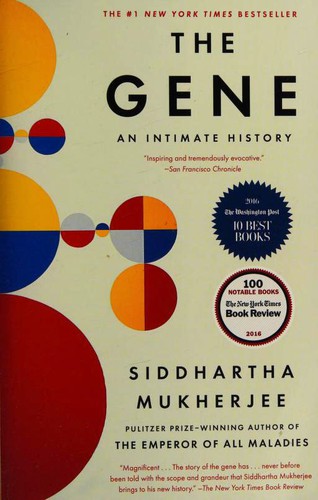
The Gene: An Intimate History
Siddhartha Mukherjee
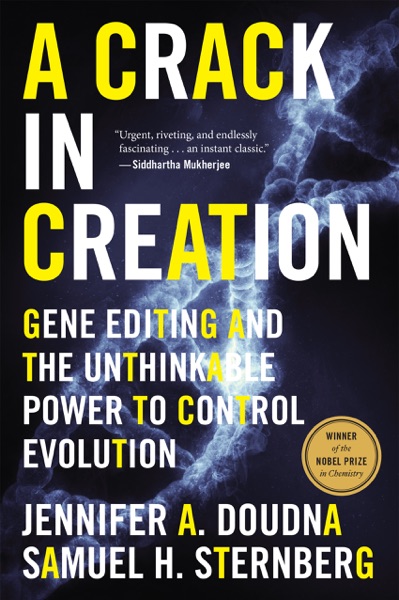
A Crack in Creation: Gene Editing and the Unthinkable Power to Control Evolution
Jennifer A. Doudna and Samuel H. Sternberg
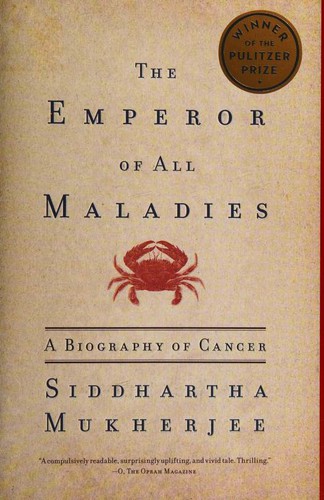
The Emperor of All Maladies: A Biography of Cancer
Siddhartha Mukherjee
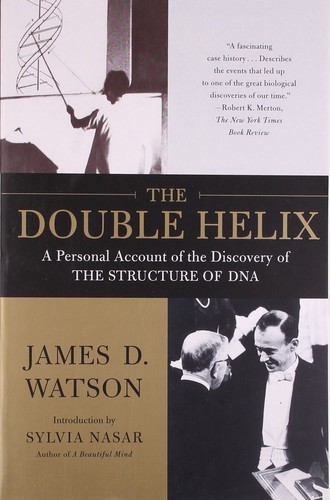
The Double Helix
James D. Watson
