History · Book club
The Cold War: A New History book club questions
Here are 12 book club questions for The Cold War: A New History by John Lewis Gaddis, ordered to open easily and end somewhere worth arguing about. Copy them, print them, or bring them up one at a time.
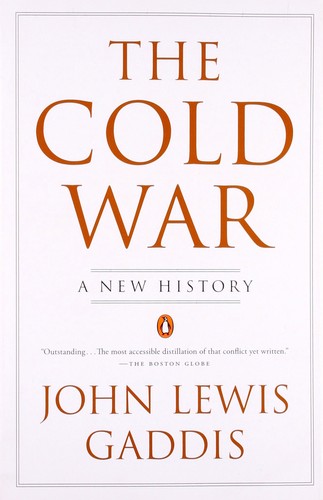
John Lewis Gaddis wrote The Cold War: A New History as a short, synthetic account of the entire superpower conflict, from the end of World War II through the Soviet collapse in 1991.
John Lewis Gaddis · 2005 · 5h 45m
Full summary and key takeaways →The 12 questions
- 1.
Gaddis argues that individual leaders mattered enormously to Cold War outcomes. Can you think of moments where a different personality in power would have led to a very different result?
- 2.
The book takes seriously the ideological convictions of both sides. Does that change how you think about the conflict compared to a purely strategic or material explanation?
- 3.
Containment was designed by Kennan as primarily political and economic. How did it become primarily military, and what were the consequences of that shift?
- 4.
Gaddis gives Reagan significant credit for the Soviet collapse. Do you find that persuasive, or does it overestimate the role of American policy?
- 5.
The Cuban Missile Crisis is presented as extremely dangerous, more so than either government admitted at the time. Does knowing how close it came change how you think about nuclear deterrence as a stable strategy?
- 6.
Both superpowers believed in universal missions. How does that shape the way Gaddis tells the story of the conflict compared to a purely realist account?
- 7.
The Soviet collapse came faster than almost anyone predicted. What does that suggest about the limits of intelligence and strategic forecasting?
- 8.
Gaddis ends without triumphalism about the American victory. What unresolved questions does he leave, and do they seem more or less urgent today?
- 9.
How does reading a short synthetic history like this compare to a detailed study of a single episode? What do you gain and lose from each approach?
- 10.
Gaddis suggests the Cold War's long peace was partly luck. How much does that conclusion unsettle your confidence in deterrence as a stable mechanism for preventing nuclear war?
- 11.
Which aspect of Cold War history that Gaddis covers did you know least about before reading, and what surprised you most?
- 12.
The Cold War shaped the global order we still live in. Which legacy of it do you think matters most for understanding current geopolitics?
How to run the discussion
- Pick six to eight, not all of them. An hour of real discussion covers fewer questions than anyone expects, and racing the list is what makes a book club feel like homework.
- Open with what people noticed, not what they concluded. Asking for a verdict first hardens opinions before anyone has heard each other.
- Let the disagreement run. The questions below that split a room are the ones worth the time; the ones everyone answers the same way can be skipped.
- Ask the quiet person a specific question. A direct, narrow question is far easier to answer than an open invitation to contribute.
Themes worth steering toward
If the conversation stalls, these are the threads that usually restart it.
Common questions
What are good book club questions for The Cold War: A New History?
Here are 12 book club questions for The Cold War: A New History by John Lewis Gaddis, ordered to open easily and end somewhere worth arguing about. The strongest openers ask what each reader noticed rather than what they concluded, and the discussion usually turns on cold war, nuclear deterrence, geopolitics.
How long should a book club discussion of The Cold War: A New History last?
Most groups run 60 to 90 minutes of actual discussion. That is roughly six to eight questions, not all of them, so pick the ones that suit your group rather than working down the list in order.
What are the main themes in The Cold War: A New History?
Cold War, Nuclear deterrence, Geopolitics, Ideology, Strategy. Those are the threads most likely to divide a room, which makes them the useful places to steer a discussion that has gone quiet.
Picking the next one? See books like The Cold War: A New History or questions for other book club picks.
