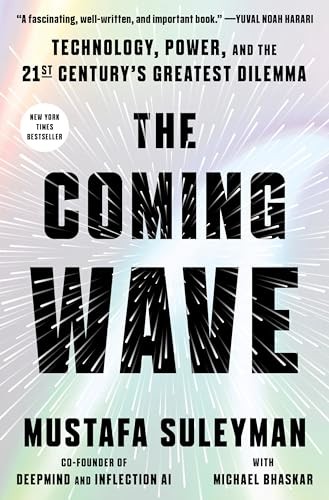
The Coming Wave by Mustafa Suleyman is a 2023 science book about artificial intelligence, technological risk, governance and regulation. AI and synthetic biology are 'general-purpose' technologies that can be directed toward almost any goal, making them structurally harder to contain than prior dangerous technologies like nuclear weapons.
Summary
The Coming Wave is written by Mustafa Suleyman, co-founder of DeepMind and CEO of Microsoft AI, who is as inside the AI development world as anyone writing seriously about its risks. The book's central argument is that AI and synthetic biology together constitute a wave of technological change unlike any before it — not because they're unprecedented in scale, but because of a particular property Suleyman calls the "containment problem." Every prior general-purpose technology, from printing to nuclear weapons, has eventually been contained through law, norms, or physical constraints. AI and biotech, he argues, may be the first technologies that can't be.
The "containment problem" is the book's governing concept. Advanced AI is becoming cheaper, faster, and more accessible. The same is true of gene-editing tools. Both are omni-use technologies — they can be directed at almost any goal. When a technology is simultaneously powerful and cheap enough to diffuse across nation-states and non-state actors, the traditional instruments of containment — export controls, arms treaties, regulatory agencies — become structurally insufficient. Suleyman is not predicting catastrophe; he is arguing that the default trajectory is toward catastrophe unless specific, serious choices are made.
Suleyman is honest about the tension in his own position. He spent over a decade building the very technology he now describes as existentially risky. The book doesn't resolve this contradiction so much as sit inside it. He argues that the developers themselves are in the best position to build in safeguards, but that developer good intentions aren't enough without government action, international coordination, and technical mechanisms for controlling AI capabilities — what he calls "brakes" on the wave.
The proposals in the last third are deliberately concrete: audit requirements, liability regimes, international treaties modeled on nuclear non-proliferation, technical kill switches, staged deployment. Whether readers find them adequate or naive depends on their starting assumptions. What the book does undeniably well is make the geopolitical and technical logic of the problem legible to a non-specialist reader — and it does so with the credibility of someone who has been building frontier AI for fifteen years.
Talk to The Coming Wave like its author wrote you back.
Get the ideas that fit your life — not generic summaries.
- Chat with the book
- Audiobook-style main ideas
- Adapts to your life and goals
- Helps you take action
Key takeaways
- 1.
AI and synthetic biology are 'general-purpose' technologies that can be directed toward almost any goal, making them structurally harder to contain than prior dangerous technologies like nuclear weapons.
- 2.
The containment problem: as these technologies become cheaper and more capable simultaneously, the instruments of control that worked for prior waves — treaties, export controls, regulation — become structurally insufficient.
- 3.
Synthetic biology poses risks comparable to AI: gene-editing tools are becoming accessible enough that the barrier to creating dangerous pathogens is dropping toward the capabilities of well-funded individuals or small groups.
- 4.
Nation-state competition is a core driver of the risk. Because AI capability confers military and economic advantage, any country that unilaterally slows down falls behind. This is a classic multipolar trap.
- 5.
Suleyman argues developers have a special responsibility — not because they are malicious but because they understand the capabilities better than regulators do, and early design choices lock in later outcomes.
- 6.
Technical 'brakes' — capability limits built into models, staged deployment, kill-switch mechanisms — are necessary complements to policy instruments. Neither alone is sufficient.
- 7.
The timeline matters: most serious risks are not distant science-fiction scenarios but extensions of systems already deployed or in late development.
- 8.
Solving the containment problem requires simultaneous progress on technical safety, national regulation, and international coordination — and all three currently lag far behind capability development.
Discussion questions
Use these on your own, with a book club, or as chat starters in Superbook. Book club version, ready to copy or print →
- 1.
Suleyman argues that AI and synthetic biology together constitute something categorically new. What, if anything, do you think distinguishes this wave from the introduction of electricity, nuclear weapons, or the internet?
- 2.
The containment problem assumes that technologies diffuse toward the cheapest and most capable actors. Do you think there are historical examples where this logic was successfully interrupted?
- 3.
Suleyman wrote this book while actively building frontier AI. How does that affect your reading of his risk assessment — does it make his concerns more credible or does it introduce blind spots?
- 4.
The book argues that national competition makes unilateral slowdown irrational. What international precedents for governing dangerous technologies seem most relevant — and what do they tell us about feasibility?
- 5.
Which of Suleyman's proposed 'brakes' — audit requirements, liability, staged deployment, international treaties, technical kill switches — do you think is most politically achievable in the near term?
- 6.
The book focuses primarily on AI and synthetic biology. Are there other technologies you'd add to this wave that carry similar containment problems?
- 7.
Suleyman is optimistic that AI will generate enormous benefits — in health, education, productivity. Do you think he adequately weighs these benefits against the risks he identifies?
- 8.
If AI capabilities continue to develop at current pace, what does a realistic 'good outcome' look like to you — and what would have to happen to get there?
- 9.
The book argues governments are structurally slow relative to commercial AI development. What would change that — and is Suleyman's expectation that governments can catch up realistic?
- 10.
Suleyman acknowledges a deep personal tension: he helped build the technology he warns about. How should we weigh the moral authority of insiders who raise alarms about their own industries?
- 11.
Does the book change how you think about the AI products you use or the companies that build them?
- 12.
The last chapters propose specific policy interventions. Pick one and argue for or against it based on what you know about how technology governance has worked historically.
Themes
Frequently asked questions
-
What is The Coming Wave about?
It argues that artificial intelligence and synthetic biology together represent a technological wave that will be uniquely difficult to contain — because both are becoming simultaneously more powerful and more accessible. Suleyman outlines the 'containment problem' and proposes a range of technical, regulatory, and international responses.
-
Is The Coming Wave worth reading if you've already read other AI risk books?
Yes, primarily because of Suleyman's insider position. He co-founded DeepMind and built frontier AI for fifteen years, which makes his risk analysis different in texture from academic or outside-observer accounts. His proposed solutions are also more operationally specific than most comparable books.
-
How does it compare to Life 3.0 or Superintelligence?
It's more current and more policy-focused. Bostrom's Superintelligence is a philosophical treatment of long-run risks; Tegmark's Life 3.0 is broader and more speculative. The Coming Wave is grounded in the actual state of AI development in 2023 and is more interested in near- and medium-term governance than in distant scenarios.
-
Who should read The Coming Wave?
Policy makers, technologists, and anyone trying to form a serious view on AI governance. It's also well-suited to general readers who want a credible account of why people inside AI development are genuinely concerned, not just people who've never built anything.
-
What is Suleyman's proposed solution to the containment problem?
He doesn't offer a single solution. He argues for a combination of technical brakes built into AI systems, national regulatory frameworks with real liability, and international coordination modeled loosely on nuclear non-proliferation treaties. He's explicit that no single instrument is sufficient on its own.
Similar books
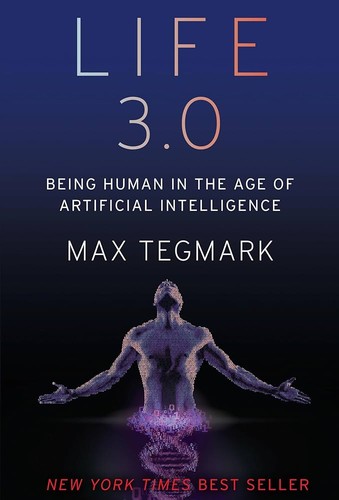
Life 3.0: Being Human in the Age of Artificial Intelligence
Max Tegmark
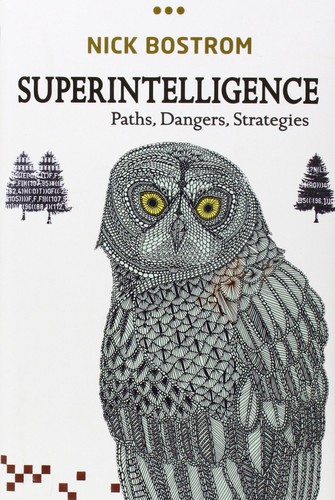
Superintelligence: Paths, Dangers, Strategies
Nick Bostrom

The Alignment Problem
Brian Christian
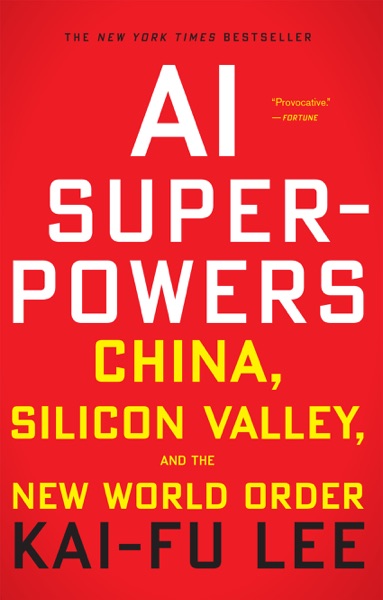
AI Superpowers
Kai-Fu Lee
