The Conversion Code by Chris Smith is a 2016 business book about sales, lead generation, digital marketing. Lead generation and lead conversion are separate problems. Most companies invest heavily in generating leads and almost nothing in the skills and processes needed to close them.
Summary
Chris Smith wrote The Conversion Code as a practical guide for converting internet leads into paying customers. Smith spent years as a sales trainer and VP at a real estate technology company, and the book draws directly from his experience running high-volume inbound sales operations. The core argument is that generating leads online and converting those leads into revenue are two separate problems that require different disciplines, and that most companies are better at one than the other.
The book is organized around three stages: capture, convert, and close. Capture covers how to generate high-quality leads through digital channels — landing pages, content offers, paid advertising, and organic search. Smith is specific about what works and what wastes money, and he provides templates for landing pages and offers that he has tested against real traffic. The convert section deals with the critical period between a lead's first contact and the first real sales conversation. Smith emphasizes speed — contacting leads within five minutes of their inquiry dramatically improves connection rates — and the specific language that builds trust in early phone and email outreach.
The close section is where the book is strongest. Smith walks through a detailed phone sales framework built around asking questions, building genuine rapport, and moving toward a decision without pressure tactics. He is explicit that the goal is not to manipulate but to help a qualified buyer make a decision they are already moving toward. The framework includes specific scripts for handling objections, asking for the appointment, and following up after no initial conversion. For sales teams that rely on inbound leads, this section alone justifies reading the book.
The main limitation is specificity: Smith's examples are heavily weighted toward real estate and B2C services with short sales cycles. The conversion code is less directly applicable to enterprise sales, long evaluation cycles, or products where the phone is not the primary conversion channel. The book also dates somewhat around specific platform tactics. But the underlying principles — speed, relevance, genuine qualification, systematic follow-up — are widely transferable, and the scripting frameworks translate to most inbound sales contexts.
Talk to The Conversion Code like its author wrote you back.
Get the ideas that fit your life — not generic summaries.
- Chat with the book
- Audiobook-style main ideas
- Adapts to your life and goals
- Helps you take action
Key takeaways
- 1.
Lead generation and lead conversion are separate problems. Most companies invest heavily in generating leads and almost nothing in the skills and processes needed to close them.
- 2.
Speed is the single most important variable in inbound sales. Contacting a lead within five minutes of their inquiry increases connection and conversion rates dramatically compared to calling even thirty minutes later.
- 3.
A great landing page has one goal and removes every element that distracts from that goal. Offer clarity, social proof, and a single call to action — nothing else.
- 4.
The best sales calls start with curiosity, not a pitch. Asking questions to understand the prospect's actual situation builds trust and surfaces the information needed to make a relevant offer.
- 5.
Systematic follow-up beats ad hoc outreach. Most sales happen after five or more contacts, but most salespeople stop after one or two. A documented multi-touch sequence removes this from willpower.
- 6.
Qualifying out is as important as qualifying in. Time spent on prospects who will never buy is time not spent on those who will. Asking hard questions early saves everyone time.
- 7.
Scripts are tools, not scripts. Having prepared language for common objections and transitions reduces cognitive load and keeps conversations on track without sounding robotic when internalized well.
- 8.
Conversion rate optimization on landing pages compounds: small percentage improvements in conversion have outsized effects on revenue when lead volume is high.
Discussion questions
Use these on your own, with a book club, or as chat starters in Superbook. Book club version, ready to copy or print →
- 1.
Smith argues that most businesses are better at generating leads than converting them. Which is the bigger constraint in your business right now?
- 2.
The five-minute response rule is well-supported by research but is hard to operationalize in most organizations. What would need to change in your team to actually achieve it?
- 3.
What does your current follow-up sequence look like after an initial lead contact fails to convert? How does it compare to Smith's recommended multi-touch approach?
- 4.
Smith is specific that the best sales conversations start with questions, not a pitch. What questions do your salespeople actually ask in the first five minutes of a new lead call?
- 5.
The book argues that using scripts improves sales quality when the salesperson internalizes them. Where do you draw the line between useful preparation and sounding scripted?
- 6.
Smith's framework is designed for inbound leads with a phone-based close. How much of the conversion code applies to your sales motion, and what needs to be adapted?
- 7.
Qualifying out quickly is presented as a virtue. What keeps sales teams from doing this — and who in your organization currently does it best?
- 8.
The book emphasizes landing page design as a lever for improving conversion. Have you tested your current landing pages against alternatives? What have you learned?
- 9.
Smith argues that rapport-building is not manipulation — it is helping a buyer make a decision they are already considering. Do you agree with this framing?
- 10.
What is the biggest drop-off point in your current lead-to-customer journey? What would it take to cut that drop-off rate in half?
- 11.
Smith's examples skew toward real estate and high-volume B2C. Which parts of the conversion code apply most directly to your context, and which require significant adaptation?
Themes
Frequently asked questions
-
Is The Conversion Code worth reading if I'm not in real estate?
Yes, with caveats. The underlying principles — speed to lead, systematic follow-up, question-based selling, and landing page optimization — apply broadly to inbound sales. The specific examples and scripts are real-estate heavy, so you'll need to translate some material to your context. The phone sales framework in particular transfers well to any B2C or SMB inbound sales environment.
-
How long is The Conversion Code?
Around 220 pages, which takes roughly three to four hours to read. The book is structured practically rather than narratively, with checklists, scripts, and templates throughout, so many readers use it as a reference rather than reading cover to cover.
-
What is the main idea of The Conversion Code?
That generating internet leads is only half the problem. Converting those leads into revenue requires a specific set of processes — fast response, systematic follow-up, questioning-based sales calls — that most organizations have not formalized. The book provides those processes in detail.
-
Who should read The Conversion Code?
Sales managers, SDRs, and founders who rely on inbound leads and use the phone as a conversion channel. Also useful for marketers who want to understand how the leads they generate are handled after the click, and for building tighter alignment between marketing and sales.
-
What is the most actionable idea in the book?
The speed-to-lead rule. Set a goal of contacting every inbound lead within five minutes, measure your current average response time, and build the process changes needed to close the gap. Most teams find their actual response time is hours or days, and the improvement opportunity is significant.
Similar books
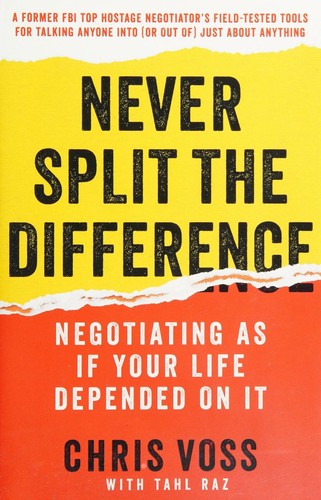
Never Split the Difference
Chris Voss
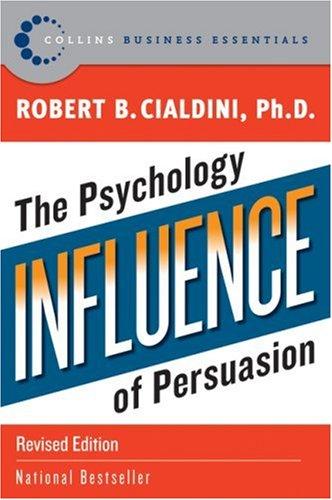
Influence: The Psychology of Persuasion
Robert B. Cialdini
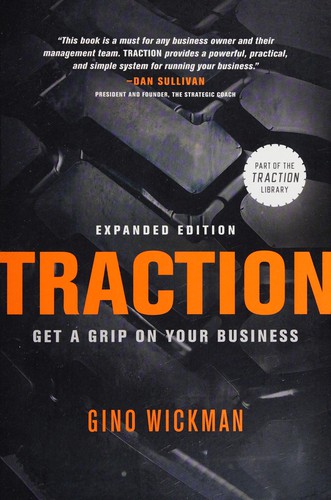
Traction: Get a Grip on Your Business
Gino Wickman
The New Rules of Marketing and PR
David Meerman Scott
