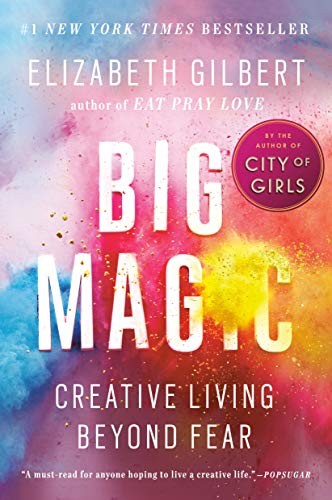
Big Magic by Elizabeth Gilbert is a 2015 self-help book about creativity, fear, creative work. Fear is the constant companion of creative work, not an absence to be overcome. The productive approach is to acknowledge it and create anyway, not to wait until it's gone.
Summary
Big Magic is Elizabeth Gilbert's manifesto for living a creative life — not as a professional artistic career but as an orientation toward existence. The book is warm, direct, and deliberately anti-perfectionist. Gilbert's argument is that the primary obstacle to creative living is not lack of talent or time but fear, and that the proper response to fear is not to overcome it but to bring it along as a passenger while moving forward anyway.
The book is organized around six concepts: Courage, Enchantment, Permission, Persistence, Trust, and Divinity. Gilbert argues that creative ideas exist as entities with their own energy, moving through the world looking for a willing human host. Whether or not you accept this as literal, the implication is clear: ideas find people who are ready to receive them and move on when those people fail to act. This explains why two people sometimes arrive at similar ideas simultaneously — the idea found a second host when the first one hesitated.
The permission chapter is the book's most practically useful: Gilbert grants the reader explicit permission to create without credentials, without mastery, without certainty that the work will be good or received well. She is impatient with the martyrdom of artistic suffering and the idea that creative work must be anguished to be legitimate. She argues for curiosity over passion — curiosity is more sustainable, more inclusive, and less likely to burn out.
Gilbert is aware that her approach is too soft for some readers. She acknowledges the criticism directly: real creative work requires more discipline than she admits, and enchantment only goes so far. But her core audience is people who have stopped creating entirely out of fear of inadequacy, and for them, Big Magic's warmth and permission may be exactly what's needed.
Talk to Big Magic like its author wrote you back.
Get the ideas that fit your life — not generic summaries.
- Chat with the book
- Audiobook-style main ideas
- Adapts to your life and goals
- Helps you take action
Key takeaways
- 1.
Fear is the constant companion of creative work, not an absence to be overcome. The productive approach is to acknowledge it and create anyway, not to wait until it's gone.
- 2.
Permission to create does not require credentials, mastery, or external validation. Granting yourself permission is the first and most important step.
- 3.
Curiosity is more sustainable than passion as a creative guide. Following what you find interesting — even modestly — leads to more sustained engagement than chasing burning purpose.
- 4.
Ideas have an energy of their own and move through the world seeking willing collaborators. Acting quickly and consistently on a creative idea honors the idea and keeps it alive.
- 5.
Perfectionism is fear in disguise. It is not the high standard of careful craftspeople; it is the refusal to start or finish because the work might fail.
- 6.
Creative work does not need to be your livelihood to be valid. Having a job that pays the bills while protecting time for creative work preserves both the work and the practitioner.
- 7.
The martyr model of creativity — suffering as evidence of seriousness — is a trap. Joy, lightness, and play are legitimate creative states that produce serious work.
- 8.
Persistence is the core creative skill. Most creative people succeed not through a single inspired breakthrough but through years of consistent practice and output.
Discussion questions
Use these on your own, with a book club, or as chat starters in Superbook. Book club version, ready to copy or print →
- 1.
Gilbert gives you explicit permission to create without credentials or mastery. What would you make or do if you genuinely believed you had that permission?
- 2.
She describes curiosity as more sustainable than passion. What are you curious about right now that you've been treating as too small or too impractical to pursue?
- 3.
Fear as a traveling companion rather than a condition to overcome — does that reframe work for you? What fear are you currently using as a reason to not create?
- 4.
Have you ever had the experience of an idea 'moving on' — of abandoning a creative project only to see someone else execute essentially the same idea later? What does Gilbert's framework make of that?
- 5.
The martyr model of creativity says suffering validates serious work. Where in your own approach to creative work do you impose this standard unnecessarily?
- 6.
Gilbert argues that keeping a day job to fund your creative work is not compromise but wisdom. Does that idea free you or feel like it diminishes the work?
- 7.
What is the creative project you've been avoiding starting because you're afraid it won't be good enough? What is the minimum viable version you could start tomorrow?
- 8.
She distinguishes creative curiosity from burning purpose. Which has been more present in your creative life? Which has been more productive?
- 9.
Big Magic is optimistic and encouraging in a way that some readers find insufficient. What does this book leave out that you think is important for a realistic account of creative work?
- 10.
Gilbert describes creative work as a relationship with a collaborating force rather than a solitary act of will. Does that framing help or hinder your own creative thinking?
- 11.
What would it mean to commit to creating something — anything — every day for thirty days, regardless of quality or outcome?
Themes
Frequently asked questions
-
Is Big Magic worth reading?
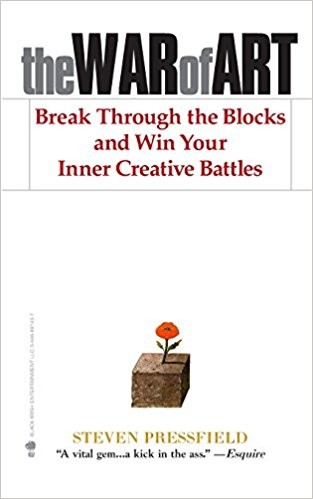
For its intended audience — people who have stopped creating out of fear or perfectionism — yes. For people looking for tactical advice on craft and discipline, less so. Gilbert's approach is deliberately gentle. If you want confrontation, Pressfield's The War of Art is a useful counterpart.
-
How long does it take to read Big Magic?
About three to four hours. The book is short, the chapters are brief, and the prose is accessible. Most readers finish it in one or two sittings.
-
What is the main idea of Big Magic?
Creative living is available to everyone, not just professionals or people with traditional talent. The primary obstacle is fear, and the solution is to acknowledge the fear and create anyway. Curiosity is a more reliable guide than burning passion.
-
Who should read Big Magic?
People who have stopped creating (writing, painting, making music, building things) because they believe they need more credentials, more time, or more certainty that the work will be good. Gilbert is speaking to the person who wants to make something but is paralyzed by fear of inadequacy.
-
How does Big Magic compare to The War of Art?
They address the same obstacle — fear that stops creative work — from opposite temperaments. Pressfield is confrontational and military; Gilbert is warm and permissive. Pressfield diagnoses you as a professional who is failing; Gilbert encourages you as a fellow explorer. Reading both creates a useful tension.