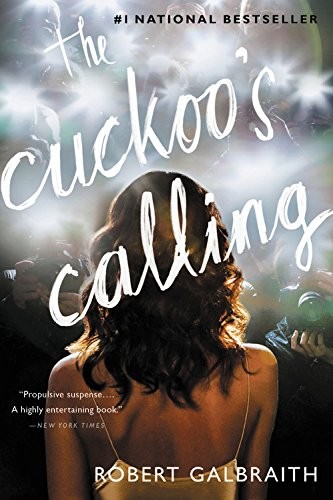
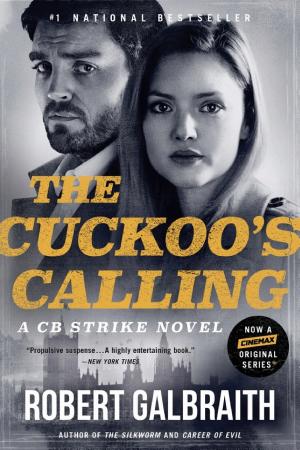
The Cuckoo's Calling by Robert Galbraith is a 2013 mystery book about celebrity and its costs, class and money, identity and performance. Lula Landry's death is a mystery precisely because her world was so full of people whose relationship to her was conditional — the motive pool is large and mostly financial.
Summary
The Cuckoo's Calling was published in 2013 under the pseudonym Robert Galbraith and received modest but positive reviews before an anonymous tip revealed the author was J.K. Rowling. The novel introduces Cormoran Strike, a war veteran and private detective with a prosthetic leg and a dissolving personal life, who is hired to investigate the apparent suicide of Lula Landry, a supermodel who fell from her London apartment balcony. Her brother refuses to accept the suicide verdict. Strike, essentially broke and sleeping in his office, takes the case.
The book's intelligence lies in using a celebrity murder mystery to examine class and the particular social ecosystem around fame. Lula Landry moved through a world of very rich people, photographers, hangers-on, and family members whose relationships to her were all, in different ways, transactional. Rowling, writing as Galbraith, is more interested in that ecology than in the mechanics of who-did-it, though the mechanics are solid. Strike's method involves a lot of patient conversation — he is good at being underestimated — and the investigation accumulates detail before resolving in a satisfying final act.
The other major pleasure of the book is Robin Ellacott, the temporary secretary who becomes Strike's partner across the series. She is drawn with considerable care: competent, curious, underestimated by Strike at first, possessed of her own judgment. The Strike-Robin dynamic is the series' actual engine, and this first book establishes it well enough that readers return for it as much as for the mysteries.
The Cuckoo's Calling is a substantial novel — longer than it probably needs to be in its middle section — but it earns the length in atmosphere and character. Readers who want a faster-paced mystery may find the famous-person-circle milieu exhausting; readers who enjoy literary crime with strong characters and genuine social observation will find plenty to like.
Talk to The Cuckoo's Calling like its author wrote you back.
Get the ideas that fit your life — not generic summaries.
- Chat with the book
- Audiobook-style main ideas
- Adapts to your life and goals
- Helps you take action
Key takeaways
- 1.
Lula Landry's death is a mystery precisely because her world was so full of people whose relationship to her was conditional — the motive pool is large and mostly financial.
- 2.
Strike's physical and financial precarity is structural to the novel, not decoration. His war injury and his broken engagement shape what he notices and how people respond to him.
- 3.
The celebrity ecosystem Rowling describes — stylists, photographers, devoted fans, family members with their own agendas — is observed with sharp, unsympathetic precision.
- 4.
Robin Ellacott is the more interesting of the two central characters and the one whose arc across the series carries more dramatic weight. This first book undersells her.
- 5.
The pseudonym experiment succeeded because Galbraith writes in a genuinely different register from Rowling's other work — quieter, more procedural, less exuberant.
- 6.
Class runs through every layer of the investigation: who Strike can get access to, who ignores him, who condescends, and what those reactions reveal about the crime.
- 7.
The middle section of the book is patient to the point of testing. The final third repays that patience.
- 8.
The book treats Lula's biracial identity and her search for her biological family as important context without making it the story's moral center — a difficult balance that Rowling manages.
Discussion questions
Use these on your own, with a book club, or as chat starters in Superbook. Book club version, ready to copy or print →
- 1.
The revelation that Galbraith was Rowling affected the book's reception dramatically. Does knowing the author's identity change how you read it? Should it?
- 2.
Lula Landry is the victim, but the investigation is really about what her world was like — who was close to her, and what for. Did you find that world interesting or alienating?
- 3.
Strike is introduced as physically and financially diminished. How does that positioning shape the investigation? What can he do that a more conventional detective couldn't?
- 4.
Robin is more capable than Strike gives her credit for in this first book. How does she navigate being underestimated? Do you read that as a comment on something broader?
- 5.
The novel is careful about the question of Lula's racial identity — it matters to the plot but isn't the point of the plot. How does Rowling handle that balance?
- 6.
The suicide verdict is the position everyone except Lula's brother accepts. What does the book say about the social pressure to accept an explanation that's convenient for everyone?
- 7.
Several characters in Lula's circle are drawn as shallow or predatory. Is that a fair portrait of celebrity culture, or is the book stacking the deck?
- 8.
The length of the middle section — repeated interviews, accumulated detail — is a deliberate choice. Did it work for you, or did you find it exhausting?
- 9.
Robin's fiancé Matthew appears briefly and is clearly an obstacle to her ambitions. Is he well-enough drawn, or is he too transparently a plot function?
- 10.
Strike has a famous father he has never acknowledged. The novel mentions this but doesn't develop it in this book. How does that detail affect how you read his social positioning?
- 11.
Compared to a more forensic procedural — Patricia Cornwell, say, or Michael Connelly — where does this book sit? What does it prioritize over procedural accuracy?
- 12.
If you continued with the series, what did this book establish that made you want to? If you didn't continue, what stopped you?
Themes
Frequently asked questions
-
Is The Cuckoo's Calling worth reading even though J.K. Rowling wrote it?
The book should be judged on its own terms. It is a competent and often clever mystery with strong characters and good social observation. Readers who want to separate the work from their views on the author will find it holds up independently.
-
Do I need to read The Cuckoo's Calling before the rest of the Strike series?
Yes — the series builds on character development from this first book, particularly the Strike-Robin dynamic. The mysteries are self-contained but the characters are not.
-
Is The Cuckoo's Calling long?
At around 450 pages, yes. The middle section is deliberate and some readers find it slow. The later books in the series are considerably longer — Troubled Blood runs to over 900 pages.
-
What makes the Cormoran Strike series different from other crime fiction?
The Strike-Robin partnership and the social milieu of contemporary Britain — celebrity, class, media — which Rowling observes with unusual precision. The books are slower and more character-driven than most commercial crime fiction.
-
Who shouldn't read The Cuckoo's Calling?
Readers who want fast-paced, action-forward crime fiction. The book rewards patience and doesn't deliver many hard surprises. Also readers who cannot separate the work from their views on the author.