Contemporary fiction · Book club
The Curious Incident of the Dog in the Night-Time book club questions
Here are 12 book club questions for The Curious Incident of the Dog in the Night-Time by Mark Haddon, ordered to open easily and end somewhere worth arguing about. Copy them, print them, or bring them up one at a time.
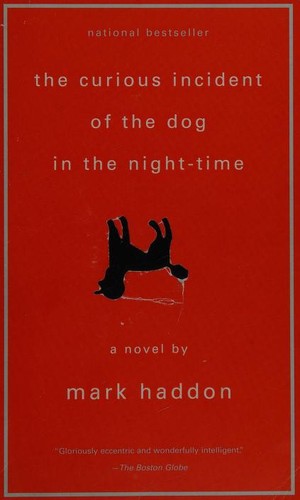
Christopher John Francis Boone is fifteen years old, knows all the prime numbers up to 7,057, and has decided to investigate who killed his neighbor's dog with a garden fork.
Mark Haddon · 2003 · 4h 15m
Full summary and key takeaways →The 12 questions
- 1.
Haddon deliberately avoided labeling Christopher's condition in the text. Does that choice help you engage with him as a specific person, or does it make the novel harder to interpret?
- 2.
Christopher cannot lie and finds lying physically distressing. Does that make him more or less trustworthy as a narrator than most fiction narrators?
- 3.
The real mystery — what his parents concealed — is much more mundane than a murder. Was that revelation as affecting as you expected, or more so?
- 4.
Christopher's father is both the person who harms him most and the person who genuinely loves him. How does the novel ask you to hold that?
- 5.
The novel is sometimes taught in schools alongside books about autism or Asperger's syndrome. Does teaching it that way help or limit what the book actually does?
- 6.
Christopher's logic-driven narration occasionally produces comedy. Is that comedy affectionate, problematic, or both?
- 7.
The chapter numbers are primes. Did you notice while reading, and if so, did it change anything for you?
- 8.
Christopher undertakes a journey that terrifies him to reach a goal most teenagers would find trivial. What does that courage cost him, and does the novel honor it adequately?
- 9.
How does this novel compare to a-wrinkle-in-time or the-outsiders as a coming-of-age story about a character who doesn't fit?
- 10.
Several adult characters in the novel are well-intentioned and still harmful. Which one felt most honestly drawn?
- 11.
The book ends with Christopher having accomplished something important and planning something bigger. Is that an earned ending or an evasion?
- 12.
If Christopher told this story at fifty rather than fifteen, what would change?
How to run the discussion
- Pick six to eight, not all of them. An hour of real discussion covers fewer questions than anyone expects, and racing the list is what makes a book club feel like homework.
- Open with what people noticed, not what they concluded. Asking for a verdict first hardens opinions before anyone has heard each other.
- Let the disagreement run. The questions below that split a room are the ones worth the time; the ones everyone answers the same way can be skipped.
- Ask the quiet person a specific question. A direct, narrow question is far easier to answer than an open invitation to contribute.
Themes worth steering toward
If the conversation stalls, these are the threads that usually restart it.
Common questions
What are good book club questions for The Curious Incident of the Dog in the Night-Time?
Here are 12 book club questions for The Curious Incident of the Dog in the Night-Time by Mark Haddon, ordered to open easily and end somewhere worth arguing about. The strongest openers ask what each reader noticed rather than what they concluded, and the discussion usually turns on neurodivergence and perception, truth and trust, family breakdown.
How long should a book club discussion of The Curious Incident of the Dog in the Night-Time last?
Most groups run 60 to 90 minutes of actual discussion. That is roughly six to eight questions, not all of them, so pick the ones that suit your group rather than working down the list in order.
What are the main themes in The Curious Incident of the Dog in the Night-Time?
Neurodivergence and perception, Truth and trust, Family breakdown, Independence and courage, Logic versus emotion. Those are the threads most likely to divide a room, which makes them the useful places to steer a discussion that has gone quiet.
Picking the next one? See books like The Curious Incident of the Dog in the Night-Time or questions for other book club picks.
