Thriller · Book club
The Da Vinci Code book club questions
Here are 12 book club questions for The Da Vinci Code by Dan Brown, ordered to open easily and end somewhere worth arguing about. Copy them, print them, or bring them up one at a time.
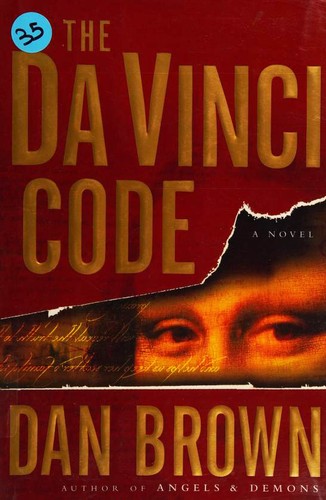
Harvard symbologist Robert Langdon is called to the Louvre in the middle of the night after a curator is found dead, his body arranged in a cryptic pose beside a trail of symbols.
Dan Brown · 2003 · 7h 0m
Full summary and key takeaways →The 12 questions
- 1.
Brown presents his historical claims as based on real scholarship. Did knowing they're largely fictional change how you read the novel while you were in it?
- 2.
Langdon explains everything to Sophie, who stands in for the reader. Did you find that exposition technique satisfying, or did it feel condescending?
- 3.
The Catholic Church responded to the novel with significant public opposition. Is a thriller that plays fast and loose with historical facts about living institutions different from one that invents history wholesale?
- 4.
The 'sacred feminine' thesis has roots in real feminist religious scholarship. Does Brown do that scholarship justice, or does he flatten it into a thriller device?
- 5.
The novel is extremely plot-efficient but the characters don't develop. Is that a fair trade-off for the kind of book Brown is writing?
- 6.
Which setpiece worked best for you — the Louvre opening, the cryptex, the church sequences? What made it land?
- 7.
The villain turns out to be someone Langdon trusted. Did you see it coming? And does it matter if the mystery is solvable, or is that not the point?
- 8.
Brown's books consistently feature a male expert and a female partner who is smart but less expert. Is that a formula problem or a structural inevitability for this kind of story?
- 9.
The Da Vinci Code sold 80 million copies. What does that scale of success suggest about what readers were looking for in 2003 — and whether that's changed?
- 10.
Leonardo's paintings are read by Langdon as coded messages. Is there something worth taking seriously in the idea of art as encrypted communication, or is it pure conspiracy thinking?
- 11.
Compare the novel to its 2006 film adaptation with Tom Hanks. Does the story work better on the page or on screen, and why?
- 12.
If someone told you they'd read The Da Vinci Code as an introduction to the history of early Christianity, how would you respond?
How to run the discussion
- Pick six to eight, not all of them. An hour of real discussion covers fewer questions than anyone expects, and racing the list is what makes a book club feel like homework.
- Open with what people noticed, not what they concluded. Asking for a verdict first hardens opinions before anyone has heard each other.
- Let the disagreement run. The questions below that split a room are the ones worth the time; the ones everyone answers the same way can be skipped.
- Ask the quiet person a specific question. A direct, narrow question is far easier to answer than an open invitation to contribute.
Themes worth steering toward
If the conversation stalls, these are the threads that usually restart it.
Common questions
What are good book club questions for The Da Vinci Code?
Here are 12 book club questions for The Da Vinci Code by Dan Brown, ordered to open easily and end somewhere worth arguing about. The strongest openers ask what each reader noticed rather than what they concluded, and the discussion usually turns on secret history, religion and power, codes and symbols.
How long should a book club discussion of The Da Vinci Code last?
Most groups run 60 to 90 minutes of actual discussion. That is roughly six to eight questions, not all of them, so pick the ones that suit your group rather than working down the list in order.
What are the main themes in The Da Vinci Code?
Secret history, Religion and power, Codes and symbols, Institutional cover-up, Gender and sacred feminine. Those are the threads most likely to divide a room, which makes them the useful places to steer a discussion that has gone quiet.
Picking the next one? See books like The Da Vinci Code or questions for other book club picks.
