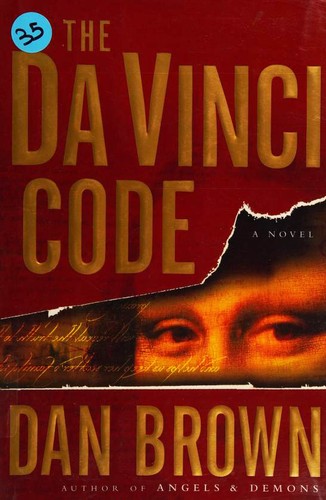
The Da Vinci Code by Dan Brown is a 2003 thriller book about secret history, religion and power, codes and symbols. Brown's chapter structure — short, ending on hooks — is a masterclass in mass-market pacing, whatever you think of the prose quality.
Summary
Harvard symbologist Robert Langdon is called to the Louvre in the middle of the night after a curator is found dead, his body arranged in a cryptic pose beside a trail of symbols. The murder turns out to be the first move in a race to uncover a secret the Catholic Church has suppressed for two millennia: evidence about the true nature of the Holy Grail and the bloodline of Jesus Christ. With cryptographer Sophie Neveu in tow, Langdon follows a trail through Leonardo da Vinci's art, Opus Dei, the Priory of Sion, and several locked rooms before the truth is revealed.
The Da Vinci Code is a puzzle-box thriller built on a specific formula: expert + crime + conspiracy + running = chapters that end mid-sentence so you keep turning pages. Brown is one of the most skilled practitioners of that formula alive. The chapters are short, the setpieces are kinetic, and the historical-theological context is deployed just slowly enough to feel like education rather than lecture. The book sold 80 million copies and became a cultural event because it touched several live wires simultaneously: skepticism about institutional religion, fascination with secret history, and the appeal of a Dan-Brown-style version of "what if everything you knew was wrong."
The historical claims are mostly fictional, borrowed from earlier popular conspiracy books (notably Holy Blood, Holy Grail). Scholars and historians have comprehensively debunked the novel's factual assertions, which is worth noting because Brown presents them as grounded in real research. This doesn't invalidate the book as entertainment, but it does change how you read it. The "secret history" form has always involved a degree of productive dishonesty.
As a novel, The Da Vinci Code is functional rather than distinguished. The prose is declarative and the characters are vehicles for information. Langdon and Neveu exist to ask questions and receive answers; they don't develop in any meaningful sense. But the momentum is real, the setpieces work, and at its best — the chase through the Louvre, the cryptex sequence — it delivers the pleasures it promises efficiently. This is a book that knows exactly what it is.
Talk to The Da Vinci Code like its author wrote you back.
Get the ideas that fit your life — not generic summaries.
- Chat with the book
- Audiobook-style main ideas
- Adapts to your life and goals
- Helps you take action
Key takeaways
- 1.
Brown's chapter structure — short, ending on hooks — is a masterclass in mass-market pacing, whatever you think of the prose quality.
- 2.
The novel works because it flatters the reader: you feel like you're learning forbidden history while reading what is, in fact, a fast-moving thriller.
- 3.
The 'expert protagonist' formula — Langdon explains things to Sophie, who explains them to us — is efficient delivery mechanism for exposition, even if it's not subtle.
- 4.
The sacred feminine thesis, drawn from earlier conspiracy books, tapped into a genuine appetite for alternative histories of early Christianity.
- 5.
The book's cultural impact exceeded its literary merit by an enormous margin — it generated pilgrimages to real locations, debates in churches, and actual legal cases.
- 6.
Secret-history thrillers require readers to accept a specific bargain: suspend factual skepticism in exchange for narrative momentum. Brown's bargain is unusually generous on the momentum side.
- 7.
The villain's reveal follows thriller convention closely enough that careful readers can anticipate it — but Brown's pacing means most readers don't pause to check.
- 8.
The Da Vinci Code is partly responsible for a wave of similar 'symbologist-on-the-run' thrillers, establishing a template that has been imitated but rarely matched at the commercial level.
Discussion questions
Use these on your own, with a book club, or as chat starters in Superbook. Book club version, ready to copy or print →
- 1.
Brown presents his historical claims as based on real scholarship. Did knowing they're largely fictional change how you read the novel while you were in it?
- 2.
Langdon explains everything to Sophie, who stands in for the reader. Did you find that exposition technique satisfying, or did it feel condescending?
- 3.
The Catholic Church responded to the novel with significant public opposition. Is a thriller that plays fast and loose with historical facts about living institutions different from one that invents history wholesale?
- 4.
The 'sacred feminine' thesis has roots in real feminist religious scholarship. Does Brown do that scholarship justice, or does he flatten it into a thriller device?
- 5.
The novel is extremely plot-efficient but the characters don't develop. Is that a fair trade-off for the kind of book Brown is writing?
- 6.
Which setpiece worked best for you — the Louvre opening, the cryptex, the church sequences? What made it land?
- 7.
The villain turns out to be someone Langdon trusted. Did you see it coming? And does it matter if the mystery is solvable, or is that not the point?
- 8.
Brown's books consistently feature a male expert and a female partner who is smart but less expert. Is that a formula problem or a structural inevitability for this kind of story?
- 9.
The Da Vinci Code sold 80 million copies. What does that scale of success suggest about what readers were looking for in 2003 — and whether that's changed?
- 10.
Leonardo's paintings are read by Langdon as coded messages. Is there something worth taking seriously in the idea of art as encrypted communication, or is it pure conspiracy thinking?
- 11.
Compare the novel to its 2006 film adaptation with Tom Hanks. Does the story work better on the page or on screen, and why?
- 12.
If someone told you they'd read The Da Vinci Code as an introduction to the history of early Christianity, how would you respond?
Themes
Frequently asked questions
-
Is The Da Vinci Code historically accurate?
No. The novel's central historical claims — about the Priory of Sion, the sacred feminine bloodline, Opus Dei's role, and Leonardo da Vinci's encoded messages — are either fictional or borrowed from discredited fringe scholarship. Historians have addressed this thoroughly. The book is historical fiction in the loosest sense.
-
Should I read Angels & Demons before The Da Vinci Code?
No — the books can be read in any order. Angels & Demons was published first but The Da Vinci Code was the massive commercial breakthrough. Start with whichever sounds more interesting.
-
Is The Da Vinci Code worth reading in 2026?
As a thriller, yes — it's fast, propulsive, and structurally efficient. As a cultural artifact, absolutely. As a source of religious history, no. Read it knowing you're in Dan Brown's world, not in the Vatican's archives.
-
Who shouldn't read The Da Vinci Code?
Readers who want literary fiction, psychological depth, or historically responsible treatment of early Christianity. Also: readers who find breathless pacing and short chapters that end mid-revelation exhausting rather than propulsive.
-
Is there a film adaptation?
Yes. Ron Howard directed a 2006 film starring Tom Hanks as Langdon and Audrey Tautou as Sophie. The film is competent but slower than the novel, which is almost a paradox given Brown's already economical pacing.
Similar books
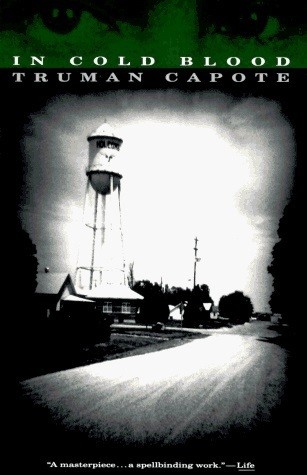
In Cold Blood
Truman Capote
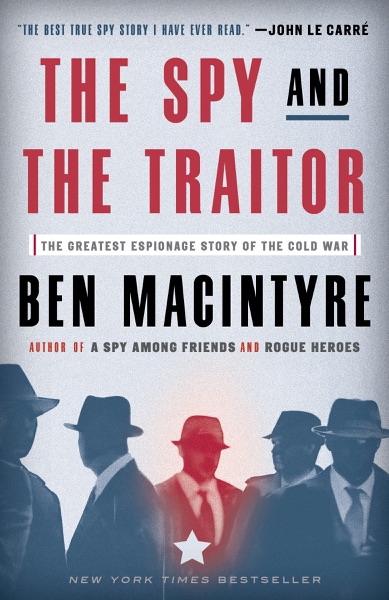
The Spy and the Traitor: The Greatest Espionage Story of the Cold War
Ben Macintyre
Operation Mincemeat: How a Dead Man and a Bizarre Plan Fooled the Nazis and Assured an Allied Victory
Ben Macintyre
Agent Zigzag: A True Story of Nazi Espionage, Love, and Betrayal
Ben Macintyre
