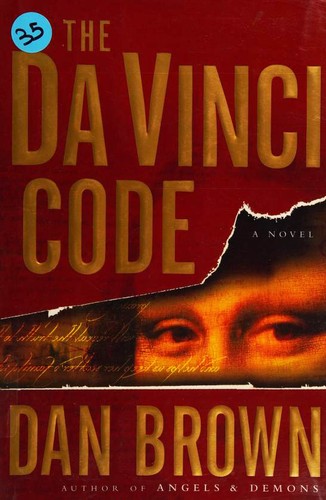
Talk to The Da Vinci Code like its author wrote you back.
Get the ideas that fit your life — not generic summaries.
- Chat with the book
- Audiobook-style main ideas
- Adapts to your life and goals
- Helps you take action
The Da Vinci Code, in detail
Harvard symbologist Robert Langdon is called to the Louvre in the middle of the night after a curator is found dead, his body arranged in a cryptic pose beside a trail of symbols. The murder turns out to be the first move in a race to uncover a secret the Catholic Church has suppressed for two millennia: evidence about the true nature of the Holy Grail and the bloodline of Jesus Christ. With cryptographer Sophie Neveu in tow, Langdon follows a trail through Leonardo da Vinci's art, Opus Dei, the Priory of Sion, and several locked rooms before the truth is revealed.
The Da Vinci Code is a puzzle-box thriller built on a specific formula: expert + crime + conspiracy + running = chapters that end mid-sentence so you keep turning pages. Brown is one of the most skilled practitioners of that formula alive. The chapters are short, the setpieces are kinetic, and the historical-theological context is deployed just slowly enough to feel like education rather than lecture. The book sold 80 million copies and became a cultural event because it touched several live wires simultaneously: skepticism about institutional religion, fascination with secret history, and the appeal of a Dan-Brown-style version of "what if everything you knew was wrong."
The historical claims are mostly fictional, borrowed from earlier popular conspiracy books (notably Holy Blood, Holy Grail). Scholars and historians have comprehensively debunked the novel's factual assertions, which is worth noting because Brown presents them as grounded in real research. This doesn't invalidate the book as entertainment, but it does change how you read it. The "secret history" form has always involved a degree of productive dishonesty.
As a novel, The Da Vinci Code is functional rather than distinguished. The prose is declarative and the characters are vehicles for information. Langdon and Neveu exist to ask questions and receive answers; they don't develop in any meaningful sense. But the momentum is real, the setpieces work, and at its best — the chase through the Louvre, the cryptex sequence — it delivers the pleasures it promises efficiently. This is a book that knows exactly what it is.
The big ideas
- 1.
Brown's chapter structure — short, ending on hooks — is a masterclass in mass-market pacing, whatever you think of the prose quality.
- 2.
The novel works because it flatters the reader: you feel like you're learning forbidden history while reading what is, in fact, a fast-moving thriller.
- 3.
The 'expert protagonist' formula — Langdon explains things to Sophie, who explains them to us — is efficient delivery mechanism for exposition, even if it's not subtle.
