Psychology · Book club
The Dance of Anger book club questions
Here are 11 book club questions for The Dance of Anger by Harriet Lerner, ordered to open easily and end somewhere worth arguing about. Copy them, print them, or bring them up one at a time.
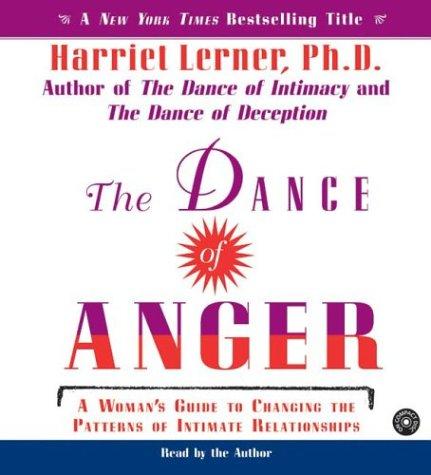
Harriet Lerner's central argument is that anger is a signal, not a problem.
Harriet Lerner · 1985 · 4h 45m
Full summary and key takeaways →The 11 questions
- 1.
Lerner says anger is a signal, not a problem. What do you think your own anger has been trying to signal to you in a recent situation?
- 2.
The book describes over-functioning and under-functioning as a paired pattern. Which role are you more likely to fall into, and what does it cost you?
- 3.
Think of a relationship where a circular dance is running. What would your part of the dance look like if you changed it, and what would you expect the other person to do?
- 4.
Lerner says most people either escalate or go silent when angry. Which do you tend to do, and what effect does it actually have on the situation?
- 5.
The 'change-back' reaction is one of the book's most important ideas. Have you experienced it when you've tried to change something in a relationship? How did you interpret it at the time?
- 6.
The book was written primarily for women in 1985. Does the analysis still feel relevant and applicable regardless of gender, or does the framing limit its usefulness?
- 7.
Lerner argues that triangling relieves anxiety but prevents resolution. Where do you see this pattern operating in your own relationships?
- 8.
What would it look like to express anger 'well' in a relationship that matters to you — directly, without blaming, and without backing down?
- 9.
Lerner spends a chapter on anger in family-of-origin relationships. How much do you think the patterns you learned in your original family shape how you handle anger now?
- 10.
The book distinguishes between staying in a relationship and staying stuck in a pattern. What's the difference, and how would you know which one you're doing?
- 11.
What's a situation from your own life where expressing anger more clearly might have changed an outcome — either professionally or personally?
How to run the discussion
- Pick six to eight, not all of them. An hour of real discussion covers fewer questions than anyone expects, and racing the list is what makes a book club feel like homework.
- Open with what people noticed, not what they concluded. Asking for a verdict first hardens opinions before anyone has heard each other.
- Let the disagreement run. The questions below that split a room are the ones worth the time; the ones everyone answers the same way can be skipped.
- Ask the quiet person a specific question. A direct, narrow question is far easier to answer than an open invitation to contribute.
Themes worth steering toward
If the conversation stalls, these are the threads that usually restart it.
Common questions
What are good book club questions for The Dance of Anger?
Here are 11 book club questions for The Dance of Anger by Harriet Lerner, ordered to open easily and end somewhere worth arguing about. The strongest openers ask what each reader noticed rather than what they concluded, and the discussion usually turns on anger, relationships, self-knowledge.
How long should a book club discussion of The Dance of Anger last?
Most groups run 60 to 90 minutes of actual discussion. That is roughly six to eight questions, not all of them, so pick the ones that suit your group rather than working down the list in order.
What are the main themes in The Dance of Anger?
Anger, Relationships, Self-knowledge, Communication, Family systems. Those are the threads most likely to divide a room, which makes them the useful places to steer a discussion that has gone quiet.
Picking the next one? See books like The Dance of Anger or questions for other book club picks.
