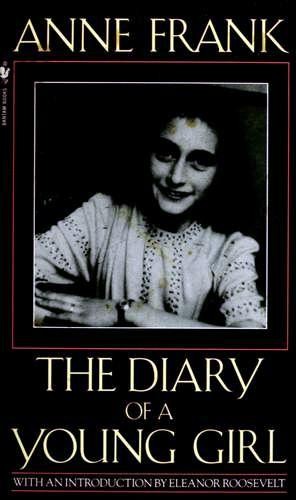
The Diary of a Young Girl by Anne Frank is a 1947 memoir book about identity, survival, coming of age. Human interiority persists under extreme conditions. Anne's diary shows that adolescent self-discovery, jealousy, ambition, and humor do not pause even when survival is uncertain.
Summary
Anne Frank's diary, kept during the two years she spent hiding with her family in a concealed Amsterdam apartment, stands as one of the most widely read first-person accounts of the Holocaust. Anne received the blank diary as a birthday present in June 1942, a month before the Frank family went into hiding in the annex above her father's business. She addressed her entries to an imaginary friend she called Kitty, writing with a candor and self-awareness that belies her age.
The diary records the mechanics of life in hiding — the enforced silence during business hours, the dependency on a small group of Dutch protectors who risked their lives to bring food and news, the claustrophobia of eight people sharing cramped rooms for twenty-five months. Anne catalogues the tensions between the families, her complicated feelings about her mother, and her growing attachment to Peter van Pels, the teenage son of the other family hiding in the annex. She is frequently exasperated by the adults around her and acutely conscious of her own contradictions.
What separates the diary from a mere historical document is Anne's ambition. She revised her entries with an eye toward eventual publication, aware that her experience deserved a wider audience. She writes about wanting to be a writer after the war, about the difference between the Anne who performed for others and the Anne she kept hidden, about justice and human nature with a philosophical maturity that surprises readers who expect simple suffering. Her refusal to be defined only by victimhood is part of what has made her book an enduring moral document rather than just a testimony.
The diary ends in August 1944, when the family was arrested after an anonymous tip. Anne died of typhus in Bergen-Belsen concentration camp in February or March 1945, weeks before liberation. Her father Otto, the only annex resident to survive, retrieved her writings and arranged publication. The book has since been translated into more than seventy languages and read by hundreds of millions of people.
Talk to The Diary of a Young Girl like its author wrote you back.
Get the ideas that fit your life — not generic summaries.
- Chat with the book
- Audiobook-style main ideas
- Adapts to your life and goals
- Helps you take action
Key takeaways
- 1.
Human interiority persists under extreme conditions. Anne's diary shows that adolescent self-discovery, jealousy, ambition, and humor do not pause even when survival is uncertain.
- 2.
Anne distinguished between her public and private selves long before she had the vocabulary for it. Her writing is partly an attempt to reconcile the two.
- 3.
The diary is a document of complicity and courage equally: the Dutch protectors who kept the family alive were exceptional; the neighbor who eventually betrayed them was ordinary.
- 4.
Hope and realism coexisted in the annex. Anne's famous declaration that people are good at heart was written not in innocence but alongside entries recording the brutality of the occupation.
- 5.
Anne revised her entries with publication in mind, turning a private journal into a considered literary project. What we read is not raw diary but an author at work.
- 6.
The ordinary frustrations of the diary — arguments about food, noise, manners — make the extraordinary circumstances legible. The mundane details are what make the horror real.
- 7.
The diary's longevity comes partly from what it omits: Anne did not live to write the ending. Readers bring their knowledge of the camps to a text that is otherwise full of plans for the future.
- 8.
Adolescent identity formation is a recurring preoccupation. Anne is as interested in who she is becoming as in the war that constrains her becoming.
Discussion questions
Use these on your own, with a book club, or as chat starters in Superbook. Book club version, ready to copy or print →
- 1.
Anne distinguishes between the self she shows the world and the self she keeps private. How sharp is that divide in your own life, and what does it cost you?
- 2.
The diary was revised by Anne herself for potential publication. Does knowing this change how you read it, or how you think about authenticity in memoir?
- 3.
The Dutch protectors Miep Gies and Jan Gies risked their lives repeatedly for years. What conditions do you think make that kind of courage possible?
- 4.
Anne writes that she wants to go on living even after death, through her words. What does it mean to achieve that kind of posthumous presence, and what does her case tell us about how it happens?
- 5.
How does Anne's relationship with her mother compare to her relationship with her father? What does each relationship reveal about her sense of herself?
- 6.
Anne writes about the Jews with pride and also with frustration that Jewish people so often invite persecution through passivity. How do you read that passage today?
- 7.
The famous sentence 'I still believe that people are good at heart' appears in an entry that also describes the war's brutality. Do you read it as faith, denial, or something else?
- 8.
Anne's diary captures a moment when she was becoming a writer. What in the entries makes that ambition visible, and how does it change the texture of the text?
- 9.
Peter van Pels and Anne develop a close relationship in the annex. What does the diary suggest about intimacy formed under conditions of shared confinement?
- 10.
The diary ends abruptly. Does knowing what happened after the final entry change the experience of reading the entries themselves?
- 11.
Otto Frank chose to publish the diary and to protect certain passages. What are the ethics of a parent editing a child's private writing for public release?
- 12.
What does the diary suggest about the relationship between ordinary daily life and historical catastrophe? Do the two coexist, or does catastrophe eventually erase the ordinary?
Themes
Frequently asked questions
-
Is The Diary of a Young Girl suitable for all ages?
It is most commonly assigned in middle school and high school, and the content — confinement, fear, adolescent romance, and the knowledge of what followed — is appropriate for readers roughly twelve and up. Younger children may benefit from reading it with an adult who can provide context about the Holocaust.
-
What is the difference between the original and the definitive edition?
The original 1947 Dutch edition omitted passages Otto Frank considered too personal, including Anne's reflections on sexuality and her more critical observations about her mother. The 1995 definitive edition restores those passages and is considered the more complete and authentic text.
-
How long does it take to read The Diary of a Young Girl?
About four to five hours for an average reader. Many people read it in a single sitting or over a weekend. The diary format makes it easy to pause and return, though it also rewards sustained reading that allows the rhythms of daily life in the annex to accumulate.
-
Why is the diary still so widely read?
Several reasons reinforce each other: the literary quality of Anne's prose, her self-awareness as a thinker, the universality of adolescent identity questions, and the fact that she was killed before she could become an adult. The diary puts a specific, vivid human face on an event that is otherwise almost too large to comprehend.
-
What happened to the other people hiding in the annex?
All seven other residents were arrested in August 1944 and deported to concentration camps. Otto Frank was the only survivor. Anne and her sister Margot died in Bergen-Belsen, likely in February or March 1945, weeks before the camp was liberated.