Science · Book club
The Disappearing Spoon: And Other True Tales of Madness, Love, and the History of the World from the Periodic Table book club questions
Here are 12 book club questions for The Disappearing Spoon: And Other True Tales of Madness, Love, and the History of the World from the Periodic Table by Sam Kean, ordered to open easily and end somewhere worth arguing about. Copy them, print them, or bring them up one at a time.
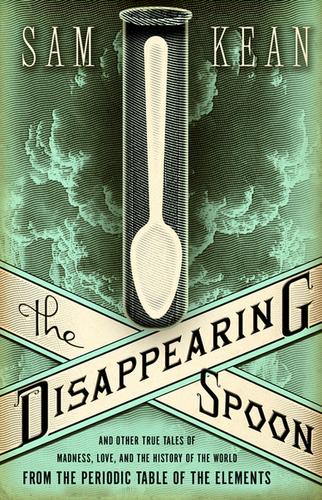
The Disappearing Spoon is Sam Kean's account of how the periodic table of elements came to be — not as a dry exercise in classroom science, but as a record of obsession, accident, rivalry, and the occasional poisoning.
Sam Kean · 2010 · 6h 0m
Full summary and key takeaways →The 12 questions
- 1.
Kean presents the periodic table as a record of human obsession. Which element's story struck you as the most surprising, and why?
- 2.
Fritz Haber is one of the book's most morally complicated figures. How do you reconcile a single career that both feeds billions and enables mass killing?
- 3.
Mendeleev predicted elements that hadn't been found yet. What does it say about scientific thinking that a conceptual framework could reveal something physical that hadn't yet been observed?
- 4.
Kean argues that the names of elements carry political baggage from the nations and eras that claimed them. Does that framing change how you think about familiar names like Americium or Californium?
- 5.
The book suggests that danger and discovery are closely linked — radium researchers dying slowly, chemists poisoned by their own work. What does that history imply about the risks people take in the name of knowledge?
- 6.
Which of the biographical portraits — Curie, Haber, the element hunters of the Cold War — felt most like a cautionary tale, and which felt like an inspiration?
- 7.
Kean spends considerable time on the elements that sustain human life in trace amounts. Did the section on biological elements change how you think about the connection between chemistry and health?
- 8.
The lanthanides and actinides are usually shown as detached footnotes on the periodic table. What do you think keeps them invisible in public understanding, given how heavily they're used in modern technology?
- 9.
The book's structure follows the table's logic — groups, periods, families. Did that structure help you as a reader, or would a purely chronological account have worked better?
- 10.
Several elements were named to honor nations during periods of nationalist competition. What do you think gets lost — or gained — when science becomes entangled with national prestige?
- 11.
Kean describes how certain toxic elements like mercury and lead were used for centuries in medicine, cosmetics, and paint before their dangers were understood. What does that pattern suggest about how we should approach newer materials today?
- 12.
The disappearing spoon trick using gallium is the book's central image. What's the value of using a single striking physical demonstration as a hook for a history this large?
How to run the discussion
- Pick six to eight, not all of them. An hour of real discussion covers fewer questions than anyone expects, and racing the list is what makes a book club feel like homework.
- Open with what people noticed, not what they concluded. Asking for a verdict first hardens opinions before anyone has heard each other.
- Let the disagreement run. The questions below that split a room are the ones worth the time; the ones everyone answers the same way can be skipped.
- Ask the quiet person a specific question. A direct, narrow question is far easier to answer than an open invitation to contribute.
Themes worth steering toward
If the conversation stalls, these are the threads that usually restart it.
Common questions
What are good book club questions for The Disappearing Spoon: And Other True Tales of Madness, Love, and the History of the World from the Periodic Table?
Here are 12 book club questions for The Disappearing Spoon: And Other True Tales of Madness, Love, and the History of the World from the Periodic Table by Sam Kean, ordered to open easily and end somewhere worth arguing about. The strongest openers ask what each reader noticed rather than what they concluded, and the discussion usually turns on chemistry, scientific discovery, history of science.
How long should a book club discussion of The Disappearing Spoon: And Other True Tales of Madness, Love, and the History of the World from the Periodic Table last?
Most groups run 60 to 90 minutes of actual discussion. That is roughly six to eight questions, not all of them, so pick the ones that suit your group rather than working down the list in order.
What are the main themes in The Disappearing Spoon: And Other True Tales of Madness, Love, and the History of the World from the Periodic Table?
Chemistry, Scientific discovery, History of science, Elements, Human curiosity. Those are the threads most likely to divide a room, which makes them the useful places to steer a discussion that has gone quiet.
Picking the next one? See books like The Disappearing Spoon: And Other True Tales of Madness, Love, and the History of the World from the Periodic Table or questions for other book club picks.
