History · Book club
The Discovery of France: A Historical Geography from the Revolution to the First World War book club questions
Here are 11 book club questions for The Discovery of France: A Historical Geography from the Revolution to the First World War by Graham Robb, ordered to open easily and end somewhere worth arguing about. Copy them, print them, or bring them up one at a time.
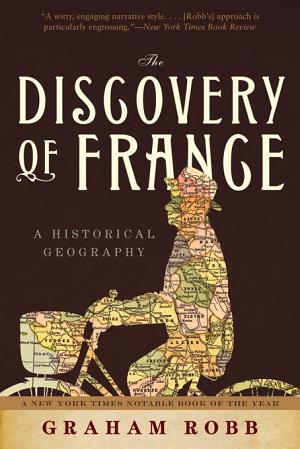
Graham Robb's premise is audacious: France was not discovered until relatively recently, and even then, most of what was discovered was quickly erased.
Graham Robb · 2007 · 7h 45m
Full summary and key takeaways →The 11 questions
- 1.
Robb argues that France was constructed rather than discovered. Does the same argument apply to the national identity of any country you know well?
- 2.
The book describes the destruction of regional languages and cultures as a deliberate state project. Was that project a necessary cost of modernity, or a loss that could have been avoided?
- 3.
What does it mean that the France of Victor Hugo and Balzac was writing about a country that most of its inhabitants didn't yet experience as their own?
- 4.
Robb cycled 14,000 miles across France to research this book. Does that method — physical immersion in landscape and local archives — produce a kind of historical knowledge that more conventional research cannot?
- 5.
The book's micro-regions — with their specific dialects, saints, and customs — have mostly vanished. Is the disappearance of that diversity simply the cost of modernity, or is something important still recoverable?
- 6.
The French state created France partly by suppressing what it found. Are there analogous processes happening today — ways in which documentation and standardization erase what they measure?
- 7.
How does Robb's France compare to the France you knew or imagined before reading the book? What surprised you most?
- 8.
He is a literary biographer writing history. Does his background make the book better or does it introduce blind spots that a professional historian might avoid?
- 9.
The transhumant shepherds, the seasonal migrants, the locally practicing semi-Christians Robb describes — what would it take to recover knowledge of lives that left so few records?
- 10.
Robb is ambivalent about nostalgia but clearly finds the lost world he describes moving. Is that tension sustainable, or does it require him to have it both ways?
- 11.
What is a version of this story — the gap between an official national narrative and a more complex regional reality — that you think most needs telling in your own country?
How to run the discussion
- Pick six to eight, not all of them. An hour of real discussion covers fewer questions than anyone expects, and racing the list is what makes a book club feel like homework.
- Open with what people noticed, not what they concluded. Asking for a verdict first hardens opinions before anyone has heard each other.
- Let the disagreement run. The questions below that split a room are the ones worth the time; the ones everyone answers the same way can be skipped.
- Ask the quiet person a specific question. A direct, narrow question is far easier to answer than an open invitation to contribute.
Themes worth steering toward
If the conversation stalls, these are the threads that usually restart it.
Common questions
What are good book club questions for The Discovery of France: A Historical Geography from the Revolution to the First World War?
Here are 11 book club questions for The Discovery of France: A Historical Geography from the Revolution to the First World War by Graham Robb, ordered to open easily and end somewhere worth arguing about. The strongest openers ask what each reader noticed rather than what they concluded, and the discussion usually turns on france, national identity, geography.
How long should a book club discussion of The Discovery of France: A Historical Geography from the Revolution to the First World War last?
Most groups run 60 to 90 minutes of actual discussion. That is roughly six to eight questions, not all of them, so pick the ones that suit your group rather than working down the list in order.
What are the main themes in The Discovery of France: A Historical Geography from the Revolution to the First World War?
France, National identity, Geography, Rural life, Modernization. Those are the threads most likely to divide a room, which makes them the useful places to steer a discussion that has gone quiet.
Picking the next one? See books like The Discovery of France: A Historical Geography from the Revolution to the First World War or questions for other book club picks.
