Talk to The Dispossessed like its author wrote you back.
Get the ideas that fit your life — not generic summaries.
- Chat with the book
- Audiobook-style main ideas
- Adapts to your life and goals
- Helps you take action
What it argues
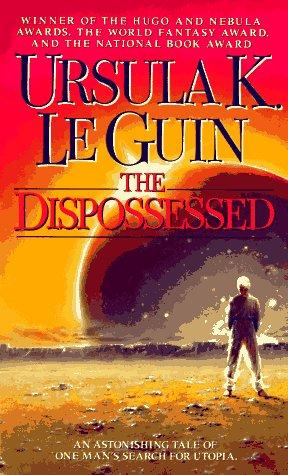
The Dispossessed follows Shevek, a physicist from the anarchist moon Anarres, who travels to the wealthy capitalist planet Urras — the world his society broke away from 170 years earlier. The novel alternates between timelines: Shevek's childhood and young adulthood on Anarres, where he fights for the intellectual freedom to pursue his physics against the subtle coercions of a society officially committed to freedom; and his voyage and stay on Urras, where he confronts a world of beauty, inequality, and political violence he was raised to regard as the enemy.
Le Guin's subtitle is "An Ambiguous Utopia," and she means both words. Anarres is a genuine attempt at anarchist society — no government, no property, mutual aid organized through voluntary syndicates — but the novel documents how any society, however idealistic its origins, develops informal mechanisms of conformity and control. Shevek's struggle is not against an oppressor but against the accumulated weight of social expectation on a world that officially has no authority to enforce it.
What it gets right
- 1.
Anarres shows that informal social pressure can be as coercive as law — a society without authority can still enforce conformity through shame, ostracism, and the assignment of undesirable work.
- 2.
Shevek's physics — a unified theory of time that reconciles sequence and simultaneity — is a structural metaphor for the novel's own form, which holds two timelines in tension without collapsing them.
- 3.
The wall on the first page — the wall around the spaceport, separating Anarres from all it rejected — is both literal and the novel's governing image: every choice to be free is also a choice to exclude.
What it covers
Who wrote it
Ursula K. Le Guin (1929–2018) was an American novelist and essayist whose work across science fiction, fantasy, and literary fiction redefined what speculative fiction could be. She is best known for the Hainish Cycle — which includes The Left Hand of Darkness and The Dispossessed — and the Earthsea series. She won six Hugo Awards, six Nebula Awards, and the National Book Foundation's Medal for Distinguished Contribution to American Letters. Le Guin studied at Radcliffe and Columbia and was the daughter of anthropologist Alfred Kroeber, whose influence on her anthropological approach to world-building is pervasive.
