Philosophy · Book club
The Divine Comedy: Inferno book club questions
Here are 12 book club questions for The Divine Comedy: Inferno by Dante Alighieri, ordered to open easily and end somewhere worth arguing about. Copy them, print them, or bring them up one at a time.
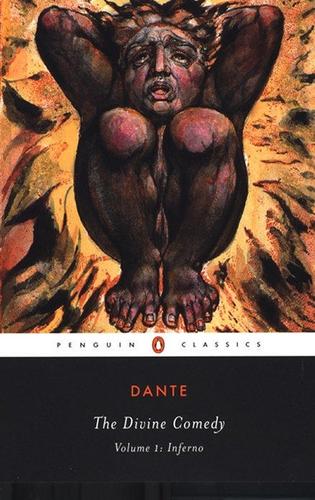
The Inferno is the first of three canticles in Dante Alighieri's Divine Comedy, written between approximately 1308 and 1320.
Dante Alighieri · 1472 · 3h 45m
Full summary and key takeaways →The 12 questions
- 1.
The contrapasso gives each punishment a direct relationship to its corresponding sin. Which punishments in the Inferno do you find most morally coherent, and which seem arbitrary or excessive?
- 2.
Dante arranges Hell so that fraud and treachery are worse than violence. Does that moral hierarchy match your own intuitions? Why or why not?
- 3.
Virgil is the guide through Hell and Purgatory but cannot enter Paradise. What does that say about the limits Dante saw in purely rational virtue?
- 4.
Dante meets Francesca da Rimini with evident sympathy, even weeping for her. Does the poem endorse that sympathy or judge it? What do you make of the ambiguity?
- 5.
Ulysses is damned for the voyage beyond the Pillars of Hercules — for the desire to know without limits. Is that a condemnation of intellectual ambition, or something more specific?
- 6.
The poem is saturated with Dante's personal grievances — his exile, his political enemies, corrupt popes. Does knowing that change how you read the judgments he renders?
- 7.
Dante places the virtuous pagans — Homer, Aristotle, Plato — in Limbo rather than deeper Hell. Does that feel like a generous solution or an evasion?
- 8.
The suicides are placed in a wood of self-destroyers, lower than the murderers. How does that reflect medieval Christian theology about bodily integrity, and what do you think of it?
- 9.
Which figure in the Inferno do you find most humanly compelling? What makes that encounter feel different from the others?
- 10.
The poem was written by someone in exile, facing real enemies. Does reading it as political autobiography change your relationship to its moral authority?
- 11.
How does the Inferno's vision of justice compare to modern secular frameworks? What has changed, and what, if anything, still resonates?
- 12.
Dante frequently expresses pity and compassion for the damned. Is that consistent with a belief in the justice of their punishment, or does the poem contain a genuine tension here?
How to run the discussion
- Pick six to eight, not all of them. An hour of real discussion covers fewer questions than anyone expects, and racing the list is what makes a book club feel like homework.
- Open with what people noticed, not what they concluded. Asking for a verdict first hardens opinions before anyone has heard each other.
- Let the disagreement run. The questions below that split a room are the ones worth the time; the ones everyone answers the same way can be skipped.
- Ask the quiet person a specific question. A direct, narrow question is far easier to answer than an open invitation to contribute.
Themes worth steering toward
If the conversation stalls, these are the threads that usually restart it.
Common questions
What are good book club questions for The Divine Comedy: Inferno?
Here are 12 book club questions for The Divine Comedy: Inferno by Dante Alighieri, ordered to open easily and end somewhere worth arguing about. The strongest openers ask what each reader noticed rather than what they concluded, and the discussion usually turns on sin and punishment, justice, spiritual journey.
How long should a book club discussion of The Divine Comedy: Inferno last?
Most groups run 60 to 90 minutes of actual discussion. That is roughly six to eight questions, not all of them, so pick the ones that suit your group rather than working down the list in order.
What are the main themes in The Divine Comedy: Inferno?
Sin and punishment, Justice, Spiritual journey, Medieval cosmology, Human nature. Those are the threads most likely to divide a room, which makes them the useful places to steer a discussion that has gone quiet.
Picking the next one? See books like The Divine Comedy: Inferno or questions for other book club picks.
