The Elegant Universe by Brian Greene is a 1999 science book about string theory, quantum mechanics, relativity. General relativity and quantum mechanics are both spectacularly accurate in their respective domains but mathematically incompatible — unifying them is the central unsolved problem in fundamental physics.
Summary
The Elegant Universe is Brian Greene's attempt to bring string theory — one of the most mathematically demanding ideas in modern physics — within reach of general readers. Greene's central argument is that physicists have spent a century struggling to reconcile two extraordinarily successful but mutually incompatible theories: Einstein's general relativity, which governs the large-scale structure of spacetime and gravity, and quantum mechanics, which governs the behavior of subatomic particles. String theory, Greene argues, offers the most promising route to resolving this conflict.
The core idea of string theory is that the fundamental constituents of the universe are not point particles but tiny, one-dimensional vibrating strings of energy. Different vibrational patterns of the same string give rise to different particles — electrons, quarks, photons — much as different vibrational modes of a guitar string produce different musical notes. The theory requires the existence of extra spatial dimensions beyond the three we experience, dimensions so tightly curled up that they remain invisible at all accessible scales. Greene explains these features with unusual clarity, using extended analogies and thought experiments that spare the reader most of the mathematics.
Greene also covers the evolution of string theory through its various forms — including the five competing versions that existed through the early 1990s — and the M-theory synthesis that Edward Witten proposed in 1995, which unified them all as limiting cases of a single eleven-dimensional framework. The account is historically grounded: Greene traces the arguments among the physicists involved and conveys the genuine excitement of a field that believed it was closing in on a theory of everything.
The book is honest about what string theory does not yet deliver. It makes no confirmed experimental predictions and may require energy scales far beyond any foreseeable particle accelerator to test directly. Greene acknowledges these difficulties without minimizing them. The result is a portrait of physics at a peculiar frontier — a theory of extraordinary mathematical beauty that may or may not describe the actual universe.

Talk to The Elegant Universe like its author wrote you back.
Get the ideas that fit your life — not generic summaries.
- Chat with the book
- Audiobook-style main ideas
- Adapts to your life and goals
- Helps you take action
Key takeaways
- 1.
General relativity and quantum mechanics are both spectacularly accurate in their respective domains but mathematically incompatible — unifying them is the central unsolved problem in fundamental physics.
- 2.
String theory proposes that all particles are different vibrational modes of the same underlying one-dimensional strings, which elegantly produces both gravity and quantum behavior from one framework.
- 3.
The theory requires extra spatial dimensions beyond the three we experience, curled up at scales far smaller than any current instrument can probe.
- 4.
By the mid-1990s, five competing string theories existed. Witten's M-theory proposal unified them as facets of a single eleven-dimensional framework.
- 5.
The history of physics has repeatedly rewarded theories that traded intuitive simplicity for mathematical elegance — string theory extends this pattern to its logical extreme.
- 6.
Supersymmetry — a symmetry relating matter particles to force-carrying particles — is a key ingredient of string theory and may be testable at particle accelerators even if the strings themselves are not.
- 7.
String theory has not yet made a single confirmed experimental prediction, which raises serious questions about whether it qualifies as empirical science in the traditional sense.
- 8.
Explaining why the cosmological constant has the tiny value it does is one of the hardest challenges for any candidate theory of everything, and string theory has not resolved it.
Discussion questions
Use these on your own, with a book club, or as chat starters in Superbook. Book club version, ready to copy or print →
- 1.
Greene argues that mathematical elegance is evidence of physical truth. Do you find that persuasive, or does it seem like wishful thinking?
- 2.
The extra dimensions required by string theory are undetectable with current technology. Does an empirically untestable theory still count as science?
- 3.
How should the physics community allocate resources between string theory — elegant but hard to test — and more directly testable alternatives?
- 4.
Greene compares the vibrating strings to musical notes producing different particles. How helpful do you find that analogy, and where does it break down?
- 5.
The reconciliation of general relativity and quantum mechanics has eluded physicists for a century. What does that suggest about the limits of human intuition at extreme scales?
- 6.
If string theory turns out to be mathematically consistent but physically wrong about the actual universe, what would that tell us about the relationship between mathematics and physical reality?
- 7.
Greene is a practicing string theorist writing about string theory. How does that affect how you read his assessment of its promise?
- 8.
What would it mean practically — for technology, for philosophy, for everyday life — if physicists actually found a complete theory of everything?
- 9.
Supersymmetry predicts a whole zoo of particles that have never been observed. How long should physicists search for them before concluding the theory is wrong?
- 10.
Greene describes the shift from point particles to strings as a conceptual revolution similar to Einstein's shift from absolute to relative spacetime. Does the analogy hold?
- 11.
The Planck scale where strings live is roughly 10^19 times beyond current accelerator energy. Does that inaccessibility bother you, or is it enough to know the mathematics is consistent?
- 12.
How do you personally weigh beauty and elegance against empirical testability when evaluating a scientific theory?
Themes
Frequently asked questions
-
Is The Elegant Universe worth reading if I don't know physics?
Yes. Greene writes for general readers and avoids equations almost entirely, relying instead on extended analogies. A basic familiarity with atoms and the idea of forces helps, but is not required. The book is demanding in places but rewards patience.
-
What is string theory in simple terms?
String theory proposes that every particle in the universe is actually a tiny vibrating loop or strand of energy. Different vibrational patterns produce different particles, much as different vibrations of a violin string produce different notes. The theory requires extra curled-up spatial dimensions beyond the three we see.
-
Has string theory been proven?
No. String theory has not made a single confirmed experimental prediction as of the book's writing, and that situation has not substantially changed since. It remains mathematically consistent and popular among theorists, but it is not empirically confirmed.
-
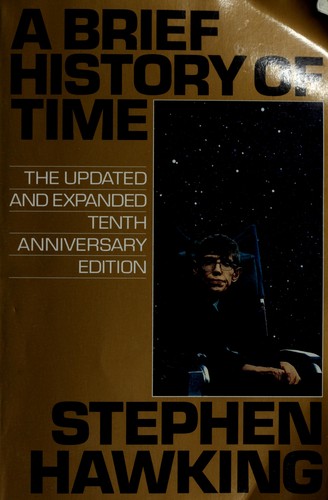
How does The Elegant Universe compare to A Brief History of Time?
A Brief History of Time is shorter and more accessible; The Elegant Universe is longer and goes deeper into string theory specifically. Hawking's book covers more ground across cosmology; Greene's is more focused. Readers who finish one often read the other.
-
Who should read The Elegant Universe?
Anyone curious about the cutting edge of theoretical physics and willing to spend time with dense material. It is not a light read, but it is probably the most accessible treatment of string theory written for a non-specialist audience.