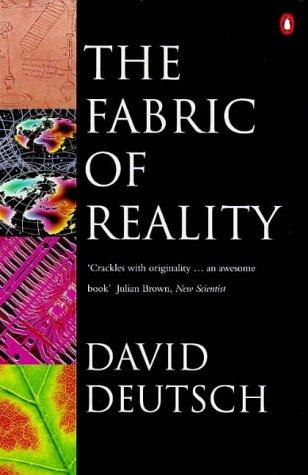
The Fabric of Reality by David Deutsch is a 1997 science book about quantum mechanics, knowledge, multiverse. Quantum mechanics, epistemology, evolution, and computation are not separate disciplines but interlinked strands of a single description of reality — understanding one requires understanding all four.
Summary
The Fabric of Reality is David Deutsch's argument that four distinct strands of explanation — quantum physics, epistemology, the theory of evolution, and the theory of computation — are not separate fields but facets of a single unified description of reality. Deutsch, a physicist at Oxford who pioneered the concept of the quantum computer, writes with the conviction that most popular accounts of science fail readers by explaining what scientists have discovered without explaining how knowledge itself works or what it means for something to be real.
The book's most provocative claim concerns quantum mechanics. Deutsch is a committed advocate of the many-worlds interpretation, developed by Hugh Everett in the 1950s. In this view, quantum interference effects — the experimental basis for the whole field — are only explicable if vast numbers of parallel universes actually exist and interact at the quantum level. Deutsch argues that the other interpretations of quantum mechanics, including the Copenhagen interpretation still taught in most textbooks, are philosophically evasive: they describe what happens without committing to what is actually there. The multiverse, in his view, is not speculation but the most straightforward reading of the evidence.
Deutsch draws on Karl Popper's epistemology to argue that good explanations are hard to vary — they are specific, testable, and cannot be adjusted arbitrarily to accommodate any result. He applies this criterion across fields: the theory of natural selection is a good explanation because removing any part of it destroys the explanation's force; the many-worlds interpretation is a good explanation because it commits to claims about reality that could in principle be checked. The chapters on computation introduce Alan Turing's universal computer and Deutsch's own extension of it to quantum computing, which he connects to the structure of the multiverse.
The book is demanding and occasionally combative. Deutsch takes positions most physicists avoid and defends them without hedging. Readers who want a gentle survey of physics will be frustrated; readers willing to follow an argument to its conclusions will find The Fabric of Reality one of the most intellectually serious popular science books written.
Talk to The Fabric of Reality like its author wrote you back.
Get the ideas that fit your life — not generic summaries.
- Chat with the book
- Audiobook-style main ideas
- Adapts to your life and goals
- Helps you take action
Key takeaways
- 1.
Quantum mechanics, epistemology, evolution, and computation are not separate disciplines but interlinked strands of a single description of reality — understanding one requires understanding all four.
- 2.
The many-worlds interpretation of quantum mechanics is, in Deutsch's view, the only interpretation that takes the theory's implications seriously rather than evading them with talk of observation and collapse.
- 3.
Quantum interference experiments are direct evidence that parallel universes exist and interact at the quantum level; the interference effects require an explanation, and other universes provide it.
- 4.
Good explanations are hard to vary: a valid scientific explanation specifies claims that cannot be freely adjusted without destroying the explanation. This criterion distinguishes science from ad hoc story-telling.
- 5.
Karl Popper's falsificationism is the right epistemology for science, but science grows not mainly by falsifying theories but by constructing increasingly hard-to-vary explanations.
- 6.
A universal quantum computer — which Deutsch first proposed — would not merely be faster than a classical computer but would be fundamentally different in kind, performing computations across parallel universes simultaneously.
- 7.
The physical Church-Turing thesis holds that a universal quantum computer can simulate any physical process: this is a deep connection between the structure of computation and the structure of the universe.
- 8.
Progress in knowledge is the only way to solve problems, including long-term survival problems. A static civilization that stops creating new knowledge is, in the long run, doomed.
Discussion questions
Use these on your own, with a book club, or as chat starters in Superbook. Book club version, ready to copy or print →
- 1.
Deutsch claims the many-worlds interpretation is the only honest reading of quantum mechanics. Does his argument convince you, or does it seem like an extraordinary claim requiring more evidence?
- 2.
He argues that good explanations are hard to vary. Can you think of an explanation in everyday life — or in a field you know well — that fails this criterion?
- 3.
What does it mean to take a scientific theory seriously? Is there a difference between treating a theory as a calculating tool and believing it is literally true?
- 4.
Deutsch connects quantum computing to the structure of the multiverse. Does that connection seem like a genuine insight or an overreach?
- 5.
If parallel universes exist but can never be visited or directly observed, in what sense are they real?
- 6.
Deutsch criticizes the Copenhagen interpretation as philosophically evasive. Are there good reasons to prefer an interpretation that doesn't commit to an underlying reality?
- 7.
The book argues that knowledge and explanation are themselves physical processes, subject to the laws of physics. What implications does that have for how we think about truth?
- 8.
Deutsch places Popper's epistemology at the center of the book. Had you encountered Popper before? Does his falsificationism match how science actually works in your experience?
- 9.
How should scientific education change if Deutsch is right that most textbooks teach evasive interpretations of quantum mechanics?
- 10.
What would it mean for evolution and quantum mechanics to be parts of the same explanatory fabric? Does that unification seem forced or genuine?
- 11.
Deutsch writes that a static civilization — one that stops creating new knowledge — will inevitably fail. Do you agree? What evidence is there for or against?
- 12.
The book is confident to the point of combativeness. Does an author's tone affect how seriously you take their arguments?
Themes
Frequently asked questions
-
Is The Fabric of Reality a physics book or a philosophy book?
Both. Deutsch argues that physics and philosophy of knowledge are inseparable. The book covers quantum mechanics and quantum computing but spends equal time on epistemology and what it means for an explanation to be good. Readers comfortable with either discipline will find the other half rewarding but challenging.
-
Do I need a background in quantum mechanics to read it?
No prior physics is required, but the book assumes you are willing to think carefully. Deutsch builds his quantum mechanics from scratch using thought experiments. The philosophical sections similarly assume no prior Popper, but the arguments are dense and reward slow reading.
-
What is the many-worlds interpretation?
It is the interpretation of quantum mechanics, proposed by Hugh Everett, which holds that every quantum event causes the universe to branch into multiple versions, each corresponding to a possible outcome. There is no wave-function collapse; all outcomes occur in parallel universes. Most physicists avoid committing to any interpretation; Deutsch argues the many-worlds version is the only honest one.
-
How does this compare to Greene's The Elegant Universe?
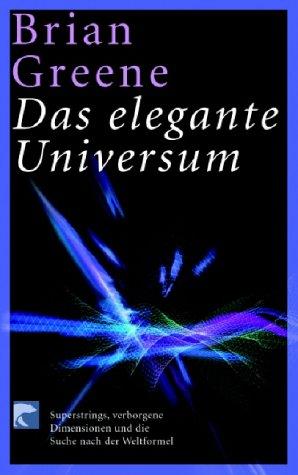
Both cover fundamental physics for general readers, but Deutsch is more philosophical and more opinionated. Greene focuses on string theory and extra dimensions; Deutsch focuses on the foundations of quantum mechanics and the nature of knowledge. Deutsch is harder but more intellectually distinctive.
-
Who should skip this book?
Readers who want a broad survey of modern physics without deep argument. Deutsch covers a narrow set of ideas very thoroughly. If you want breadth, Bryson's A Short History of Nearly Everything is a better choice.