Business · Book club
The Empathetic Workplace book club questions
Here are 12 book club questions for The Empathetic Workplace by Katharine Manning, ordered to open easily and end somewhere worth arguing about. Copy them, print them, or bring them up one at a time.
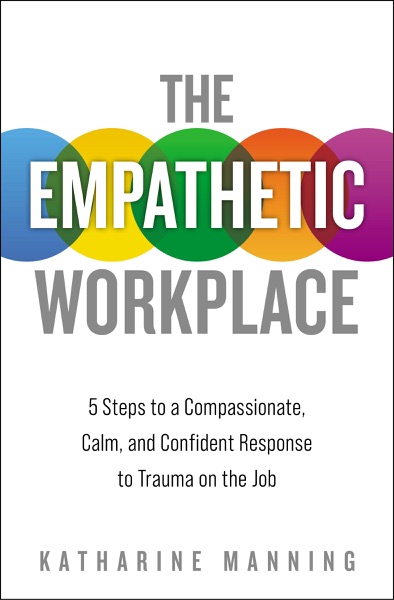
The Empathetic Workplace is Katharine Manning's guide to responding effectively when employees, colleagues, or clients bring personal crises, trauma, or distress into professional settings.
Katharine Manning · 2021 · 4h 30m
Full summary and key takeaways →The 12 questions
- 1.
Think of a time someone came to you with a personal crisis at work. Looking back, what did you do well and what would you do differently now?
- 2.
Manning argues most workplaces handle distress poorly by default. What patterns from your own organization do you recognize in her examples?
- 3.
Which step of the LASER framework would be hardest for you personally, and why?
- 4.
How do you distinguish between being supportive and overstepping into territory that requires professional help?
- 5.
Manning points out that people from marginalized groups are less likely to disclose distress at work. What barriers exist in your environment?
- 6.
What organizational practices — meeting rhythms, performance review design, HR processes — make it harder or easier to respond to employees in crisis?
- 7.
Secondary trauma affects people who regularly hear distressing stories. How does your team or organization support people in those roles?
- 8.
Have you ever been on the receiving end of a particularly good or particularly bad response when you shared something difficult at work? What made the difference?
- 9.
Manning says 'empowering' someone means giving back agency rather than directing their next steps. How does that change how you'd handle a specific real situation you've faced?
- 10.
When does organizational empathy risk becoming performative rather than genuine? What would be the warning signs?
- 11.
What specific change to onboarding, management training, or team norms in your organization would make the biggest practical difference for distressed employees?
- 12.
Manning's background is in trauma-informed legal advocacy. How does framing this as a legal and organizational risk, not just a moral one, change the conversation in your context?
How to run the discussion
- Pick six to eight, not all of them. An hour of real discussion covers fewer questions than anyone expects, and racing the list is what makes a book club feel like homework.
- Open with what people noticed, not what they concluded. Asking for a verdict first hardens opinions before anyone has heard each other.
- Let the disagreement run. The questions below that split a room are the ones worth the time; the ones everyone answers the same way can be skipped.
- Ask the quiet person a specific question. A direct, narrow question is far easier to answer than an open invitation to contribute.
Themes worth steering toward
If the conversation stalls, these are the threads that usually restart it.
Common questions
What are good book club questions for The Empathetic Workplace?
Here are 12 book club questions for The Empathetic Workplace by Katharine Manning, ordered to open easily and end somewhere worth arguing about. The strongest openers ask what each reader noticed rather than what they concluded, and the discussion usually turns on empathy, workplace trauma, leadership.
How long should a book club discussion of The Empathetic Workplace last?
Most groups run 60 to 90 minutes of actual discussion. That is roughly six to eight questions, not all of them, so pick the ones that suit your group rather than working down the list in order.
What are the main themes in The Empathetic Workplace?
Empathy, Workplace trauma, Leadership, Psychological safety, Employee wellbeing. Those are the threads most likely to divide a room, which makes them the useful places to steer a discussion that has gone quiet.
Picking the next one? See books like The Empathetic Workplace or questions for other book club picks.
