Science · Book club
The End of Overeating book club questions
Here are 11 book club questions for The End of Overeating by David A. Kessler, ordered to open easily and end somewhere worth arguing about. Copy them, print them, or bring them up one at a time.
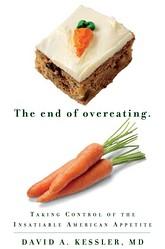
David Kessler, a former FDA commissioner and dean of two medical schools, wrote The End of Overeating as a scientific investigation into why so many people — including himself — find it nearly impossible to stop eating hyperpalatable food once they start.
David A. Kessler · 2009 · 6h 0m
Full summary and key takeaways →The 11 questions
- 1.
Kessler argues that conditioned hypereating is a neurological state, not a character flaw. Does that reframe change how you relate to your own eating behavior?
- 2.
The book distinguishes between hunger and cue-triggered urge. Can you identify moments in your own life where you ate in response to a cue rather than genuine need?
- 3.
Kessler came to this research partly through his own struggles with overeating. Does that personal stake make the book more credible to you, or does it introduce a potential bias?
- 4.
The prescription is closer to cognitive-behavioral therapy than to nutrition advice. Do you think food is better addressed through behavioral approaches or dietary ones?
- 5.
How does Kessler's neuroscience framing compare to Moss's industry-reporting framing in Salt Sugar Fat? Are they two sides of the same argument or fundamentally different diagnoses?
- 6.
Which foods in your own diet function more like cue-triggered habits than genuine choices? What would it take to change your relationship to one of them?
- 7.
Kessler recommends building a narrative about why a particular food isn't worth eating. Have you ever used self-talk in this way? Did it work?
- 8.
The book was published in 2009. Given how much the food environment has changed since, do you think the problem of conditioned hypereating is worse, better, or the same?
- 9.
Food companies spent enormous resources learning to trigger dopamine pathways. Is there an argument that they have a responsibility to apply the same research to reducing overconsumption?
- 10.
Kessler's framework requires identifying which specific foods are problematic and avoiding them strictly. How practical is strict avoidance in a world where those foods are everywhere?
- 11.
If conditioned hypereating is as common as Kessler suggests, what policy interventions would follow from accepting his diagnosis?
How to run the discussion
- Pick six to eight, not all of them. An hour of real discussion covers fewer questions than anyone expects, and racing the list is what makes a book club feel like homework.
- Open with what people noticed, not what they concluded. Asking for a verdict first hardens opinions before anyone has heard each other.
- Let the disagreement run. The questions below that split a room are the ones worth the time; the ones everyone answers the same way can be skipped.
- Ask the quiet person a specific question. A direct, narrow question is far easier to answer than an open invitation to contribute.
Themes worth steering toward
If the conversation stalls, these are the threads that usually restart it.
Common questions
What are good book club questions for The End of Overeating?
Here are 11 book club questions for The End of Overeating by David A. Kessler, ordered to open easily and end somewhere worth arguing about. The strongest openers ask what each reader noticed rather than what they concluded, and the discussion usually turns on food addiction, neuroscience, appetite.
How long should a book club discussion of The End of Overeating last?
Most groups run 60 to 90 minutes of actual discussion. That is roughly six to eight questions, not all of them, so pick the ones that suit your group rather than working down the list in order.
What are the main themes in The End of Overeating?
Food addiction, Neuroscience, Appetite, Consumer behavior, Self-regulation. Those are the threads most likely to divide a room, which makes them the useful places to steer a discussion that has gone quiet.
Picking the next one? See books like The End of Overeating or questions for other book club picks.
