Politics · Book club
The End of Power book club questions
Here are 12 book club questions for The End of Power by Moisés Naím, ordered to open easily and end somewhere worth arguing about. Copy them, print them, or bring them up one at a time.
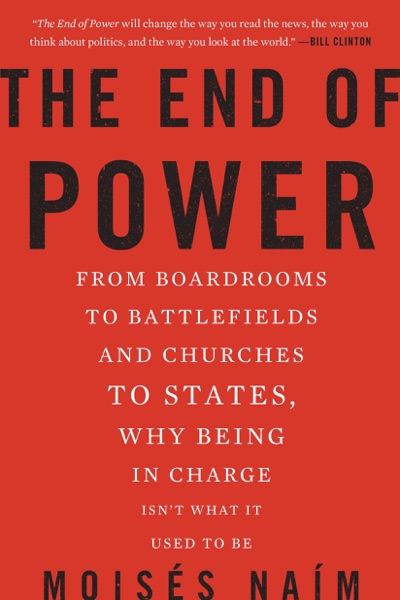
The End of Power is Moisés Naím's argument that power — the ability to make others do what you want — is becoming easier to acquire, harder to consolidate, and faster to lose.
Moisés Naím · 2013 · 5h 15m
Full summary and key takeaways →The 12 questions
- 1.
Naím published this in 2013. Do the ten years since feel like confirmation of his thesis, a partial refutation, or something more complicated?
- 2.
He argues that power is decaying across politics, business, religion, and warfare simultaneously. Is that one phenomenon or several different ones that happen to share a surface pattern?
- 3.
The book is careful to say that the decay of power is not simply good. What collective-action problems do you think are most endangered by the fragmentation he describes?
- 4.
Naím identifies three revolutions: More, Mobility, Mentality. Which of the three do you think is most important, and why?
- 5.
How does the rise of AI and large-scale digital platforms fit into his framework? Do they concentrate power again, or accelerate its decay?
- 6.
He argues that incumbents in most industries hold positions for shorter periods. Is that consistent with what you observe in your own field?
- 7.
The Mentality revolution — declining deference to authority — has both progressive and regressive expressions. How do you distinguish between healthy skepticism of institutions and corrosive rejection of expertise?
- 8.
Naím was a Venezuelan cabinet minister. Does his own national experience of institutional breakdown shape the argument in ways worth noting?
- 9.
If veto players multiply and it becomes harder to make decisions stick, what institutions or mechanisms do you think still manage to act effectively? What makes them different?
- 10.
The book ends with concern about global governance problems requiring sustained institutional commitment. Has that concern been borne out in climate, nuclear, or health governance since 2013?
- 11.
Naím frames the decay of power as a structural trend, not a moral judgment. Is that framing persuasive, or does the argument have a normative direction?
- 12.
What should individuals, organizations, and governments be doing differently given the landscape he describes? Does the book answer that question adequately?
How to run the discussion
- Pick six to eight, not all of them. An hour of real discussion covers fewer questions than anyone expects, and racing the list is what makes a book club feel like homework.
- Open with what people noticed, not what they concluded. Asking for a verdict first hardens opinions before anyone has heard each other.
- Let the disagreement run. The questions below that split a room are the ones worth the time; the ones everyone answers the same way can be skipped.
- Ask the quiet person a specific question. A direct, narrow question is far easier to answer than an open invitation to contribute.
Themes worth steering toward
If the conversation stalls, these are the threads that usually restart it.
Common questions
What are good book club questions for The End of Power?
Here are 12 book club questions for The End of Power by Moisés Naím, ordered to open easily and end somewhere worth arguing about. The strongest openers ask what each reader noticed rather than what they concluded, and the discussion usually turns on power and authority, political fragmentation, institutions.
How long should a book club discussion of The End of Power last?
Most groups run 60 to 90 minutes of actual discussion. That is roughly six to eight questions, not all of them, so pick the ones that suit your group rather than working down the list in order.
What are the main themes in The End of Power?
Power and authority, Political fragmentation, Institutions, Geopolitics, Democracy. Those are the threads most likely to divide a room, which makes them the useful places to steer a discussion that has gone quiet.
Picking the next one? See books like The End of Power or questions for other book club picks.
