Thriller · Book club
The English Assassin book club questions
Here are 11 book club questions for The English Assassin by Daniel Silva, ordered to open easily and end somewhere worth arguing about. Copy them, print them, or bring them up one at a time.
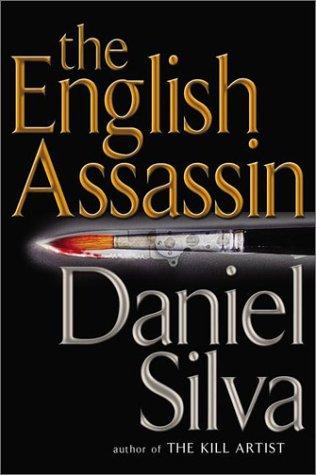
Gabriel Allon, Mossad's master art restorer and occasional assassin, travels to Zurich to collect a painting from a banker named Augustus Rolfe — only to find Rolfe already dead and himself framed for the murder.
Daniel Silva · 2002 · 6h 45m
Full summary and key takeaways →The 11 questions
- 1.
Gabriel's skill as a restorer is repeatedly contrasted with his skill as an operative. Does the novel resolve that tension, or does it leave Gabriel permanently divided?
- 2.
Switzerland's neutrality during World War II has been reevaluated significantly in the decades since. How does The English Assassin use that historical reassessment, and does it oversimplify it?
- 3.
The novel suggests that powerful families and institutions will do violence to preserve secrets from the war era. Is that a plausible argument about human behavior, or thriller melodrama?
- 4.
Gabriel is framed for a murder he didn't commit and has to act without institutional backing. How does operating outside sanctioned authority change the moral calculus of what he does?
- 5.
Silva is an American writing about European institutions and specifically about Swiss banking culture. Did the novel feel credibly European to you, or did it read as an American outsider's version?
- 6.
The stolen-art narrative intersects with the Nazi-gold narrative. Are those two threads better served separately or together — does the combination add complexity or muddy the focus?
- 7.
Compared to The Day of the Jackal or the Odessa File — earlier European political thrillers — what does The English Assassin do differently with similar material?
- 8.
Gabriel's backstory involves a personal tragedy that runs parallel to the professional story. Did that biographical depth add to your investment in the character or feel like conventional thriller machinery?
- 9.
The novel was published in 2002, shortly after 9/11, and the intelligence world it depicts is pre-transformation. How much does that historical moment inflect the book's view of intelligence services?
- 10.
If accountability for wartime complicity expires after a certain number of decades, where does that line fall? The novel seems to argue it doesn't expire — do you agree?
- 11.
This is the second novel in a long series. Did it make you want to read the others, and what would it take for a thriller series to justify going beyond five or six books?
How to run the discussion
- Pick six to eight, not all of them. An hour of real discussion covers fewer questions than anyone expects, and racing the list is what makes a book club feel like homework.
- Open with what people noticed, not what they concluded. Asking for a verdict first hardens opinions before anyone has heard each other.
- Let the disagreement run. The questions below that split a room are the ones worth the time; the ones everyone answers the same way can be skipped.
- Ask the quiet person a specific question. A direct, narrow question is far easier to answer than an open invitation to contribute.
Themes worth steering toward
If the conversation stalls, these are the threads that usually restart it.
Common questions
What are good book club questions for The English Assassin?
Here are 11 book club questions for The English Assassin by Daniel Silva, ordered to open easily and end somewhere worth arguing about. The strongest openers ask what each reader noticed rather than what they concluded, and the discussion usually turns on nazi gold and swiss complicity, art and identity, intelligence operations.
How long should a book club discussion of The English Assassin last?
Most groups run 60 to 90 minutes of actual discussion. That is roughly six to eight questions, not all of them, so pick the ones that suit your group rather than working down the list in order.
What are the main themes in The English Assassin?
Nazi gold and Swiss complicity, Art and identity, Intelligence operations, Accountability and memory, Cold professionalism. Those are the threads most likely to divide a room, which makes them the useful places to steer a discussion that has gone quiet.
Picking the next one? See books like The English Assassin or questions for other book club picks.
