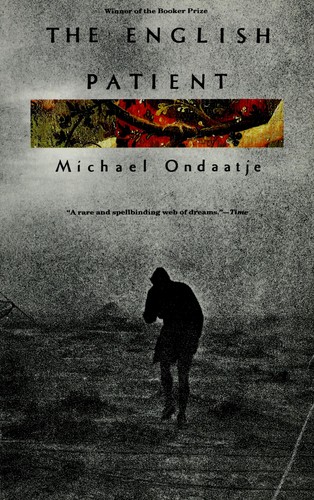
Talk to The English Patient like its author wrote you back.
Get the ideas that fit your life — not generic summaries.
- Chat with the book
- Audiobook-style main ideas
- Adapts to your life and goals
- Helps you take action
What it argues
The English Patient is set at the end of the Second World War, in a damaged Italian villa north of Florence. A Canadian nurse named Hana tends to a severely burned man — the "English patient" — who is nearly unrecognizable and whose identity is unclear. Two other figures arrive: Kip, a young Sikh sapper defusing German bombs throughout the Italian countryside, who becomes Hana's lover; and Caravaggio, a Canadian thief turned spy with a personal connection to the damaged man. Over the course of the novel, through memory and story, the burned man's identity — and his catastrophic love affair in the North African desert before the war — is gradually revealed.
What the novel is doing beneath its plot is something more ambitious: examining how identity, nationality, and borders dissolve under the pressures of war and passion. The English patient has spent years mapping the desert — a landscape that resists the imperial impulse to name and claim — and he has had an affair that destroyed multiple lives. Ondaatje is interested in people for whom conventional belonging has become impossible: Hana, traumatized by loss; Kip, fighting for an empire that doesn't consider him its equal; Caravaggio, a man without a stable identity.
What it gets right
- 1.
The novel treats national identity as a kind of violence — the English patient's rejection of borders and nationhood is both his freedom and the source of the catastrophe he causes.
- 2.
Ondaatje's non-linear structure enacts memory rather than just describing it: the reader reassembles the burned man's story in the same way the characters do, incompletely and out of sequence.
- 3.
The North African desert is more than setting — it's the novel's counter-symbol, a space that resists mapping, that undoes the imperial logic the characters are caught inside.
What it covers
Who wrote it
Michael Ondaatje is a Sri Lankan-born Canadian novelist and poet whose work moves between lyricism, fragmented structure, and postcolonial preoccupations. His novels include Coming Through Slaughter, In the Skin of a Lion, Anil's Ghost, Divisadero, and The Cat's Table. The English Patient won the Booker Prize in 1992 and was adapted into a highly successful film in 1996. He has also published poetry collections and a memoir, Running in the Family. He is widely regarded as one of the most distinctive prose stylists writing in English.
