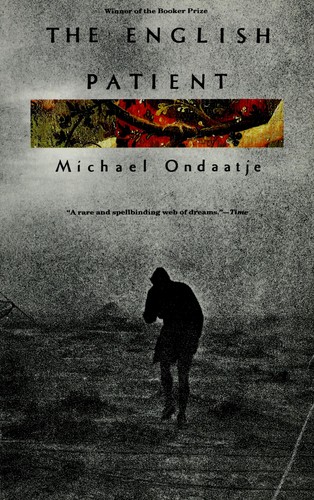
Talk to The English Patient like its author wrote you back.
Get the ideas that fit your life — not generic summaries.
- Chat with the book
- Audiobook-style main ideas
- Adapts to your life and goals
- Helps you take action
The English Patient, in detail
The English Patient is set at the end of the Second World War, in a damaged Italian villa north of Florence. A Canadian nurse named Hana tends to a severely burned man — the "English patient" — who is nearly unrecognizable and whose identity is unclear. Two other figures arrive: Kip, a young Sikh sapper defusing German bombs throughout the Italian countryside, who becomes Hana's lover; and Caravaggio, a Canadian thief turned spy with a personal connection to the damaged man. Over the course of the novel, through memory and story, the burned man's identity — and his catastrophic love affair in the North African desert before the war — is gradually revealed.
What the novel is doing beneath its plot is something more ambitious: examining how identity, nationality, and borders dissolve under the pressures of war and passion. The English patient has spent years mapping the desert — a landscape that resists the imperial impulse to name and claim — and he has had an affair that destroyed multiple lives. Ondaatje is interested in people for whom conventional belonging has become impossible: Hana, traumatized by loss; Kip, fighting for an empire that doesn't consider him its equal; Caravaggio, a man without a stable identity.
The prose is Ondaatje's most distinctive feature — lyrical, fragmented, non-linear, moving between timelines without warning in a way that mirrors the burned man's memory. Some sentences are close to poetry; the physical descriptions of desert geography are among the most unusual in English-language fiction. The novel won the Booker Prize in 1992 (sharing it with Barry Unsworth's Sacred Hunger) and was the basis for Anthony Minghella's 1996 film.
The English Patient is beautiful and demands slow reading — it can't be consumed like a plot-driven novel. The chronological jumps and lyrical density are features of its meaning, not obstacles to it. Readers expecting a straightforward war narrative or a conventional love story will be disoriented. Readers willing to be immersed in its particular atmosphere — part excavation of the past, part meditation on belonging — often find it unforgettable.
The big ideas
- 1.
The novel treats national identity as a kind of violence — the English patient's rejection of borders and nationhood is both his freedom and the source of the catastrophe he causes.
- 2.
Ondaatje's non-linear structure enacts memory rather than just describing it: the reader reassembles the burned man's story in the same way the characters do, incompletely and out of sequence.
- 3.
The North African desert is more than setting — it's the novel's counter-symbol, a space that resists mapping, that undoes the imperial logic the characters are caught inside.
