Economics · Book club
The Essays of Warren Buffett book club questions
Here are 12 book club questions for The Essays of Warren Buffett by Warren Buffett, ordered to open easily and end somewhere worth arguing about. Copy them, print them, or bring them up one at a time.
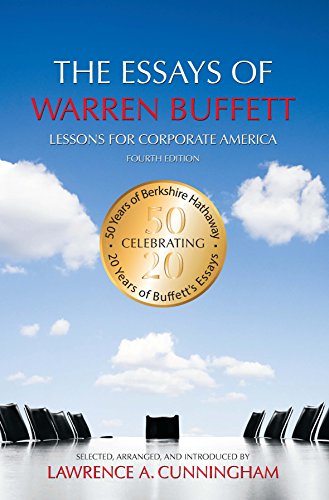
The Essays of Warren Buffett is Lawrence Cunningham's thematic compilation of Warren Buffett's annual letters to Berkshire Hathaway shareholders, spanning from the 1970s through the year of publication.
Warren Buffett · 1997 · 5h 0m
Full summary and key takeaways →The 12 questions
- 1.
Buffett writes that he tries to buy wonderful businesses at fair prices rather than fair businesses at wonderful prices. How do you evaluate the difference between a wonderful business and a fair one?
- 2.
The corporate governance sections are unusually direct about the failures of typical boards. Have you ever seen board behavior, as an employee, investor, or observer, that matched the pattern Buffett criticizes?
- 3.
Buffett distinguishes between owner earnings and reported earnings. How much of the financial reporting you typically read reflects economic reality, and how much is accounting convention?
- 4.
Buffett has explained his investment approach in these letters for decades. If the approach is this clearly articulated, why don't more professional investors replicate it successfully?
- 5.
The book spans several decades. Does Buffett's investment philosophy change over time in ways the compilation reveals, or is there genuine continuity across the letters?
- 6.
Buffett is critical of stock option accounting — the practice of not expensing options — long before it became required. Where do you see similar gaps today between what accounting reports and what is economically true?
- 7.
The economic moat concept identifies businesses that can defend their returns on capital from competition. What businesses in your own experience have genuine moats, and what creates those moats?
- 8.
Buffett argues that most acquisitions destroy value because they are done at excessive prices. What does that imply about how executives and boards actually make capital allocation decisions?
- 9.
The letters are addressed to a specific audience — Berkshire shareholders — but have been read by millions of investors who own no Berkshire stock. Does that audience shift change how you read the advice?
- 10.
Buffett's writing voice is distinctive: folksy, self-deprecating, unusually honest about mistakes. How much of his credibility comes from that voice versus the underlying track record?
- 11.
What specific idea from the essays has most directly influenced how you think about evaluating a business or an investment?
- 12.
Buffett has written that if he were starting with a small amount of capital today, his approach would be quite different. What do you think he means, and does it change how applicable the essays are for individual investors?
How to run the discussion
- Pick six to eight, not all of them. An hour of real discussion covers fewer questions than anyone expects, and racing the list is what makes a book club feel like homework.
- Open with what people noticed, not what they concluded. Asking for a verdict first hardens opinions before anyone has heard each other.
- Let the disagreement run. The questions below that split a room are the ones worth the time; the ones everyone answers the same way can be skipped.
- Ask the quiet person a specific question. A direct, narrow question is far easier to answer than an open invitation to contribute.
Themes worth steering toward
If the conversation stalls, these are the threads that usually restart it.
Common questions
What are good book club questions for The Essays of Warren Buffett?
Here are 12 book club questions for The Essays of Warren Buffett by Warren Buffett, ordered to open easily and end somewhere worth arguing about. The strongest openers ask what each reader noticed rather than what they concluded, and the discussion usually turns on value investing, corporate governance, business ownership.
How long should a book club discussion of The Essays of Warren Buffett last?
Most groups run 60 to 90 minutes of actual discussion. That is roughly six to eight questions, not all of them, so pick the ones that suit your group rather than working down the list in order.
What are the main themes in The Essays of Warren Buffett?
Value investing, Corporate governance, Business ownership, Long-term thinking, Management principles. Those are the threads most likely to divide a room, which makes them the useful places to steer a discussion that has gone quiet.
Picking the next one? See books like The Essays of Warren Buffett or questions for other book club picks.
