Science · Book club
The Extended Mind book club questions
Here are 12 book club questions for The Extended Mind by Annie Murphy Paul, ordered to open easily and end somewhere worth arguing about. Copy them, print them, or bring them up one at a time.
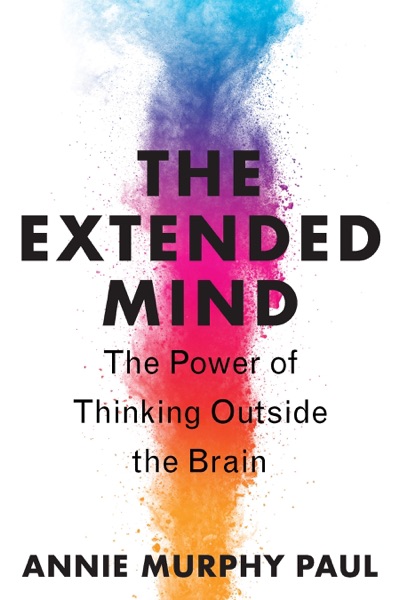
The Extended Mind is Annie Murphy Paul's argument that the brain is not the only seat of cognition.
Annie Murphy Paul · 2021 · 6h 0m
Full summary and key takeaways →The 12 questions
- 1.
Paul argues that the body is a resource for thinking, not just a vehicle for the brain. When have you noticed physical sensations providing information that influenced a decision?
- 2.
Have you ever noticed that moving, walking, or changing your physical posture affected how you thought through a problem? What happened?
- 3.
What does your primary work environment signal to your brain? Is it optimized for the type of thinking you most need to do there?
- 4.
Paul distinguishes between natural environments that restore attention and stimulating environments that prime creativity. Where do you go when you need to recover your concentration? When you need a new idea?
- 5.
The research on gesture suggests that preventing people from gesturing hurts their thinking. How do meetings, phone calls, and remote work affect how freely you gesture?
- 6.
Think of a conversation that genuinely changed how you thought about something — not just added information but shifted how you understood the problem. What made that possible?
- 7.
The book argues that most organizational collaboration is coordination rather than genuine collaborative cognition. Does that match your experience of team work?
- 8.
What is the most cognitively demanding thing you regularly do? Is your environment designed to support that specific type of thinking?
- 9.
Paul covers the effect of spreading information spatially — on a table or wall — rather than scrolling through it on a screen. How do you currently work with complex material, and does it match what the research suggests?
- 10.
Interoception — paying attention to bodily signals — is reportedly trainable. What would it mean to get better at noticing and interpreting your own physical state while working?
- 11.
Who in your life do you think best with — not just most comfortably, but whose presence genuinely makes your thinking better? What is it about how they engage?
- 12.
If you took the book's conclusions seriously, what one change would you make to how you set up your physical workspace?
How to run the discussion
- Pick six to eight, not all of them. An hour of real discussion covers fewer questions than anyone expects, and racing the list is what makes a book club feel like homework.
- Open with what people noticed, not what they concluded. Asking for a verdict first hardens opinions before anyone has heard each other.
- Let the disagreement run. The questions below that split a room are the ones worth the time; the ones everyone answers the same way can be skipped.
- Ask the quiet person a specific question. A direct, narrow question is far easier to answer than an open invitation to contribute.
Themes worth steering toward
If the conversation stalls, these are the threads that usually restart it.
Common questions
What are good book club questions for The Extended Mind?
Here are 12 book club questions for The Extended Mind by Annie Murphy Paul, ordered to open easily and end somewhere worth arguing about. The strongest openers ask what each reader noticed rather than what they concluded, and the discussion usually turns on cognition, learning, environment.
How long should a book club discussion of The Extended Mind last?
Most groups run 60 to 90 minutes of actual discussion. That is roughly six to eight questions, not all of them, so pick the ones that suit your group rather than working down the list in order.
What are the main themes in The Extended Mind?
Cognition, Learning, Environment, Embodied thinking, Collaboration. Those are the threads most likely to divide a room, which makes them the useful places to steer a discussion that has gone quiet.
Picking the next one? See books like The Extended Mind or questions for other book club picks.
