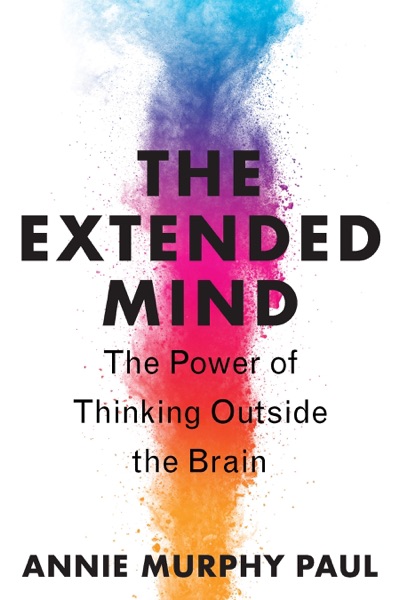
The Extended Mind by Annie Murphy Paul is a 2021 science book about cognition, learning, environment. Cognition extends beyond the brain. The body, the physical environment, and other people are not just supports for thinking — they are part of the cognitive process itself.
Summary
The Extended Mind is Annie Murphy Paul's argument that the brain is not the only seat of cognition. Drawing on research across cognitive science, neuroscience, and psychology, Paul makes the case that humans routinely outsource and extend their thinking through the body, through physical spaces, and through other people — and that understanding this can dramatically change how we learn, work, and create.
Paul organizes the book around three resources that people can recruit for thinking: interoception (sensing the body's internal states), the physical environment (spaces, objects, gestures), and social contexts (other minds). Each section is built from research that tends to be scattered across academic disciplines and rarely synthesized for a general reader. The body section covers findings on how physical movement, embodied gestures, and gut feelings influence cognition in ways that are invisible when you treat the brain as the only input. People who gesture while learning retain more; people who pay attention to their physical sensations make better predictions; physical arrangements of information on a page or a table affect the quality of the reasoning done with them.
The environment section is especially rich. Paul draws on research showing that different spaces enable different kinds of thinking — restorative natural environments recover directed attention; structured, familiar spaces support focused analytical work; stimulating, novel spaces prime creative thinking. The implication is not just that environment matters but that designing your physical context for the specific cognitive task at hand is a learnable skill.
The collaboration section moves into other people as cognitive resources. Paul argues that thinking with others who have different knowledge, through structured conversation and argument, extends what any individual can do — but that most organizational practices for collaboration are poorly designed to exploit this. The book is careful to distinguish between coordination (splitting work) and genuine collaborative cognition (thinking that is qualitatively different when done jointly). Some sections are denser with citations than others, but Paul writes with clarity and genuine conviction throughout. For readers who have sensed that how they organize their workspace, how they move, and who they think with all affect the quality of their thinking, the book provides a research-backed framework for taking those intuitions seriously.
Talk to The Extended Mind like its author wrote you back.
Get the ideas that fit your life — not generic summaries.
- Chat with the book
- Audiobook-style main ideas
- Adapts to your life and goals
- Helps you take action
Key takeaways
- 1.
Cognition extends beyond the brain. The body, the physical environment, and other people are not just supports for thinking — they are part of the cognitive process itself.
- 2.
Interoception — sensing internal body states — improves decision-making. Attending to physical signals like heart rate, gut feelings, and physical tension gives access to information that the conscious brain processes more slowly.
- 3.
Gesture enhances thinking and learning. People who gesture while explaining or learning retain more and understand better. Gestures are not just communication tools; they are thinking tools.
- 4.
Natural environments restore directed attention. Brief exposure to natural settings or even images of nature measurably improves concentration and cognitive performance in subsequent tasks.
- 5.
The physical arrangement of information affects how it's reasoned about. Spreading material spatially on a table or large surface supports different reasoning than confining it to a screen.
- 6.
Thinking aloud — explaining something verbally, even to no one — improves comprehension and problem-solving. The act of forming language forces more rigorous structuring of vague intuitions.
- 7.
Collaborative cognition is different from coordination. Groups that genuinely think together — where each person's contribution reshapes others' thinking — produce outcomes qualitatively different from individuals dividing work.
- 8.
The spaces where you work shape how you think. Designing different environments for different types of cognitive work — focused, restorative, creative — is a practical strategy, not a luxury.
Discussion questions
Use these on your own, with a book club, or as chat starters in Superbook. Book club version, ready to copy or print →
- 1.
Paul argues that the body is a resource for thinking, not just a vehicle for the brain. When have you noticed physical sensations providing information that influenced a decision?
- 2.
Have you ever noticed that moving, walking, or changing your physical posture affected how you thought through a problem? What happened?
- 3.
What does your primary work environment signal to your brain? Is it optimized for the type of thinking you most need to do there?
- 4.
Paul distinguishes between natural environments that restore attention and stimulating environments that prime creativity. Where do you go when you need to recover your concentration? When you need a new idea?
- 5.
The research on gesture suggests that preventing people from gesturing hurts their thinking. How do meetings, phone calls, and remote work affect how freely you gesture?
- 6.
Think of a conversation that genuinely changed how you thought about something — not just added information but shifted how you understood the problem. What made that possible?
- 7.
The book argues that most organizational collaboration is coordination rather than genuine collaborative cognition. Does that match your experience of team work?
- 8.
What is the most cognitively demanding thing you regularly do? Is your environment designed to support that specific type of thinking?
- 9.
Paul covers the effect of spreading information spatially — on a table or wall — rather than scrolling through it on a screen. How do you currently work with complex material, and does it match what the research suggests?
- 10.
Interoception — paying attention to bodily signals — is reportedly trainable. What would it mean to get better at noticing and interpreting your own physical state while working?
- 11.
Who in your life do you think best with — not just most comfortably, but whose presence genuinely makes your thinking better? What is it about how they engage?
- 12.
If you took the book's conclusions seriously, what one change would you make to how you set up your physical workspace?
Themes
Frequently asked questions
-
Is The Extended Mind worth reading?
Yes, particularly for knowledge workers and educators. Paul synthesizes research from cognitive science, neuroscience, and education that is usually scattered across journals and disciplines. The practical implications — about environment, gesture, collaboration, and interoception — are immediately applicable and well-supported.
-
How long does it take to read The Extended Mind?
Around five to six hours at average reading pace. It's denser with citations than most popular science books, which means some sections reward slower reading if you want to follow the evidence rather than just the argument.
-
What's the most counterintuitive finding in The Extended Mind?
Probably the gesture research: that gesturing while thinking or explaining is not just a habit or a communication aid but actually changes how well you think and how much you retain. The studies showing that preventing gesturing impairs learning are surprising even for readers familiar with embodied cognition.
-
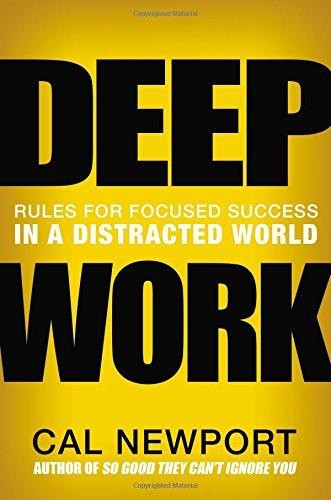
How is The Extended Mind different from books like Deep Work or Atomic Habits?
It's primarily a science survey rather than a framework book. Paul presents research and draws implications rather than building a system for you to follow. It explains why certain environmental and physical practices improve cognition rather than telling you to do them. Read it alongside more prescriptive books for the full picture.
-
Who should read The Extended Mind?
Teachers, knowledge workers, designers of offices and learning spaces, and anyone who has intuited that how they physically arrange themselves and their environment affects how well they think. Also useful for managers interested in what genuine collaborative thinking actually requires.