Science · Book club
The Fabric of the Cosmos book club questions
Here are 12 book club questions for The Fabric of the Cosmos by Brian Greene, ordered to open easily and end somewhere worth arguing about. Copy them, print them, or bring them up one at a time.
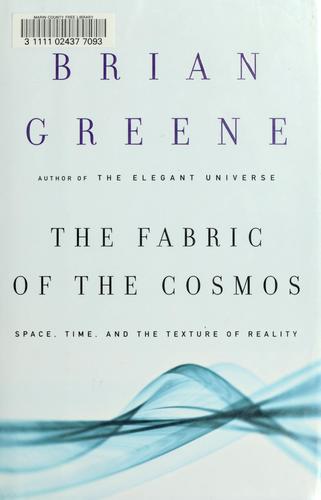
The Fabric of the Cosmos is Brian Greene's attempt to explain what physicists actually mean when they talk about space and time — not the intuitive everyday notions, but the deeply strange picture that emerges from general relativity and quantum mechanics.
Brian Greene · 2004 · 8h 45m
Full summary and key takeaways →The 12 questions
- 1.
Greene argues that our intuitive sense of space as empty and passive is wrong. How does knowing space is a dynamic physical thing change how you think about the universe?
- 2.
The arrow of time is explained by the low entropy of the Big Bang, not by any built-in asymmetry in physics. Does that explanation feel satisfying, or does it just push the mystery one level deeper?
- 3.
Quantum mechanics says a particle doesn't have a definite position until it's measured. Which interpretation — Copenhagen, many-worlds, or another — do you find most coherent, and why?
- 4.
Entanglement allows particles to be correlated across any distance, faster than light, but can't transmit information. Does the distinction between correlation and communication feel principled to you, or like a convenient loophole?
- 5.
Greene is candid that string theory remains speculative and untested. At what point does a physical theory become so mathematically compelling that it's worth pursuing despite no experimental confirmation?
- 6.
The holographic principle implies the 3D world we experience might be encoded on a 2D surface. What does it mean for something to feel real if it might be a kind of projection?
- 7.
If the many-worlds interpretation of quantum mechanics is correct, every quantum event creates a branching of realities. What are the practical or ethical implications of that view?
- 8.
Inflation explains the uniformity of the cosmic microwave background, but the initial conditions of inflation are themselves unexplained. Is this a satisfying scientific explanation, or does it just push the question back?
- 9.
Greene says physicists routinely use quantum mechanics without agreeing on what it means. Is that intellectually stable? Can a theory be useful while remaining philosophically unresolved?
- 10.
How does reading about the actual texture of space and time — not the pop-sci version — change your sense of what's meant by the word 'nothing'?
- 11.
The book argues that everyday intuitions about reality are wrong in deep ways, yet those intuitions work perfectly for everyday life. What does that tell us about the relationship between truth and usefulness?
- 12.
Greene wrote this in 2004. What developments since then — gravitational wave detection, black hole imaging — change or strengthen the picture he describes?
How to run the discussion
- Pick six to eight, not all of them. An hour of real discussion covers fewer questions than anyone expects, and racing the list is what makes a book club feel like homework.
- Open with what people noticed, not what they concluded. Asking for a verdict first hardens opinions before anyone has heard each other.
- Let the disagreement run. The questions below that split a room are the ones worth the time; the ones everyone answers the same way can be skipped.
- Ask the quiet person a specific question. A direct, narrow question is far easier to answer than an open invitation to contribute.
Themes worth steering toward
If the conversation stalls, these are the threads that usually restart it.
Common questions
What are good book club questions for The Fabric of the Cosmos?
Here are 12 book club questions for The Fabric of the Cosmos by Brian Greene, ordered to open easily and end somewhere worth arguing about. The strongest openers ask what each reader noticed rather than what they concluded, and the discussion usually turns on space and time, quantum mechanics, cosmology.
How long should a book club discussion of The Fabric of the Cosmos last?
Most groups run 60 to 90 minutes of actual discussion. That is roughly six to eight questions, not all of them, so pick the ones that suit your group rather than working down the list in order.
What are the main themes in The Fabric of the Cosmos?
Space and time, Quantum mechanics, Cosmology, Reality, Physics. Those are the threads most likely to divide a room, which makes them the useful places to steer a discussion that has gone quiet.
Picking the next one? See books like The Fabric of the Cosmos or questions for other book club picks.
