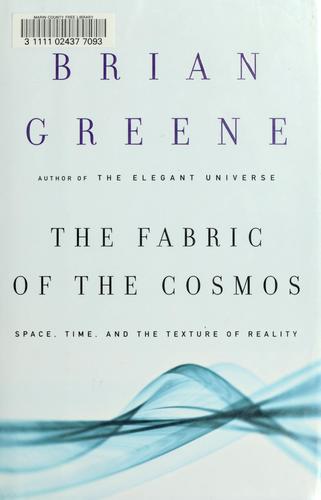
The Fabric of the Cosmos by Brian Greene is a 2004 science book about space and time, quantum mechanics, cosmology. Space and time are not a fixed backdrop for events but a dynamic fabric that curves in response to mass and energy — and that curvature is what we call gravity.
Summary
The Fabric of the Cosmos is Brian Greene's attempt to explain what physicists actually mean when they talk about space and time — not the intuitive everyday notions, but the deeply strange picture that emerges from general relativity and quantum mechanics. The ambition is larger than most popular science books: Greene isn't just explaining one theory, he's laying out the full conceptual landscape of modern physics, from Newton's absolute space to string theory and the possibility of a holographic universe.
The book opens with the nature of space itself. Is space a real physical thing that exists independently of matter, or just a convenient fiction? Newton thought it was absolute. Leibniz disagreed. Mach took a third view. Einstein transformed the question entirely, showing that space and time are woven into a single flexible fabric that warps in the presence of mass and energy. Greene explains this with unusual clarity, grounding each idea in thought experiments before the math arrives.
The quantum mechanics section covers the double-slit experiment, entanglement, and the various interpretations of what quantum theory actually means — Copenhagen, many-worlds, and others. Greene is candid that no interpretation is fully satisfying, and that physicists routinely use quantum mechanics without agreeing on what it is. The section on entropy and the arrow of time is one of the book's strongest: Greene traces the deep puzzle of why time flows only forward to the low-entropy initial conditions of the Big Bang, not to any fundamental asymmetry in physical law.
The later chapters cover string theory and M-theory, braneworld cosmology, and the holographic principle — the idea that the information content of a region of space may be fully encoded on its boundary. Greene is a string theorist himself, and his enthusiasm shows, though he's careful to distinguish what has experimental support from what remains speculative. The Fabric of the Cosmos rewards patient readers with a rare sense of having understood why physicists believe what they believe, not just what they believe.
Talk to The Fabric of the Cosmos like its author wrote you back.
Get the ideas that fit your life — not generic summaries.
- Chat with the book
- Audiobook-style main ideas
- Adapts to your life and goals
- Helps you take action
Key takeaways
- 1.
Space and time are not a fixed backdrop for events but a dynamic fabric that curves in response to mass and energy — and that curvature is what we call gravity.
- 2.
The arrow of time — the fact that past and future feel different — is not built into physical law. It comes from the Big Bang's extraordinarily low-entropy initial condition.
- 3.
Quantum entanglement allows distant particles to be correlated in ways that violate classical intuitions about locality, though it cannot be used to transmit information faster than light.
- 4.
The double-slit experiment reveals that particles do not follow single definite paths; they behave as waves of probability until measurement forces a definite outcome.
- 5.
Entropy — a measure of disorder — always increases in a closed system. This gives time its direction, even though the underlying laws of physics are time-symmetric.
- 6.
String theory proposes that fundamental particles are tiny vibrating strings of energy, and that their different vibrational modes correspond to the different particles we observe.
- 7.
The holographic principle suggests that the physics of a volume of space can be fully described by information encoded on its boundary surface, one dimension lower.
- 8.
Inflationary cosmology explains why the universe looks nearly uniform on large scales and predicts subtle temperature variations in the cosmic microwave background that have since been confirmed.
Discussion questions
Use these on your own, with a book club, or as chat starters in Superbook. Book club version, ready to copy or print →
- 1.
Greene argues that our intuitive sense of space as empty and passive is wrong. How does knowing space is a dynamic physical thing change how you think about the universe?
- 2.
The arrow of time is explained by the low entropy of the Big Bang, not by any built-in asymmetry in physics. Does that explanation feel satisfying, or does it just push the mystery one level deeper?
- 3.
Quantum mechanics says a particle doesn't have a definite position until it's measured. Which interpretation — Copenhagen, many-worlds, or another — do you find most coherent, and why?
- 4.
Entanglement allows particles to be correlated across any distance, faster than light, but can't transmit information. Does the distinction between correlation and communication feel principled to you, or like a convenient loophole?
- 5.
Greene is candid that string theory remains speculative and untested. At what point does a physical theory become so mathematically compelling that it's worth pursuing despite no experimental confirmation?
- 6.
The holographic principle implies the 3D world we experience might be encoded on a 2D surface. What does it mean for something to feel real if it might be a kind of projection?
- 7.
If the many-worlds interpretation of quantum mechanics is correct, every quantum event creates a branching of realities. What are the practical or ethical implications of that view?
- 8.
Inflation explains the uniformity of the cosmic microwave background, but the initial conditions of inflation are themselves unexplained. Is this a satisfying scientific explanation, or does it just push the question back?
- 9.
Greene says physicists routinely use quantum mechanics without agreeing on what it means. Is that intellectually stable? Can a theory be useful while remaining philosophically unresolved?
- 10.
How does reading about the actual texture of space and time — not the pop-sci version — change your sense of what's meant by the word 'nothing'?
- 11.
The book argues that everyday intuitions about reality are wrong in deep ways, yet those intuitions work perfectly for everyday life. What does that tell us about the relationship between truth and usefulness?
- 12.
Greene wrote this in 2004. What developments since then — gravitational wave detection, black hole imaging — change or strengthen the picture he describes?
Themes
Frequently asked questions
-
Is The Fabric of the Cosmos worth reading?
Yes, if you want to understand the actual state of modern physics rather than a simplified version. Greene writes with unusual care about what is established versus speculative, and the chapters on time and entropy alone justify the investment. The book is long and the later chapters on string theory are harder going.
-
How long does it take to read The Fabric of the Cosmos?
Roughly eight to nine hours at average reading pace for the 500-page book. The chapters vary considerably in density. The early sections on space and time read quickly; the string theory and cosmology chapters reward slower reading.
-
What is The Fabric of the Cosmos about?
It's about the deep nature of space, time, and quantum reality. Greene covers general relativity, quantum mechanics, entropy, string theory, and the holographic principle, building toward a picture of what physicists currently think the universe is made of and how it works at the most fundamental level.
-
Do I need a physics background to read this book?
No. Greene is genuinely good at building intuition before introducing technical concepts. Calculus is not required. High school physics helps but isn't essential. The later chapters on string theory and M-theory are harder to follow without some background, but the core ideas remain accessible.
-
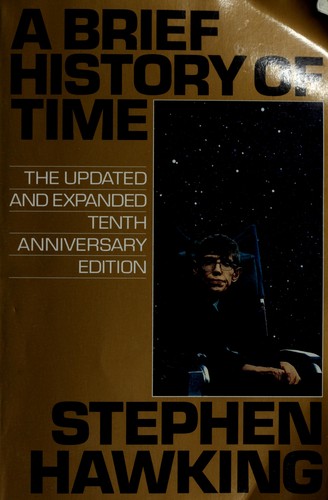
How does this compare to A Brief History of Time?
It's longer, more detailed, and covers more ground, particularly on quantum mechanics and string theory. Hawking's book is shorter and more focused on cosmology and black holes. Both are accessible, but Greene's is more comprehensive and was written two decades later with more recent science.