Contemporary fiction · Book club
The Fault in Our Stars book club questions
Here are 12 book club questions for The Fault in Our Stars by John Green, ordered to open easily and end somewhere worth arguing about. Copy them, print them, or bring them up one at a time.
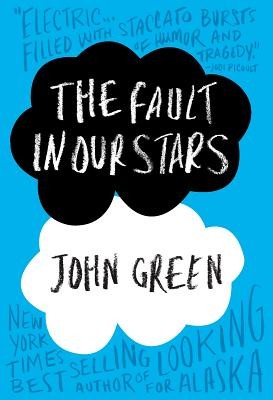
Hazel Grace Lancaster is sixteen, has thyroid cancer that has spread to her lungs, and attends a cancer support group mostly to appease her parents.
John Green · 2012 · 4h 45m
Full summary and key takeaways →The 12 questions
- 1.
Hazel argues that oblivion is inevitable and that this should shape how we value impact. Augustus wants to matter and leave a trace. Whose position do you find more defensible?
- 2.
Van Houten is a terrible person who may be more honest about mortality than the protagonists. How do you read his role in the novel — is he a cautionary tale or a corrective?
- 3.
Is Hazel's voice believably that of a teenager, or does she sound like a teenager written by a thirty-five-year-old novelist? Does it matter?
- 4.
The Amsterdam section — the wish, the trip, the meeting with Van Houten — is the novel's structural centerpiece. Did it pay off for you?
- 5.
Green doesn't give either character a miraculous cure or a sudden remission. Was that the right choice? What would the book have lost?
- 6.
How does this novel compare to a grief memoir like The Year of Magical Thinking in how it handles loss? What can fiction do that nonfiction can't here?
- 7.
Hazel worries she'll destroy Augustus by letting him love her. Is that a realistic fear or a form of self-protection?
- 8.
The novel is written in Hazel's first person. How much do we miss by not being inside Augustus's head?
- 9.
This is often described as a romance, but it might be more accurately described as a novel about death that happens to have a love story in it. Which framing fits better?
- 10.
The Genie support group and its attendees could easily be manipulative tearjerker material. How well does Green handle that risk?
- 11.
What does the title mean, and do you think it accurately describes the novel's argument?
- 12.
Who in your own life would benefit from reading this book, and why?
How to run the discussion
- Pick six to eight, not all of them. An hour of real discussion covers fewer questions than anyone expects, and racing the list is what makes a book club feel like homework.
- Open with what people noticed, not what they concluded. Asking for a verdict first hardens opinions before anyone has heard each other.
- Let the disagreement run. The questions below that split a room are the ones worth the time; the ones everyone answers the same way can be skipped.
- Ask the quiet person a specific question. A direct, narrow question is far easier to answer than an open invitation to contribute.
Themes worth steering toward
If the conversation stalls, these are the threads that usually restart it.
Common questions
What are good book club questions for The Fault in Our Stars?
Here are 12 book club questions for The Fault in Our Stars by John Green, ordered to open easily and end somewhere worth arguing about. The strongest openers ask what each reader noticed rather than what they concluded, and the discussion usually turns on mortality and illness, love and loss, meaning-making.
How long should a book club discussion of The Fault in Our Stars last?
Most groups run 60 to 90 minutes of actual discussion. That is roughly six to eight questions, not all of them, so pick the ones that suit your group rather than working down the list in order.
What are the main themes in The Fault in Our Stars?
Mortality and illness, Love and loss, Meaning-making, Adolescence and identity, Literature and language. Those are the threads most likely to divide a room, which makes them the useful places to steer a discussion that has gone quiet.
Picking the next one? See books like The Fault in Our Stars or questions for other book club picks.
